
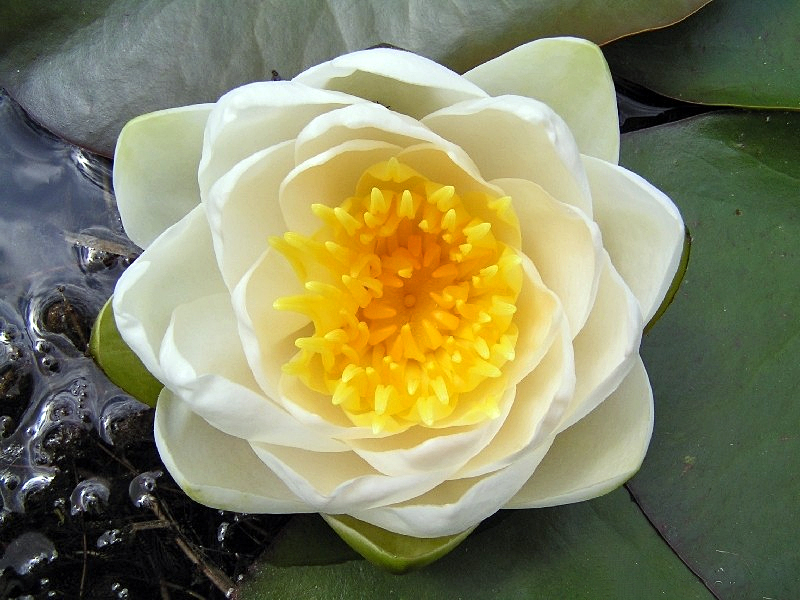
Aquatic plants, also referred to as hydrophytes, encompass both vascular and non-vascular plant species that have evolved adaptations for survival in aquatic habitats, whether saline or freshwater. Within lacustrine, riverine, and wetland ecosystems, these aquatic vegetations offer crucial shelter for aquatic fauna, including fish, amphibians, and aquatic insects. Furthermore, they establish substrates for benthic invertebrates, generate oxygen through photosynthesis, and constitute a food source for various herbivorous wildlife. Prominent examples of aquatic flora include waterlilies, lotuses, duckweeds, mosquito ferns, floating hearts, water milfoils, mare's tail, water lettuce, and water hyacinth.
The sustained submersion in water and the ability to float on the water's surface necessitate specific adaptations in aquatic plants. A prevalent adaptation involves the development of lightweight internal packing cells, termed aerenchyma; however, floating leaves and intricately dissected leaves are also frequently observed. These plants flourish exclusively in aquatic conditions or in consistently saturated soil, making them characteristic constituents of swamp and marshland ecosystems.
Evolutionary Development
Aquatic plants have evolved to inhabit either freshwater or marine environments. Vascular aquatic plants have emerged independently across various plant families, encompassing both ferns and angiosperms (including monocotyledons and dicotyledons). Seagrasses represent the sole angiosperms capable of complete submersion in seawater, with notable examples found in genera like Thalassia and Zostera. The hypothesis of an aquatic origin for angiosperms is substantiated by fossil evidence indicating that several of the earliest known angiosperm fossils exhibited aquatic characteristics. Phylogenetically, aquatic plants are broadly distributed among angiosperms, demonstrating at least 50 distinct evolutionary origins, despite constituting less than 2% of total angiosperm species. Archaefructus, approximately 125 million years old, stands as one of the most ancient and complete angiosperm fossils. These organisms necessitate specialized adaptations for either submerged existence or surface flotation.
Morphological Characteristics
Completely submerged aquatic plants exhibit minimal requirements for rigid or lignified tissues, as their position within the water column is maintained primarily through buoyancy, often facilitated by gas-filled lacunae or turgid aerenchyma cells. Consequently, upon removal from their aquatic environment, these plants typically become flaccid and experience a rapid loss of turgor.
Conversely, species inhabiting lotic environments necessitate adequate structural xylem to withstand damage from rapid water currents. Furthermore, robust attachment mechanisms are essential to prevent dislodgement by riverine flow.
Numerous fully submerged plants possess intricately dissected leaves, a morphology likely evolved to minimize hydrodynamic drag in riverine settings and to significantly augment the surface area available for the exchange of minerals and gases. Certain species, such as Ranunculus aquatilis, exhibit heterophylly, displaying two distinct leaf forms: finely dissected leaves that remain submerged and entire leaves that float on the water's surface.
Certain lentic plants demonstrate the capacity to modify their position within the water column across different seasons. A prominent illustration is the water soldier, which typically resides as a rootless rosette on the substrate of the aquatic environment. In late spring, it gradually ascends to the surface, allowing its inflorescence to emerge into the atmosphere. During this ascent, the plant develops roots and generates vegetative daughter plants via rhizomes. Following the completion of flowering, the plant subsequently descends through the water column, and its roots undergo atrophy.
In floating aquatic angiosperms, leaf morphology has adapted such that stomata are exclusively located on the adaxial (upper) surface, facilitating the utilization of atmospheric carbon dioxide. Consequently, gas exchange predominantly transpires through the upper leaf surface, and these stomata remain perpetually open. Given their aquatic habitat, these plants are not susceptible to water loss via stomata and thus incur no risk of dehydration. For carbon fixation, certain aquatic angiosperms possess the ability to absorb CO2 from dissolved bicarbonate in the water, a characteristic absent in terrestrial flora. Angiosperms employing HCO
§89§- can maintain adequate CO§1314§ concentrations, even in alkaline environments characterized by low carbon availability. The diverse classification schemes for aquatic plants are fundamentally rooted in their morphological attributes.
Classification
Aquatic plants are categorized into two primary groups: aquatic macrophytes and aquatic microphytes. Aquatic macrophytes are defined as hydrophytes of sufficient size to be discernible without magnification. Conversely, aquatic microphytes are microscopic hydrophytes, imperceptible to the unaided eye.
Categorization of Macrophytes
Macrophytes are categorized according to their growth forms, which include:
- Emergent
- Rooted: anchored to the substrate.
- Unrooted: freely suspended within the water column.
- Floating-leaved
- Free-floating
Emergent Macrophytes
- This growth habit may have evolved due to the enhanced photosynthetic efficiency of leaves in air and reduced competition from submerged flora. However, the primary aerial component is frequently the flower, facilitating reproductive processes. The emergent morphology enables pollination through wind or by flying insects.
- Numerous emergent plant species exist, including the reed (Phragmites), Cyperus papyrus, various Typha species, flowering rush, and wild rice species. Certain species, such as purple loosestrife, can thrive as emergent plants in aquatic settings but are also capable of flourishing in fens or merely in moist soil.
Submerged Macrophytes
- Submerged macrophytes develop entirely beneath the water surface, either with roots anchored to the substrate (termed rooted submerged, e.g., Myriophyllum spicatum) or lacking a root system entirely (termed unrooted submerged, e.g., Ceratophyllum demersum). These plants may also extend upwards to the water's surface. Helophytes are plants that grow partially submerged in marsh environments and regenerate from buds located below the water surface. Tall vegetation stands bordering water bodies and rivers frequently comprise helophytes. Illustrative examples include populations of Equisetum fluviatile, Glyceria maxima, Hippuris vulgaris, Sagittaria, Carex, Schoenoplectus, Sparganium, Acorus, yellow flag (Iris pseudacorus), Typha, and Phragmites australis.
- While seaweeds, which are extensive multicellular marine algae, perform ecological functions analogous to those of aquatic plants like seagrass, they do not possess the specialized root or rhizoid systems characteristic of vascular plants. Instead, seaweeds feature holdfasts that function solely as anchoring structures, devoid of absorptive capabilities.
Floating-leaved Macrophytes
- Floating-leaved macrophytes are characterized by root systems anchored to the substrate or the bed of the aquatic environment, with their leaves resting on the water's surface. Prominent examples of floating-leaved macrophytes include water lilies (family Nymphaeaceae) and pondweeds (family Potamogetonaceae).
Free-floating Macrophytes
- These plants drift unattached on the water's surface.
- Free-floating macrophytes are observed suspended on the water surface, lacking attachment of their roots to the substrate, sediment, or the bed of the aquatic system. They are susceptible to wind dispersal, and certain species can serve as breeding habitats for mosquitoes. Illustrative examples include Lemna species and Pistia species, the latter being commonly known as water lettuce, water cabbage, or Nile cabbage.
Categorization of Microphytes
Microphytes are classified into the following categories:
- Phytoplankton, also referred to as microscopic algae, are free-floating organisms that drift passively with water currents.
- Periphyton refers to microphytes that inhabit and develop on the surfaces of rooted aquatic vegetation.
- Benthic algae are largely sessile algal forms that colonize the submerged substrate surfaces in freshwater environments, including mud, stones, or other stable materials. These algae can be unicellular, exemplified by diatoms or desmids, or multicellular, such as Spirogyra or Cladophora. A limited number of species, including certain diatoms, exhibit restricted motility across their substrate.
Supplementary Morphological Classifications
Aquatic plants can be classified in numerous ways based on their morphology. One such classification system delineates six distinct groups:
- Amphiphytes: Plants exhibiting adaptations for survival in both submerged aquatic conditions and terrestrial environments.
- Elodeids: Stem-dominated plants that complete their entire life cycle submerged, with only their flowers potentially extending above the water surface.
- Isoetids: Rosette-forming plants that complete their entire life cycle while fully submerged.
- Helophytes: Plants rooted in the substrate, but with their leaves extending above the waterline.
- Nymphaeids: Plants rooted in the substrate, but with their leaves floating on the water's surface.
- Neuston: Vascular plants that float unattached within the water column.
Aquatic Adaptations
Terrestrial Flora in Aquatic Habitats
Terrestrial plants may exhibit physiological alterations when subjected to submergence during flooding events. Under submerged conditions, newly developed leaves have been observed to possess thinner laminae and cell walls compared to leaves that developed in an aerial environment. Furthermore, oxygen levels are typically elevated in the submerged portions of the plant relative to sections grown terrestrially. This phenomenon exemplifies phenotypic plasticity, as the plant undergoes morphological modifications better suited to its novel aquatic habitat upon submergence. However, while some terrestrial species can achieve short-term adaptation to aquatic environments, successful reproduction underwater may be impeded, particularly for plants reliant on terrestrial pollinators.
Buoyancy
Aquatic plants experience buoyancy within their environment, which counteracts their inherent weight. Consequently, their cell walls are considerably more flexible and less rigid, owing to the reduced hydrostatic pressure compared to that encountered by terrestrial plants. Green algae, recognized as the closest ancestors to extant terrestrial and aquatic flora, also exhibit exceptionally thin cell walls due to their aquatic surroundings. In contrast, terrestrial plants possess rigid cell walls, which are essential for structural support against gravity and for resilience against adverse weather conditions. Traits such as gravitropism, phototropism, and hydrotropism are hypothesized to have evolved during the evolutionary transition from aquatic to terrestrial habitats. This transition necessitated that terrestrial plants develop mechanisms to acquire nutrients in environments with limited water access and evolve specialized sensory cells, such as statocytes.
Photosynthesis
Submerged aquatic plants face greater limitations in accessing carbon dioxide as a carbon source compared to their terrestrial counterparts. They may also contend with diminished light availability. In aquatic flora, diffuse boundary layers (DBLs) surrounding submerged leaves and photosynthetic stems vary according to leaf thickness, shape, and density. These DBLs are the primary determinant of the significantly reduced rate of gaseous transport across the leaf-water interface, thereby substantially inhibiting carbon dioxide uptake. To circumvent this constraint, many aquatic plants have evolved the capacity to metabolize bicarbonate ions as an alternative carbon source. Environmental variables influence the instantaneous photosynthetic rates of aquatic plants, as well as the activity of photosynthetic enzymes and pigments. Within aquatic environments, light intensity diminishes rapidly with increasing depth. Additionally, respiration rates are higher in darkness per unit volume of the surrounding medium.
Reproduction
While most aquatic angiosperms are capable of sexual reproduction through flowering and seed production, many have also developed extensive asexual reproductive strategies, including propagation via rhizomes, turions, and general fragmentation.
Functions of Aquatic Plants
The Bolivian waterlily stands as one of the world's largest aquatic plants, holding the Guinness World Record for the largest undivided leaf, measuring 3.2 m (10 ft 6 in) in diameter. Conversely, the rootless duckweed is among the smallest, with a diameter of only 1 mm (0.039 in). Numerous small animal species utilize aquatic plants, such as duckweeds and lily pads, for spawning sites or as protective refuges against predators from both above and below the water surface.
Aquatic plants serve as crucial primary producers, forming the foundational trophic level for a diverse array of aquatic fauna, particularly wetland species. They compete with phytoplankton for surplus nutrients like nitrogen and phosphorus, thereby mitigating the incidence of eutrophication and harmful algal blooms. Furthermore, these plants significantly influence riparian soil chemistry; their leaves, stems, and roots reduce water flow, facilitating sediment capture and pollutant trapping. The decreased flow rates promote the settling of excess sediment into the streambed. Some aquatic plants also host symbiotic microbes capable of nitrogen fixation and the degradation of pollutants trapped or absorbed by their root systems. Historically, aquatic plants have received less research attention than terrestrial species; however, the management of aquatic vegetation has emerged as an increasingly vital field for mitigating agricultural pollution in water bodies.
Functions of Macrophytes in Aquatic Systems
Macrophytes fulfill numerous ecological roles within aquatic ecosystems and offer valuable services to human populations. A primary function of macrophytes involves the absorption of dissolved nutrients, including nitrogen and phosphorus. Consequently, macrophytes are extensively employed globally in constructed wetlands for the remediation of excess nitrogen and phosphorus from contaminated water sources. Beyond direct nutrient uptake, macrophytes also indirectly affect nutrient cycling, particularly nitrogen cycling, by influencing the denitrifying bacterial communities residing on their roots and shoots. Macrophytes facilitate the sedimentation of suspended solids through reduced current velocities and mitigate erosion by stabilizing soil surfaces. Furthermore, macrophytes introduce spatial heterogeneity into otherwise uniform water columns. The structural complexity afforded by macrophytes typically enhances the diversity and density of both fish and invertebrate populations. The localized presence of macrophytes additionally creates wildlife habitats and improves the aesthetic appeal of wastewater treatment systems.
Applications and Human Significance
- Edible Crops
Certain aquatic plant species serve as human food sources. Notable examples encompass wild rice (Zizania), water caltrop (Trapa natans), Chinese water chestnut (Eleocharis dulcis), Indian lotus (Nelumbo nucifera), water spinach (Ipomoea aquatica), prickly waterlily (Euryale ferox), and watercress (Rorippa nasturtium-aquaticum).
- Biological Assessment
A reduction in macrophyte community health can signal issues with water quality and alterations in the ecological condition of an aquatic environment. These problems might stem from factors such as excessive turbidity, herbicide contamination, or increased salination. Conversely, elevated nutrient concentrations can lead to an excessive proliferation of macrophytes, potentially disrupting natural lake processes. Macrophyte populations are readily sampled, do not necessitate extensive laboratory analysis, and can be straightforwardly utilized to derive basic abundance metrics.
- Prospective Therapeutic Agents
Phytochemical and pharmacological investigations indicate that certain freshwater macrophytes, including Centella asiatica, Nelumbo nucifera, Nasturtium officinale, Ipomoea aquatica, and Ludwigia adscendens, represent valuable reservoirs of natural products with potential anticancer and antioxidative properties.
Aqueous extracts derived from the stems and roots of Ludwigia adscendens, alongside those from the fruit, leaves, and stems of Monochoria hastata, have demonstrated lipoxygenase inhibitory activity. Furthermore, an aqueous extract prepared from the leaves of Ludwigia adscendens displays alpha-glucosidase inhibitory activity that surpasses the potency of acarbose.
- Wastewater Remediation
Macrophytes play a crucial role in specific wastewater treatment methodologies, particularly in small-scale sewage processing via constructed wetlands or within polishing lagoons designed for more extensive systems.
Distribution
The primary determinant governing the spatial distribution of aquatic plants is water availability. Nevertheless, additional abiotic parameters, such as nutrient concentrations, the presence of carbon dioxide and oxygen, water temperature, substrate characteristics, water transparency, hydrological dynamics, and salinity, also exert control over their dispersal. Certain aquatic species exhibit adaptability to thrive in brackish, saline, and hypersaline aquatic environments. Furthermore, biotic elements including herbivory, interspecific competition for light, fungal colonization, and allelopathy significantly influence macrophyte prevalence.
Invasive Aquatic Flora
The global introduction of non-indigenous aquatic plant species has frequently led to their invasive establishment and subsequent ecological dominance within recipient environments. Prominent examples include water hyacinth, which has become invasive across numerous tropical and subtropical regions, encompassing significant portions of the southern United States, various Asian nations, and Australia. New Zealand stonecrop represents a highly invasive species in temperate zones, expanding from a marginal presence to colonizing entire pond ecosystems, often leading to the near-total displacement of native flora and fauna. Other notable invasive aquatic plants comprise floating pennywort, curly-leaved pondweed, the fern ally water fern, and parrot's feather. A common pathway for the environmental release of many of these invasive species has been their initial sale as oxygenating plants for aquariums or ornamental additions for garden ponds, followed by improper disposal into natural habitats.
In 2012, an extensive analysis of non-native aquatic plants across 46 European nations identified 96 alien aquatic species. These non-native species originated predominantly from North America, Asia, and South America. The most widespread non-native plant in Europe was Elodea canadensis, documented in 41 European nations, succeeded by Azolla filiculoides in 25 countries and Vallisneria spiralis in 22 countries. The nations reporting the highest numbers of recorded alien aquatic plant species were France and Italy with 30 species, followed by Germany with 27 species, and Belgium and Hungary with 26 species. The European and Mediterranean Plant Protection Organization has issued recommendations to European countries, urging the curtailment or prohibition of commerce in invasive alien plants.
Nutrient Pollution and Eutrophication
Overabundant nutrient influxes, particularly nitrogen and phosphorus from agricultural runoff, sewage, and urban development, precipitate eutrophication. This process culminates in algal proliferation, diminishing water transparency and dissolved oxygen concentrations, thereby detrimentally impacting aquatic flora. In eutrophic conditions, submerged macrophyte assemblages frequently diminish, yielding to systems dominated by phytoplankton. Such a transition curtails habitat intricacy and the provision of sanctuaries for invertebrates and fish. Additionally, decomposition of algal biomass by (micro)organisms depletes oxygen, engendering hypoxic zones, commonly termed "dead zones," where aquatic life cannot survive.
Climate Change
Climate change intensifies existing perils to aquatic plants through elevated temperatures, modified precipitation regimes, and a heightened incidence of severe climatic phenomena.
Elevated temperatures can confer an advantage upon invasive species, enabling them to outcompete indigenous flora. For example, research indicates a potential expansion in the geographical distribution of invasive species such as Egeria densa and Myriophyllum aquaticum, which could substantially broaden by 2070 as a consequence of climatic shifts. Furthermore, earlier onset of spring warming facilitates the establishment of invasive species prior to native vegetation, thereby conferring a competitive edge.
Climatically driven alterations similarly influence hydrological levels and flow dynamics, thereby affecting the spatial distribution and vitality of aquatic plants. Periods of drought can diminish water availability, whereas severe storms may result in augmented runoff and sedimentation, both of which are deleterious to aquatic flora.
Habitat Degradation
Anthropogenic activities, including urban expansion, agricultural practices, and dam construction, contribute to habitat degradation, presenting substantial perils to aquatic flora.
Urbanization augments impervious surface areas, resulting in elevated runoff volumes that transport pollutants and sediments into aquatic ecosystems. Such runoff can suffocate aquatic plants and modify water chemistry. Agricultural methodologies exacerbate nutrient loading and pesticide contamination, thereby intensifying stress on aquatic flora.
The construction of dams and water diversion initiatives modify natural hydrological regimes, influencing sediment transport and water temperature. Such modifications can interrupt the life cycles of aquatic plants and the associated species reliant upon them.
Aquatic flora are indispensable components of robust aquatic ecosystems; however, they confront a multitude of threats stemming from invasive species, nutrient contamination, climatic shifts, and habitat deterioration. Effective mitigation of these challenges necessitates comprehensive management strategies, encompassing the regulation of invasive species, diminution of nutrient influxes, amelioration of climate change effects, and the preservation and rehabilitation of aquatic habitats.
Gallery
References
References
- archive.org/web/20200410235322/tamu.edu/
- Center for Aquatic and Invasive Plants
- Aquatic Plant Monitoring in the State of Washington