
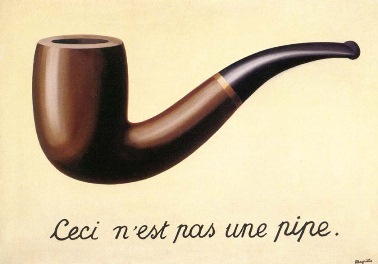
Surrealism is an artistic and cultural movement that emerged in Europe following World War I, characterized by artists' efforts to facilitate the expression of the unconscious mind, frequently manifesting in the portrayal of illogical or dreamlike scenarios and concepts. André Breton, a prominent figure, articulated its objective as the resolution of "the previously contradictory conditions of dream and reality into an absolute reality, a super-reality," which he termed surreality. The movement encompassed various artistic disciplines, including painting, writing, photography, theatre, filmmaking, music, and comedy.
Surrealist creations are characterized by elements of surprise, unforeseen juxtapositions, and non sequitur. Nevertheless, numerous Surrealist artists and writers primarily considered their output as manifestations of a philosophical movement—exemplified by Breton's concept of "pure psychic automatism" in the first Surrealist Manifesto—with the artworks themselves serving as secondary artifacts of surrealist exploration. Breton unequivocally declared Surrealism to be fundamentally a revolutionary endeavor. Contemporaneously, the movement maintained affiliations with political ideologies such as communism and anarchism. Its development was significantly shaped by the Dada movement of the 1910s.
Guillaume Apollinaire coined the term "Surrealism" in 1917. Nonetheless, the Surrealist movement's official establishment occurred only after October 1924, when Breton's publication of the Surrealist Manifesto successfully asserted his group's claim to the term, superseding a competing faction led by Yvan Goll, who had issued his own surrealist manifesto two weeks earlier. Paris, France, served as the movement's primary hub. Beginning in the 1920s, Surrealism disseminated globally, influencing visual arts, literature, theatre, film, and music across numerous countries and linguistic contexts, alongside political thought and practice, philosophy, and various social and cultural theories.
Establishment of the Movement
Guillaume Apollinaire initially coined the term surrealism in March 1917. In a letter to Paul Dermée, he stated: "All things considered, I think in fact it is better to adopt surrealism than supernaturalism, which I first used" [Tout bien examiné, je crois en effet qu'il vaut mieux adopter surréalisme que surnaturalisme que j'avais d'abord employé].
Apollinaire subsequently employed the term in his program notes for Sergei Diaghilev's Ballets Russes production, Parade, which debuted on May 18, 1917. Parade featured a one-act scenario by Jean Cocteau and music composed by Erik Satie. While Cocteau characterized the ballet as "realistic," Apollinaire extended this description, labeling Parade as "surrealistic":
This new alliance—I say new, because until now scenery and costumes were linked only by factitious bonds—has given rise, in Parade, to a kind of surrealism, which I consider to be the point of departure for a whole series of manifestations of the New Spirit that is making itself felt today and that will certainly appeal to our best minds. We may expect it to bring about profound changes in our arts and manners through universal joyfulness, for it is only natural, after all, that they keep pace with scientific and industrial progress. (Apollinaire, 1917)
Apollinaire subsequently re-employed the term, incorporating it as both a subtitle and within the preface of his play Les Mamelles de Tirésias: Drame surréaliste, which was authored in 1903 and premiered in 1917.
World War I led to the dispersal of Parisian-based writers and artists, many of whom subsequently engaged with the Dada movement, driven by the conviction that excessive rationalism and bourgeois principles had precipitated the global conflict. Dadaists expressed their dissent through anti-art gatherings, performances, writings, and artistic creations. Upon their return to Paris post-war, Dadaist activities persisted.
During World War I, André Breton, having received training in medicine and psychiatry, worked in a neurological hospital, applying Sigmund Freud's psychoanalytic techniques to soldiers afflicted with shell shock. His encounter with the young writer Jacques Vaché led Breton to perceive Vaché as the spiritual heir to Alfred Jarry, the writer and founder of pataphysics. Breton admired Vaché's anti-social disposition and his contempt for conventional artistic traditions. Breton later articulated, "In literature, I was successively taken with Rimbaud, with Jarry, with Apollinaire, with Nouveau, with Lautréamont, but it is Jacques Vaché to whom I owe the most."
Upon his return to Paris, Breton participated in Dadaist activities and co-founded the literary journal Littérature in collaboration with Louis Aragon and Philippe Soupault. They initiated experiments with automatic writing, a technique involving spontaneous, uncensored textual production, and subsequently published these writings, alongside dream narratives, within the journal. Breton and Soupault further developed their automatism techniques, culminating in the publication of The Magnetic Fields in 1920.
By October 1924, the Surrealist movement had bifurcated into two competing factions, each intending to issue a Surrealist Manifesto. Both factions asserted themselves as inheritors of a revolutionary impetus initiated by Apollinaire. One faction, under the leadership of Yvan Goll, comprised Pierre Albert-Birot, Paul Dermée, Céline Arnauld, Francis Picabia, Tristan Tzara, Giuseppe Ungaretti, Pierre Reverdy, Marcel Arland, Joseph Delteil, Jean Painlevé, and Robert Delaunay, among others. André Breton's faction contended that automatism offered a more effective strategy for societal transformation compared to the Dadaist approaches championed by Tzara, who had become a prominent rival. Breton's collective expanded to encompass a diverse array of writers and artists across various media, including figures such as Paul Éluard, Benjamin Péret, René Crevel, Robert Desnos, Jacques Baron, Max Morise, Pierre Naville, Roger Vitrac, Gala Éluard, Max Ernst, Salvador Dalí, Luis Buñuel, Man Ray, Hans Arp, Georges Malkine, Michel Leiris, Georges Limbour, Antonin Artaud, Raymond Queneau, André Masson, Joan Miró, Marcel Duchamp, Jacques Prévert, and Yves Tanguy, Dora Maar.
In the evolution of their philosophical framework, the Surrealists posited that while conventional and representational expressions held intrinsic value, their structural organization ought to remain entirely receptive to imaginative possibilities, consistent with the principles of the Hegelian Dialectic. Furthermore, their intellectual foundations drew upon the Marxist dialectic and the theoretical contributions of scholars such as Walter Benjamin and Herbert Marcuse.
Freudian concepts, specifically free association, dream analysis, and the exploration of the unconscious, proved pivotal for the Surrealists in their endeavor to emancipate the imagination. They championed idiosyncrasy, simultaneously refuting the notion of inherent insanity. As Dalí famously asserted, "The sole distinction between a madman and myself is that I am not mad."
Beyond the application of dream analysis, the Surrealists underscored the principle that "elements not typically co-located could be combined within a single framework to generate illogical and striking effects." Breton incorporated this concept of startling juxtapositions into his 1924 manifesto, deriving it from a 1918 essay by the poet Pierre Reverdy, which articulated: "a juxtaposition of two more or less distant realities. The more the relationship between the two juxtaposed realities is distant and true, the stronger the image will be−the greater its emotional power and poetic reality."
The collective sought to fundamentally transform human experience across its personal, cultural, social, and political dimensions. Their objective was to liberate individuals from deceptive rationality, as well as from oppressive customs and societal structures. Breton declared the authentic objective of Surrealism to be "long live the social revolution, and it alone!" In pursuit of this aim, Surrealists periodically affiliated themselves with both communist and anarchist ideologies.
During 1924, two distinct Surrealist factions articulated their philosophical tenets within separate Surrealist Manifestos. Concurrently, the Bureau of Surrealist Research was founded, initiating the publication of the journal La Révolution surréaliste.
The Surrealist Manifestos
Prior to 1924, two competing Surrealist collectives emerged. Both groups asserted their lineage from a revolutionary movement initiated by Apollinaire. One such collective, under the direction of Yvan Goll, included figures such as Pierre Albert-Birot, Paul Dermée, Céline Arnauld, Francis Picabia, Tristan Tzara, Giuseppe Ungaretti, Pierre Reverdy, Marcel Arland, Joseph Delteil, Jean Painlevé, and Robert Delaunay, among others.
The alternative faction, spearheaded by Breton, comprised individuals including Aragon, Desnos, Éluard, Baron, Crevel, Malkine, Jacques-André Boiffard, and Jean Carrive, among others.
Yvan Goll issued his Manifeste du surréalisme on October 1, 1924, within the inaugural and sole edition of his publication Surréalisme. This preceded the release of Breton's Manifeste du surréalisme, published by Éditions du Sagittaire on October 15, 1924, by two weeks.
The dispute between Goll and Breton regarding the proprietorship of the term "Surrealism" escalated into a physical altercation at the Comédie des Champs-Élysées. Ultimately, Breton prevailed due to his tactical and numerical advantages. Despite Breton's triumph in this foundational disagreement, the subsequent trajectory of Surrealism was characterized by internal divisions, departures, and notable expulsions, as individual Surrealists often held divergent perspectives on the movement's objectives and varied in their adherence to André Breton's established definitions.
André Breton's 1924 publication, the Surrealist Manifesto, delineated the foundational objectives of Surrealism. Within this text, Breton enumerated the movement's influences, presented instances of Surrealist creations, and elaborated on the concept of Surrealist automatism. He subsequently offered the following definitions:
Dictionary: Surrealism, noun. Defined as pure psychic automatism, through which one aims to articulate the authentic operation of thought, whether verbally, in written form, or by any other means. This involves the dictation of thought unconstrained by rational control and devoid of aesthetic or moral considerations.
Encyclopedia: Surrealism. Philosophy. Surrealism posits its foundation on the conviction of a superior reality inherent in certain previously disregarded associations, the absolute power of dreams, and the spontaneous, unmotivated interplay of thought. Its objective is to dismantle other psychic mechanisms definitively and to supplant them in addressing life's fundamental challenges.
Expansion
During the mid-1920s, the Surrealist movement was characterized by gatherings in cafes where participants engaged in collaborative drawing exercises, debated Surrealist theories, and innovated various techniques, including automatic drawing. Initially, Breton expressed skepticism regarding the utility of visual arts within Surrealism, perceiving them as less amenable to spontaneity and automatism. However, this reservation was subsequently overcome through the development of methods like frottage, grattage, and decalcomania.
Subsequently, a growing number of visual artists joined the movement, notably Giorgio de Chirico, Max Ernst, Joan Miró, Francis Picabia, Yves Tanguy, Salvador Dalí, Luis Buñuel, Alberto Giacometti, Valentine Hugo, Méret Oppenheim, Toyen, and Kansuke Yamamoto. Following the Second World War, Enrico Donati, Vinicius Pradella, and Denis Fabbri also became participants. Despite André Breton's admiration for Pablo Picasso and Marcel Duchamp and his efforts to recruit them, both artists maintained a peripheral association. Additionally, the movement attracted further writers, including the former Dadaist Tristan Tzara, René Char, and Georges Sadoul.
An independent Surrealist collective was established in Brussels in 1925, comprising the musician, poet, and artist E. L. T. Mesens, the painter and writer René Magritte, Paul Nougé, Marcel Lecomte, and André Souris. In 1927, the writer Louis Scutenaire joined their ranks. This Brussels group maintained consistent correspondence with their Parisian counterparts, and in 1927, both Goemans and Magritte relocated to Paris, integrating into Breton's artistic milieu. These artists, drawing influences from Dada, Cubism, Wassily Kandinsky's abstraction, Expressionism, and Post-Impressionism, also explored earlier artistic traditions and proto-Surrealist figures such as Hieronymus Bosch, alongside what were termed primitive and naive arts.
André Masson's automatic drawings from 1923 are frequently cited as a pivotal moment signifying the integration of visual arts into Surrealism and a departure from Dada, given their embodiment of the unconscious mind's influence. Another illustrative instance is Giacometti's 1925 sculpture, Torso, which represented his shift towards simplified forms and drew inspiration from preclassical sculptural traditions.
Nevertheless, a notable illustration of the distinction drawn between Dada and Surrealism by art scholars involves the juxtaposition of Max Ernst's 1925 work, Little Machine Constructed by Minimax Dadamax in Person (Von minimax dadamax selbst konstruiertes maschinchen), with his 1927 piece, The Kiss (Le Baiser). The former is generally perceived to convey a sense of detachment and an implicit erotic subtext, while the latter explicitly and directly depicts an erotic act. In The Kiss (Le Baiser), the stylistic influences of Miró and Picasso are evident through the application of fluid, curving, and intersecting lines and color. Conversely, Little Machine Constructed by Minimax Dadamax in Person (Von minimax dadamax selbst konstruiertes maschinchen) exhibits a directness that subsequently impacted movements like Pop art.
Giorgio de Chirico, through his prior development of metaphysical art, served as a pivotal link between the philosophical and visual dimensions of Surrealism. From 1911 to 1917, he cultivated an unadorned representational style that subsequently influenced other artists. His 1913 work, The Red Tower (La tour rouge), exemplifies the striking color contrasts and illustrative approach later embraced by Surrealist artists. In his 1914 painting, The Nostalgia of the Poet (La Nostalgie du poète), a figure is depicted with its back to the viewer, while the unconventional juxtaposition of a bust wearing glasses and a fish in relief challenges traditional interpretation. As a writer, his novel Hebdomeros features a sequence of dreamlike scenarios, employing an unconventional application of punctuation, syntax, and grammar to establish a distinct atmosphere and contextualize its imagery. His artistic output, encompassing set designs for the Ballets Russes, contributed to a decorative manifestation of Surrealism and significantly influenced Dalí and Magritte, two artists who became more widely recognized for their association with the movement. Nevertheless, he departed from the Surrealist group in 1928.
In 1924, Miró and Masson began incorporating Surrealist principles into their painting. The inaugural Surrealist exhibition, titled La Peinture Surrealiste, took place at Galerie Pierre in Paris during 1925. This exhibition showcased pieces by Masson, Man Ray, Paul Klee, Miró, and other artists. The exhibition affirmed Surrealism's presence within the visual arts, despite initial skepticism regarding its feasibility, and incorporated Dadaist techniques like photomontage. On March 26, 1926, the Galerie Surréaliste commenced operations with an exhibition featuring Man Ray's work. Breton's 1928 publication, Surrealism and Painting, provided a comprehensive overview of the movement's development up to that time, a work he continued to revise through the 1960s.
Surrealist Literature
According to André Breton, a leading figure of the movement, the foundational Surrealist work was Les Chants de Maldoror, while the first text authored and published by his group of Surréalistes was Les Champs Magnétiques (May–June 1919). The periodical Littérature featured automatist writings and dream narratives. Both the magazine and the accompanying portfolio demonstrated a rejection of literal interpretations of objects, instead emphasizing their underlying poetic currents. They highlighted not only these poetic undercurrents but also the connotations and overtones that "exist in ambiguous relationships to the visual images."
The perceived lack of overt organization in Surrealist writers' thoughts and imagery often leads some readers to find their work challenging to interpret. This perception, however, represents a superficial understanding, likely influenced by Breton's early advocacy for automatic writing as the primary method for accessing a higher reality. Yet, as exemplified by Breton's own practice, a significant portion of what is presented as purely automatic is, in fact, carefully edited and deliberately conceived. Breton subsequently acknowledged that the significance of automatic writing had been exaggerated, leading to the incorporation of additional elements, particularly as the increasing participation of visual artists necessitated more rigorous approaches for automatic painting. Consequently, techniques like collage were adopted, partly inspired by the ideal of striking juxtapositions evident in Pierre Reverdy's poetry. Furthermore, as demonstrated by Magritte's work—which did not overtly employ automatic techniques or collage—the concept of "convulsive joining" itself evolved into a distinct means of revelation. Surrealism was inherently dynamic, striving to be perpetually avant-garde, which naturally led to continuous reevaluation of its philosophical tenets in response to emerging challenges. Artists like Max Ernst, through his Surrealist collages, exemplify this evolution towards a more contemporary art form that simultaneously offers social commentary.
The Surrealists rekindled interest in Isidore Ducasse, better known by his pseudonym Comte de Lautréamont—particularly for his famous line, "beautiful as the chance meeting on a dissecting table of a sewing machine and an umbrella"—and Arthur Rimbaud. Both late 19th-century writers are considered precursors to Surrealism.
Notable works of Surrealist literature include Artaud's Le Pèse-Nerfs (1926), Aragon's Irene's Cunt (1927), Péret's Death to the Pigs (1929), Crevel's Mr. Knife Miss Fork (1931), Sadegh Hedayat's The Blind Owl (1937), and Breton's Sur la route de San Romano (1948).
La Révolution surréaliste remained in publication until 1929, characterized by densely packed textual columns on most pages, yet also featuring art reproductions, including pieces by de Chirico, Ernst, Masson, and Man Ray. Its content further encompassed books, poems, pamphlets, automatic texts, and theoretical tracts.
Surrealist Cinema
Notable early Surrealist films comprise:
- Entr'acte by René Clair (1924)
- The Seashell and the Clergyman (French: La Coquille et le clergyman) by Germaine Dulac, with a scenario by Antonin Artaud (1928)
- L'Étoile de mer by Man Ray (1928)
- Un Chien Andalou by Luis Buñuel and Salvador Dalí (1929)
- L'Âge d'Or by Buñuel and Dalí (1930)
- The Blood of a Poet (French: Le sang d'un poète) by Jean Cocteau (1930)
- Destino by Walt Disney and Salvador Dalí (later completed by Walt Disney Animation Studios) (2003)
Surrealist Photography
Prominent Surrealist photographers include Dora Maar (French), Man Ray (American), Brassaï (French/Hungarian), Claude Cahun (French), and Emiel van Moerkerken (Dutch). In Japan, the 1937 exhibition Kaigai Chōgenjitsushugi Sakuhin Ten (Exhibition of Overseas Surrealist Works), recognized as Japan’s inaugural international Surrealism exhibition, predominantly featured photographs, many of which were reproductions of Surrealist paintings and objects. This photographic movement also impacted local avant-garde communities; for instance, the Japanese poet and photographer Kansuke Yamamoto was a participant in the Nagoya Photo Avant-Garde.
Surrealist Theatre
The term surrealist was initially coined by Apollinaire to characterize his 1917 play Les Mamelles de Tirésias ("The Breasts of Tiresias"), a work subsequently adapted into an opera by Francis Poulenc.
Roger Vitrac's The Mysteries of Love (1927) and Victor, or The Children Take Over (1928) are frequently regarded as prime examples of Surrealist theatre, notwithstanding his expulsion from the movement in 1926. These productions premiered at the Theatre Alfred Jarry, a venue co-founded by Vitrac and Antonin Artaud, another early Surrealist figure who also faced expulsion from the movement.
Subsequent to his collaboration with Vitrac, Artaud expanded Surrealist principles through his conceptualization of the Theatre of Cruelty. Artaud critiqued most Western theatre as a distortion of its fundamental purpose, which he believed ought to be a mystical and metaphysical encounter. Instead, he envisioned an immediate and direct theatrical experience, a ritualistic event designed to connect the unconscious minds of performers and spectators. In this framework, emotions, feelings, and metaphysical concepts were to be conveyed physically rather than through language, thereby generating a mythological, archetypal, and allegorical vision intimately connected to the realm of dreams.
The Spanish playwright and director Federico García Lorca also explored surrealism, notably in his plays The Public (1930), When Five Years Pass (1931), and Play Without a Title (1935). Additional surrealist plays include Aragon's Backs to the Wall (1925). Gertrude Stein's opera Doctor Faustus Lights the Lights (1938) has been characterized as "American Surrealism," although it also exhibits connections to a theatrical manifestation of Cubism.
Surrealist Music
During the 1920s, numerous composers were influenced by Surrealism or by figures within the movement. These included Bohuslav Martinů, André Souris, Erik Satie, Francis Poulenc, and Edgard Varèse, who asserted that his composition Arcana originated from a dream sequence. Souris, notably, maintained a close association with the movement, cultivating a long-standing relationship with Magritte and contributing to Paul Nougé's publication Adieu Marie. Throughout the twentieth century, compositions by various artists, such as Pierre Boulez, György Ligeti, Mauricio Kagel, Olivier Messiaen, and Thomas Adès, have been linked to surrealist principles.
Germaine Tailleferre, a member of the French group Les Six, composed several works arguably inspired by Surrealism, among them the 1948 ballet Paris-Magie (with a scenario by Lise Deharme) and the operas La Petite Sirène (libretto by Philippe Soupault) and Le Maître (libretto by Eugène Ionesco). Additionally, Tailleferre composed popular songs using texts by Claude Marci, the spouse of Henri Jeanson, whose portrait Magritte had painted in the 1930s.
Despite André Breton's negative stance on music, articulated in his 1946 essay Silence is Golden, subsequent Surrealists, including Paul Garon, identified connections between Surrealism and the improvisational nature of jazz and blues. This mutual interest was occasionally reciprocated by jazz and blues musicians; for instance, the 1976 World Surrealist Exhibition featured performances by David "Honeyboy" Edwards.
Surrealism and International Politics
The evolution of Surrealism as a political movement exhibited global heterogeneity: certain regions prioritized artistic endeavors, others focused on political engagement, while some Surrealist practices aimed to transcend both art and politics. Throughout the 1930s, Surrealist concepts disseminated from Europe to North America, South America (notably with the establishment of the Mandrágora group in Chile in 1938), Central America, the Caribbean, and across Asia, functioning as both an artistic philosophy and a doctrine for political transformation.
Politically, Surrealism encompassed Trotskyist, communist, or anarchist leanings. The divergence from Dada has been characterized as a schism between anarchists and communists, with Surrealists aligning with communism. André Breton and his associates initially supported Leon Trotsky and his International Left Opposition, although a receptiveness to anarchism became more pronounced post-World War II. Certain Surrealists, including Benjamin Péret, Mary Low, and Juan Breá, adopted various forms of left communism. When the Dutch Surrealist photographer Emiel van Moerkerken approached Breton, he declined to sign the manifesto due to his non-Trotskyist stance. For Breton, mere communism was insufficient, leading him to reject Van Moerkerken's photographs for subsequent publication, which precipitated a division within Surrealism. Conversely, figures like Wolfgang Paalen advocated for complete emancipation from political ideologies; following Trotsky's assassination in Mexico, Paalen fostered a separation between art and politics through his counter-Surrealist art magazine DYN, thereby influencing the emergence of abstract expressionism. While Dalí endorsed capitalism and Francisco Franco's fascist dictatorship, his views do not represent a broader Surrealist trend; indeed, Breton and his circle regarded him as having betrayed and abandoned Surrealism. Benjamin Péret, Mary Low, Juan Breá, and the Spanish-born Eugenio Fernández Granell participated in the POUM during the Spanish Civil War.
Breton's adherents, in conjunction with the Communist Party, pursued the "liberation of man." Nevertheless, Breton's faction declined to subordinate radical artistic creation to the proletarian struggle, resulting in significant friction with the Party that rendered the late 1920s tumultuous for both entities. Consequently, numerous individuals closely affiliated with Breton, most notably Aragon, departed his group to collaborate more intimately with the Communists.
Surrealists frequently endeavored to connect their artistic and intellectual pursuits with political ideologies and activism. For instance, in the Declaration of January 27, 1925, members of the Parisian Bureau of Surrealist Research—including Breton, Aragon, Artaud, and approximately two dozen others—expressed their alignment with revolutionary politics. Although this initial declaration was somewhat imprecise, by the 1930s, many Surrealists had firmly embraced communism. The seminal text embodying this inclination within Surrealism is the Manifesto for a Free Revolutionary Art, formally attributed to Breton and Diego Rivera, but in fact co-written by Breton and Leon Trotsky.
Nevertheless, in 1933, the Surrealists' contention that "proletarian literature" was unattainable within a capitalist framework precipitated their rupture with the Association des Ecrivains et Artistes Révolutionnaires, culminating in the expulsion of Breton, Éluard, and Crevel from the Communist Party.
In 1925, the Paris Surrealist group collaborated with the extreme left wing of the French Communist Party to endorse Abd-el-Krim, who led the Rif uprising against French colonialism in Morocco. The Parisian group subsequently issued an open letter to Paul Claudel, a writer and French ambassador to Japan, stating:
We Surrealists declared our support for transforming the imperialist war, in its persistent and colonial manifestation, into a civil conflict. Consequently, we committed our efforts to the revolution, to the proletariat and its struggles, and articulated our position regarding the colonial issue, and by extension, the question of race.
The 1932 document "Murderous Humanitarianism," primarily drafted by Crevel and signed by Breton, Éluard, Péret, Tanguy, and the Martiniquan Surrealists Pierre Yoyotte and J.M. Monnerot, may be considered a foundational text for what later became known as "Black Surrealism." However, the direct interaction between Aimé Césaire and Breton in Martinique during the 1940s was instrumental in establishing this movement.
Anticolonial revolutionary writers within Martinique's Négritude movement, then a French colony, adopted Surrealism as a revolutionary methodology, employing it as a critique of European culture and a radical subjective approach. This engagement fostered connections with other Surrealists and significantly influenced the evolution of Surrealism as a revolutionary praxis. The journal Tropiques, which featured contributions from Aimé Césaire, Suzanne Césaire, René Ménil, Lucie Thésée, Aristide Maugée, and others, commenced publication in 1941.
In 1938, André Breton, accompanied by his wife, the painter Jacqueline Lamba, journeyed to Mexico to meet Trotsky, lodging with Diego Rivera's former wife, Guadalupe Marin. During this visit, Breton encountered Frida Kahlo and viewed her artwork for the first time, subsequently proclaiming her an "innate" Surrealist painter.
Internal Politics
In 1929, the satellite group affiliated with the journal Le Grand Jeu, comprising Roger Gilbert-Lecomte, Maurice Henry, and the Czech painter Josef Sima, faced ostracization. Concurrently, in February, Breton mandated that Surrealists evaluate their "degree of moral competence," and the second manifeste du surréalisme introduced theoretical refinements that led to the exclusion of individuals unwilling to commit to collective action, a list that included Leiris, Limbour, Morise, Baron, Queneau, Prévert, Desnos, Masson, and Boiffard. These excluded members initiated a counter-offensive, severely criticizing Breton in the pamphlet Un Cadavre, which notably depicted Breton wearing a crown of thorns. The pamphlet referenced a prior act of subversion by drawing a parallel between Breton and Anatole France, whose previously unquestioned literary value Breton had challenged in 1924.
The disunion of 1929–30 and the repercussions of Un Cadavre had minimal adverse impact on Surrealism, particularly from Breton's perspective, as core figures like Aragon, Crevel, Dalí, and Buñuel remained committed to the principle of collective action, at least temporarily. The success, or indeed the controversy, surrounding Dalí and Buñuel's film L'Age d'Or in December 1930 exerted a regenerative influence, attracting numerous new adherents and stimulating the creation of countless new artistic works in the subsequent year and throughout the 1930s.
Disgruntled Surrealists gravitated towards the periodical Documents, edited by Georges Bataille, whose anti-idealist materialism fostered a hybrid form of Surrealism aimed at exposing fundamental human instincts. To the dismay of many, Documents ceased publication in 1931, precisely as Surrealism appeared to be gaining momentum.
Several reconciliations occurred following this period of disunion, notably between Breton and Bataille. Conversely, Aragon departed the group in 1932 after aligning himself with the French Communist Party. Additional members were expelled over time due to various political and personal infractions, while others departed to pursue individual artistic directions.
By the conclusion of World War II, the Surrealist group led by André Breton explicitly adopted anarchism. In 1952, Breton articulated this alignment, stating, "It was in the black mirror of anarchism that surrealism first recognized itself." Breton consistently supported the francophone Anarchist Federation, maintaining his solidarity even after the Platformists, backing Fontenis, reconstituted the FA as the Fédération Communiste Libertaire. He was among the few intellectuals who continued to support the FCL during the Algerian War, when the organization endured severe repression and was compelled to operate clandestinely, even providing refuge to Fontenis during his period of concealment. Breton declined to align himself with any faction during the divisions within the French anarchist movement, and both he and Peret also expressed solidarity with the new Fédération anarchiste established by the synthesist anarchists, collaborating with the FA in the Antifascist Committees of the 1960s.
Golden Age
Throughout the 1930s, Surrealism gained increasing public visibility. A Surrealist collective emerged in London, and its 1936 London International Surrealist Exhibition was, according to Breton, a significant milestone for the period, establishing a precedent for subsequent international showcases. Concurrently, another English Surrealist group formed in Birmingham, distinguishing itself through its opposition to the London Surrealists and its preference for the movement's French origins. These two factions subsequently reconciled later in the decade.
Dalí and Magritte were responsible for producing the movement's most widely recognized imagery. Dalí joined the group in 1929 and was instrumental in the rapid establishment of its distinctive visual style between 1930 and 1935.
As a visual movement, Surrealism developed a specific methodology: to unveil psychological truths by divesting ordinary objects of their conventional meaning, thereby generating compelling images that transcended typical formal organization, ultimately aiming to elicit empathy from the observer.
The year 1931 marked a pivotal point in the stylistic evolution for several Surrealist painters. Magritte's Voice of Space (La Voix des airs) exemplifies this development, depicting three large, bell-like spheres suspended above a landscape. Another Surrealist landscape from the same year is Yves Tanguy's Promontory Palace (Palais promontoire), characterized by its fluid and molten forms. Such liquid shapes became a hallmark of Dalí's work, notably in his iconic painting The Persistence of Memory, which features watches appearing to melt and sag.
The defining characteristics of this style—a synthesis of the depictive, the abstract, and the psychological—came to symbolize the pervasive sense of alienation experienced during the modern era, coupled with a profound desire for deeper psychological exploration to achieve a holistic sense of individuality.
Between 1930 and 1933, the Surrealist Group in Paris published the periodical Le Surréalisme au service de la révolution, which succeeded La Révolution surréaliste.
From 1936 to 1938, Wolfgang Paalen, Gordon Onslow Ford, and Roberto Matta became members of the group. Paalen introduced Fumage, while Onslow Ford contributed Coulage, both representing novel pictorial automatic techniques.
Long after internal personal, political, and professional tensions led to the fragmentation of the Surrealist group, Magritte and Dalí continued to articulate a distinct visual program within the arts. This program extended beyond painting to encompass photography, as evidenced by a Man Ray self-portrait whose use of assemblage profoundly influenced Robert Rauschenberg's collage boxes.
During the 1930s, Peggy Guggenheim, a prominent American art collector, married Max Ernst and subsequently began championing the works of other Surrealists, including Yves Tanguy and the British artist John Tunnard.
Major Exhibitions in the 1930s
- 1936 – The London International Surrealist Exhibition was organized in London by art historian Herbert Read, featuring an introduction by André Breton.
- 1936 – The Museum of Modern Art in New York hosted the exhibition Fantastic Art, Dada and Surrealism.
- 1938 – A new Exposition Internationale du Surréalisme convened at the Beaux-arts Gallery in Paris, showcasing approximately 300 paintings, objects, collages, photographs, and installations by over 60 artists from various nations. The Surrealists conceptualized this exhibition as a creative act in itself, enlisting Marcel Duchamp, Wolfgang Paalen, Man Ray, and others to realize their vision. At the entrance, Salvador Dalí's "Rainy Taxi"—an antique taxi modified to produce a continuous drizzle inside its windows, featuring a shark-headed figure in the driver's seat and a blond mannequin covered in live snails in the rear—greeted patrons, who were typically in formal evening attire. One side of the lobby was transformed into Surrealist Street, populated by mannequins dressed by various Surrealists. Paalen and Duchamp collaborated on the design of the main hall, transforming it into a cave-like environment with 1,200 coal bags suspended from the ceiling above a coal brazier, which, along with a single light bulb, provided the sole illumination. The floor was covered with humid leaves and mud, and visitors were provided with flashlights to view the artworks. Wolfgang Paalen also created a small lake with grasses on the floor, while the aroma of roasting coffee permeated the air. To the Surrealists' considerable satisfaction, the exhibition provoked significant controversy among its viewers.
World War II and the Post-War Period
World War II profoundly disrupted European society, particularly affecting artists and writers who opposed Fascism and Nazism. Consequently, numerous prominent artists sought refuge and relative safety in North America, primarily the United States. The artistic milieu in New York City was already engaging with Surrealist concepts, and several American artists, including Arshile Gorky, Jackson Pollock, and Robert Motherwell, developed close, though sometimes cautious, associations with self-exiled Surrealist artists. Concepts related to the unconscious and dream imagery rapidly gained acceptance. By the Second World War, the aesthetic preferences of the American avant-garde in New York had shifted decisively towards Abstract Expressionism, a movement championed by influential figures such as Peggy Guggenheim, Leo Steinberg, and Clement Greenberg. Nevertheless, it is crucial to acknowledge that Abstract Expressionism emerged directly from the interaction between American (specifically New York-based) artists and European Surrealists who had sought refuge during World War II. Gorky and Paalen, in particular, significantly shaped the evolution of this American art form, which, akin to Surrealism, valorized the spontaneous human act as a fundamental source of creativity. The initial works of many Abstract Expressionists demonstrate a strong connection to the more overt characteristics of both movements. Furthermore, the later incorporation of Dadaistic humor by artists like Rauschenberg underscores this enduring link. Until the advent of Pop Art, Surrealism remained the singular most significant influence on the rapid expansion of American arts; even within Pop Art, elements of Surrealist humor are discernible, frequently recontextualized as cultural critique.
For a period, the Second World War largely eclipsed intellectual and artistic endeavors. In 1939, Wolfgang Paalen became the first Surrealist to depart Paris for exile in the New World. Following an extensive journey through the forests of British Columbia, he established residence in Mexico and launched his influential art magazine, *Dyn*. The subsequent year, 1940, saw Yves Tanguy marry American Surrealist painter Kay Sage. In 1941, Breton traveled to the United States, where he co-founded the ephemeral magazine VVV alongside Max Ernst, Marcel Duchamp, and American artist David Hare. Nevertheless, it was the American poet Charles Henri Ford and his publication, View, that provided Breton with a significant platform for disseminating Surrealism throughout the United States. The special issue of View dedicated to Duchamp proved instrumental in shaping public comprehension of Surrealism in America. This issue emphasized Duchamp's methodological ties to Surrealism, presented Breton's interpretations of his work, and articulated Breton's perspective that Duchamp served as a crucial link between earlier modern movements, such as Futurism and Cubism, and Surrealism itself. Wolfgang Paalen subsequently withdrew from the group in 1942, citing political and philosophical disagreements with Breton.
Despite the disruptive impact of the war on Surrealism, artistic production within the movement persisted. Numerous Surrealist artists, including Magritte, continued to develop their distinctive artistic vocabularies. Furthermore, many members of the Surrealist movement maintained correspondence and convened regularly. Although Dalí faced excommunication by Breton, he neither abandoned his thematic concerns from the 1930s—such as allusions to the "persistence of time" in a later painting—nor did he revert to a conventional, academic style. His so-called "classic period" did not signify as radical a departure from his earlier work as some interpretations suggest; indeed, figures like André Thirion contended that certain post-excommunication works retained relevance for the movement. When the Belfast Blitz brought the war to Ireland in May 1941, Colin Middleton, who had previously explored surrealist themes in the 1930s, responded by creating a series of somber artworks that captured the profound shock experienced by the city's inhabitants. These pieces were subsequently exhibited at the Belfast Municipal Gallery and Museum in 1943, following the institution's restoration after its near destruction during the blitz.
During the 1940s, Surrealism's influence extended to England, America, and the Netherlands, where Gertrude Pape and her husband Theo van Baaren contributed to its popularization through their publication, *The Clean Handkerchief*. Mark Rothko explored biomorphic forms, while in England, artists such as Henry Moore, Lucian Freud, Francis Bacon, and Paul Nash either adopted or experimented with Surrealist methodologies. Conversely, Conroy Maddox, a pioneering British Surrealist whose contributions to the genre began in 1935, maintained his allegiance to the movement. In 1978, Maddox curated an exhibition of contemporary Surrealist art, titled Surrealism Unlimited, in Paris. This exhibition, which garnered international acclaim, was organized as a direct rebuttal to a previous show he deemed an inadequate representation of Surrealism. Maddox's final solo exhibition occurred in 2002, and he passed away three years later. Concurrently, Magritte's artistic output evolved towards a more realistic portrayal of objects, yet consistently retained the characteristic element of juxtaposition, exemplified by works such as 1951's Personal Values (Les Valeurs Personnelles) and 1954's Empire of Light (L’Empire des lumières). Magritte also created iconic pieces that have become integral to artistic discourse, including Castle in the Pyrenees (Le Château des Pyrénées), which echoes the suspended landscape motif found in his 1931 work, Voix.
Certain individuals associated with the Surrealist movement faced expulsion. Despite this, several artists, including Roberto Matta, described themselves as having "remained close to Surrealism." Frida Kahlo is also noteworthy; she held a solo exhibition in New York in 1938, featuring 25 paintings, an endeavor personally encouraged by André Breton.
In South America, specifically Chile, the Surrealist collective La Mandrágora was established in 1938 by Braulio Arenas, Teófilo Cid, and Enrique Gómez Correa. This group disseminated its ideas through an eponymous review and played a pivotal role in disseminating Surrealist philosophy throughout the Southern Cone, frequently with the backing of poet Vicente Huidobro. Alongside Matta, La Mandrágora exerted a considerable literary influence on the author Roberto Bolaño.
Following the suppression of the Hungarian Revolution in 1956, Endre Rozsda relocated to Paris, where he continued to develop his distinctive artistic expression, which had evolved beyond traditional Surrealism. Notably, André Breton authored the preface for Rozsda's inaugural exhibition at the Furstenberg Gallery in 1957.
A multitude of emerging artists openly embraced the tenets of Surrealism. Prominent figures such as Dorothea Tanning and Louise Bourgeois sustained their artistic practices, exemplified by Tanning's 1970 work, Rainy Day Canape. Marcel Duchamp, meanwhile, clandestinely created sculptures, including the installation *Étant donnés*, which realistically portrays a woman observed through a peephole.
André Breton persistently advocated for the emancipation of the human mind through his writings, notably with the 1952 publication The Tower of Light. His post-war return to France initiated a renewed period of Surrealist engagement in Paris, where his critiques of rationalism and dualism resonated with a fresh audience. Breton steadfastly asserted that Surrealism represented a continuous rebellion against the commodification of humanity, religious formalism, and suffering, emphasizing the imperative of intellectual liberation.
Significant Exhibitions from the 1940s, 1950s, and 1960s
- 1942 – First Papers of Surrealism – New York. For this exhibition, the Surrealists once more enlisted Marcel Duchamp for its design. Duchamp constructed an intricate three-dimensional web of string throughout the exhibition space, which in some areas significantly obstructed the visibility of the artworks. He also orchestrated a clandestine arrangement for an associate's son to bring his friends to the opening, resulting in the arrival of elegantly attired patrons encountering a group of children in athletic wear engaged in playing with balls and skipping rope. The exhibition catalog, conceived by Duchamp, featured "found" photographs of the artists rather than conventional posed portraits.
- 1947 – International Surrealist Exhibition – Galerie Maeght, Paris.
- 1959 – International Surrealist Exhibition – Paris.
- 1960 – Surrealist Intrusion in the Enchanters' Domain – New York.
Post-Breton Surrealism
Afro-Surrealism represents an artistic and literary movement predominantly situated within the African diaspora. It draws inspiration from Négritude and postcolonial literature, with which it partially converges.
During the 1960s, artists and writers affiliated with the Situationist International maintained a close association with Surrealism. While Guy Debord expressed critical distance from Surrealism, other figures, such as Asger Jorn, explicitly employed Surrealist techniques and methodologies. The events of May 1968 in France incorporated several Surrealist concepts, with familiar Surrealist slogans appearing among those spray-painted by students on the walls of the Sorbonne. Joan Miró subsequently commemorated these events in a painting titled May 1968. Additionally, certain groups, like the Revolutionary Surrealist Group, aligned with both movements, demonstrating a stronger adherence to Surrealism.
In the 1980s, within the Eastern Bloc, Surrealism re-emerged in the political sphere through an underground artistic opposition movement known as the Orange Alternative. Founded in 1981 by Waldemar Fydrych (alias 'Major'), a history and art history graduate from the University of Wrocław, the Orange Alternative utilized Surrealist symbolism and terminology. They organized large-scale happenings in major Polish cities during the Jaruzelski regime and painted Surrealist graffiti over anti-regime slogans. Fydrych himself authored a "Manifesto of Socialist Surrealism," asserting that the socialist (communist) system had become so inherently Surrealistic that it could be perceived as an artistic expression in itself.
Surrealist art continues to attract considerable interest from museum audiences. The Guggenheim Museum in New York City presented an exhibition, Two Private Eyes, in 1999, while Tate Modern hosted a Surrealist art exhibition in 2001 that drew over 170,000 visitors. In 2002, the Metropolitan Museum of Art in New York City featured a show titled Desire Unbound, and the Centre Georges Pompidou in Paris organized an exhibition called La Révolution surréaliste. More recently, in 2021–2022, The Metropolitan Museum of Art and Tate Modern collaboratively organized the international survey exhibition Surrealism Beyond Borders, which showcased works from 45 or more countries spanning nearly eight decades, aiming to re-evaluate Surrealism's transnational networks beyond its traditional Western European focus.
Surrealist groups and literary publications maintain their activity into the contemporary era, exemplified by organizations such as the Chicago Surrealist Group, the Leeds Surrealist Group, Peculiar Mormyrid, and The Surrealist Group in Stockholm. Jan Švankmajer, a prominent figure among the Czech-Slovak Surrealists, continues to produce films and engage in object experimentation.
Impact and Influences
While Surrealism is predominantly associated with artistic disciplines, its influence extends across numerous other fields. In this broader context, Surrealism does not exclusively denote self-identified "Surrealists" or those sanctioned by André Breton; rather, it encompasses a spectrum of creative acts of rebellion and endeavors to liberate the imagination. Beyond its theoretical foundations in the ideas of Hegel, Marx, and Freud, its proponents view its intrinsic dynamic as dialectical thought. Surrealist artists have also acknowledged historical figures such as the alchemists, Dante, Hieronymus Bosch, the Marquis de Sade, Charles Fourier, Comte de Lautréamont, and Arthur Rimbaud as significant influences.
May 1968
Surrealists contend that non-Western cultures offer a continuous wellspring of inspiration for Surrealist endeavors, positing that some may foster a superior equilibrium between instrumental reason and imaginative freedom compared to Western culture. Surrealism has exerted a discernible impact on radical and revolutionary politics, both directly—through the participation or alliance of some Surrealists with radical political groups, movements, and parties—and indirectly—by emphasizing the profound connection between the liberation of imagination and mind, and emancipation from repressive and archaic social structures. This influence was particularly evident in the New Left movements of the 1960s and 1970s and the French revolt of May 1968, where the slogan "All power to the imagination" was adopted by The Situationists and Enragés from the originally Marxist "Rêvé-lutionary" theory and praxis developed by Breton's French Surrealist group.
Postmodernism and Popular Culture
Surrealism significantly influenced numerous literary movements, both directly and indirectly, during the latter half of the 20th century, a period often designated as the Postmodern era. While a universally accepted definition of Postmodernism remains elusive, many of its characteristic themes and techniques bear a striking resemblance to those found in Surrealism.
The "First Papers of Surrealism" exhibition showcased the founders of surrealism, marking a pivotal advancement for avant-garde movements toward installation art. The Beat Generation, including many of its associated writers, experienced profound influence from Surrealists. Philip Lamantia and Ted Joans, for instance, are frequently categorized as both Beat and Surrealist authors. Other Beat writers, such as Bob Kaufman, Gregory Corso, Allen Ginsberg, and Lawrence Ferlinghetti, also demonstrate substantial evidence of Surrealist impact. Antonin Artaud, in particular, exerted considerable influence on many Beat figures, especially Ginsberg and Carl Solomon. Ginsberg explicitly cited Artaud's "Van Gogh – The Man Suicided by Society" as a direct inspiration for "Howl," alongside Apollinaire's "Zone," García Lorca's "Ode to Walt Whitman," and Schwitters' "Priimiititiii." Furthermore, the structural composition of André Breton's "Free Union" notably shaped Ginsberg's "Kaddish." During their time in Paris, Ginsberg and Corso encountered prominent figures like Tristan Tzara, Marcel Duchamp, Man Ray, and Benjamin Péret, expressing their admiration through gestures such as Ginsberg kissing Duchamp's feet and Corso cutting Duchamp's tie.
William S. Burroughs, a central figure of the Beat Generation and a postmodern novelist, collaborated with former surrealist Brion Gysin to develop the cut-up technique. This method employs chance operations to determine the textual composition from words extracted from diverse sources, a process Burroughs termed the "Surrealist Lark" and acknowledged as indebted to Tristan Tzara's techniques.
Postmodern novelist Thomas Pynchon, also influenced by Beat fiction, engaged with the surrealist concept of startling juxtapositions beginning in the 1960s. He emphasized the "necessity of managing this procedure with some degree of care and skill," asserting that "any old combination of details will not do." Illustrating this principle, Pynchon recounted a statement by Spike Jones Jr., whose father's orchestral recordings profoundly affected him in childhood: "One of the things that people don't realize about Dad's kind of music is, when you replace a C-sharp with a gunshot, it has to be a C-sharp gunshot or it sounds awful."
Numerous other postmodern fiction writers have demonstrated direct influence from Surrealism. Paul Auster, for example, has translated Surrealist poetry and described the Surrealists as "a real discovery" for him. Salman Rushdie, when identified as a Magical Realist, asserted that he perceived his work as "allied to surrealism." David Lynch is widely regarded as a surrealist filmmaker, with commentators noting, "David Lynch has once again risen to the spotlight as a champion of surrealism," particularly concerning his show Twin Peaks. For the works of other postmodernists, such as Donald Barthelme and Robert Coover, a broad comparison to Surrealism is frequently drawn.
Magic realism, a prevalent literary technique among novelists in the latter half of the 20th century, particularly among Latin American writers, exhibits notable parallels with Surrealism through its juxtaposition of the ordinary and the dream-like, as exemplified in the writings of Gabriel García Márquez. Carlos Fuentes drew inspiration from the revolutionary essence of Surrealist poetry, highlighting the influence Breton and Artaud found in Fuentes' native Mexico. While Surrealism directly influenced Magic Realism in its nascent stages, many Magic Realist authors and critics, including Amaryll Chanady and S. P. Ganguly, acknowledge these similarities but also emphasize significant distinctions often obscured by direct comparison. These differences include Magic Realism's purported lack of interest in psychology and European cultural artifacts, which they claim are present in Surrealism. Alejo Carpentier stands as a prominent Magic Realist writer who recognized Surrealism as an early influence, though he later critiqued its rigid demarcation between the real and unreal as failing to represent the authentic South American experience.
Surrealist groups
The Surrealist movement persisted through various individuals and groups following André Breton's death in 1966. Although Jean Schuster disbanded the original Paris Surrealist Group in 1969, a new Parisian surrealist collective subsequently emerged. This contemporary Surrealist Group of Paris recently launched the inaugural issue of its journal, Alcheringa. Concurrently, the Group of Czech-Slovak Surrealists has maintained continuous operation, publishing their journal Analogon, which has now reached nearly 100 volumes.
Surrealism's Influence on Theatre
Surrealist theatre, alongside Artaud's "Theatre of Cruelty," significantly influenced numerous playwrights whom critic Martin Esslin categorized as the "Theatre of the Absurd" in his 1963 publication. Despite not constituting an organized movement, Esslin identified thematic and technical commonalities among these playwrights, suggesting a potential lineage from Surrealist influences. Eugène Ionesco, for instance, expressed a particular affinity for Surrealism, once asserting Breton's status as a pivotal historical thinker. Samuel Beckett also held an appreciation for Surrealists, undertaking the translation of a substantial portion of their poetry into English. Furthermore, other prominent playwrights included in Esslin's classification, such as Arthur Adamov and Fernando Arrabal, were at various times affiliated with the Surrealist group.
Alice Farley, an American artist, commenced her professional career in San Francisco during the 1970s, following her dance education at the California Institute of the Arts. Farley employs vibrant and intricate costuming, which she characterizes as "the vehicles of transformation capable of making a character's thoughts visible." Frequently engaging in collaborations with musicians like Henry Threadgill, Farley investigates the function of improvisation in dance, thereby integrating an automatic dimension into her productions. Her participation extends to several surrealist collaborations, notably the World Surrealist Exhibition held in Chicago in 1976.
Proposed Precursors in Historical Art
Several historical artists are occasionally posited as antecedents to Surrealism. Prominently cited figures include Hieronymus Bosch and Giuseppe Arcimboldo, the latter of whom Dalí famously designated the "father of Surrealism." Beyond their direct adherents, other artists, such as Joos de Momper, are sometimes noted for works like anthropomorphic landscapes within this discourse. However, a substantial number of critics contend that these creations are more appropriately classified as fantastic art, lacking a profound connection to Surrealism.
Surrealist Artists
- Surrealist artists
- Bizarre Object
- Films Influenced by the Surrealist Movement
- Surrealist Cinema
- Women Surrealists
- Exquisite Corpse
- Neo-Fauvism – A poetic painting style.
- Organic Surrealism – A categorization within Surrealist art.
- Outsider Art – Art produced beyond the confines of established cultural institutions by individuals lacking formal artistic training.
- Psychedelic Music
- Psychedelic Art – Visual art drawing inspiration from psychedelic experiences.
- Salón de Mayo – A 1967 art exhibition held in Havana, Cuba.
References
Bibliography
- André Breton
- Manifestoes of Surrealism, which includes the first and second manifestoes, an introduction to a potential third, the novel The Soluble Fish, and discussions on the political dimensions of the Surrealist movement. ISBN 0-472-17900-4.
- What is Surrealism?: Selected Writings of André Breton. ISBN 0-87348-822-9.
- Conversations: The Autobiography of Surrealism (Gallimard 1952; Paragon House English revised edition 1993). ISBN 1-56924-970-9.
- The Abridged Dictionary of Surrealism, subsequently reprinted in:
- Bonnet, Marguerite, ed. (1988). Oeuvres complètes, 1:328. Paris: Éditions Gallimard.
- Other Sources
- Ades, Dawn. Surrealism in Latin America: Vivisimo Muerto. Los Angeles: Getty Publications, 2012. ISBN 978-1-60606-117-6.
- Alexandrian, Sarane. Surrealist Art. London: Thames & Hudson, 1970.
- Apollinaire, Guillaume. 1917, 1991. Program note for Parade, published in Oeuvres en prose complètes, 2:865–866, edited by Pierre Caizergues and Michel Décaudin. Paris: Éditions Gallimard.
- Allmer, Patricia (ed.). Intersections – Women Artists/Surrealism/Modernism. Rethinking Art's Histories series. Manchester: Manchester University Press, 2016.
- Allmer, Patricia and Donna Roberts (eds). '"Wonderful Things" – Surrealism and Egypt.' Dada/Surrealism, University of Iowa, 20:1, 2013.
- Allmer, Patricia (ed.). Angels of Anarchy: Women Artists and Surrealism. London and Manchester: Prestel and Manchester Art Gallery, 2009.
- Allmer, Patricia and Hilde van Gelder (eds.). Collective Inventions: Surrealism in Belgium. Leuven: Leuven University Press, 2007.
- Allmer, Patricia and Hilde Van Gelder (eds.). "The Forgotten Surrealists: Belgian Surrealism Since 1924." Image [&] Narrative, no. 13 (2005).
- Brotchie, Alastair and Mel Gooding (eds.). A Book of Surrealist Games. Berkeley, California: Shambhala, 1995. ISBN 1-57062-084-9.
- Caws, Mary Ann. Surrealist Painters and Poets: An Anthology. MIT Press, 2001.
- Chadwick, Whitney. Mirror Images: Women, Surrealism, and Self-Representation. The MIT Press, 1998. ISBN 978-0-262-53157-3.
- Chadwick, Whitney. Women Artists and the Surrealist Movement. Bulfinch Press, 1985. ISBN 978-0-8212-1599-9.
- Durozoi, Gerard. History of the Surrealist Movement. Translated by Alison Anderson. University of Chicago Press, 2004. ISBN 0-226-17411-5.
- Flahutez, Fabrice. Nouveau Monde et Nouveau Mythe. Mutations du surréalisme de l'exil américain à l'écart absolu (1941–1965). Les presses du réel, Dijon, 2007.
- Flahutez, Fabrice (ed.), Julia Drost (ed.), Anne Helmreich (ed.), and Martin Schieder (ed.). Networking Surrealism in the United States: Artists, Agents and the Market. Vol. 1. Paris: DFK, 2019. ISBN 978-3-947449-50-7.
- Fort, Ilene Susan and Tere Arcq (eds.). In Wonderland: The Surrealist Adventures of Women Artists in Mexico and the United States. Munich: Prestel Verlag, 2012.
- Foster, Hal. Compulsive Beauty. The MIT Press, 1995. ISBN 9780262560818.
- Galtsova, Elena. Surrealism and Theatre: On the Theatrical Aesthetics of French Surrealism. Moscow: Russian State University for the Humanities, 2012. ISBN 978-5-7281-1146-7.
- Hopkins, David (2004). Dada and Surrealism: A Very Short Introduction. Oxford University Press. ISBN 978-0-19-280254-5.
- Richard, Jean-Tristan. Les structures inconscientes du signe pictural/Psychanalyse et surréalisme (Unconscious Structures of the Pictorial Sign: Psychoanalysis and Surrealism). L'Harmattan ed., Paris, 1999.
- "Mélusine," a French review published by Editions l'Age d'Homme, Lausanne, Switzerland, has been directed by Henri Behar's Center of Surrealism Studies since 1979.
- Sams, Jeremy (1997) [1993]. "Poulenc, Francis." In Amanda Holden (ed.), The Penguin Opera Guide. London: Penguin Books. ISBN 978-0-14-051385-1.Spenser, Rochelle (2021). AfroSurrealism: The African Diaspora's Surrealist Fiction. The Cultural Politics of Media and Popular Culture. London: Routledge. ISBN 978-103-208-237-0.Writings by André Breton
André Breton writings
- Breton, André. (1924). Manifesto of Surrealism. (Archived on 2010-02-09).
- Breton, André. (1934). What is Surrealism?. (Lecture delivered in Brussels).
General Overviews
- A chronological overview of Surrealism from the Centre Pompidou.
- Le Surréalisme (in French).
- Surrealism Reviewed (audiobook featuring archival recordings).
- "Surrealism." (2001, November 15). A BBC Radio 4 discussion featuring Dawn Adiss, Malcolm Bowie, and Darien Leader on In Our Time.
Surrealism and Political Engagement
- Heath, Nick. (n.d.). "1919–1950: The Politics of Surrealism." Arsenal, vol. 4.The Guardian.Surrealist Poetics
- Gullette, Alan. (n.d.). "The Theory and Techniques of Surrealist Poetry." (Archived on 2011-07-18).
- Aimé Césaire and Surrealism. (Archived on 2010-09-19). (in French)