
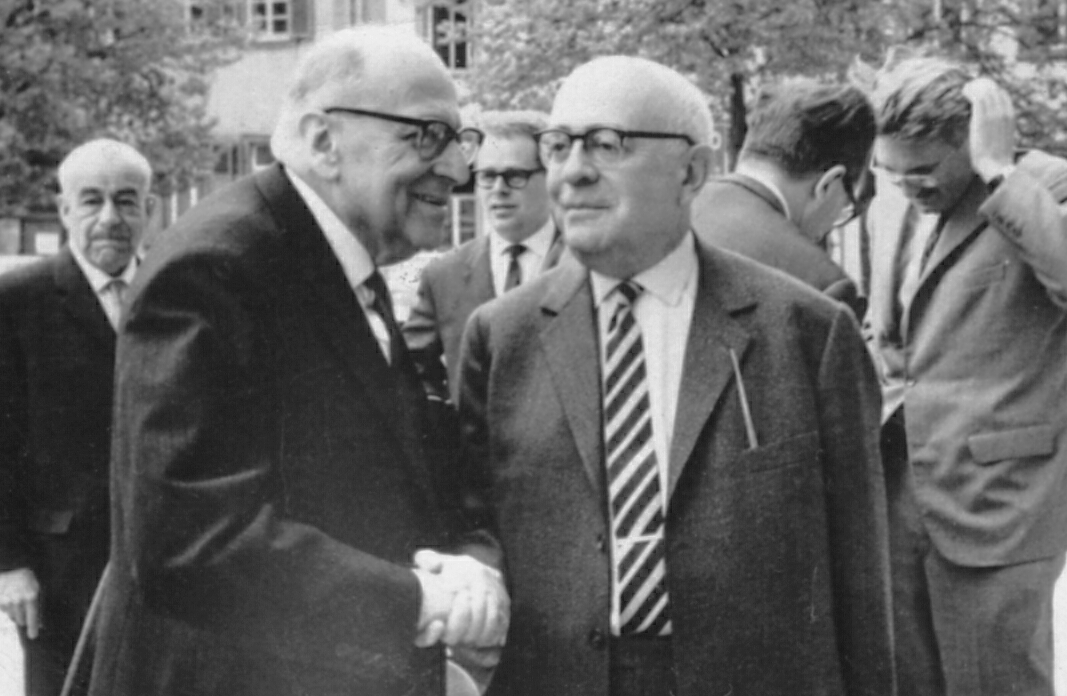
The Frankfurt School represents a prominent intellectual tradition within sociology and critical theory. It is intrinsically linked to the Institute for Social Research, established on February 3, 1923, at the University of Frankfurt am Main (now Goethe University Frankfurt). Emerging during the Weimar Republic in the European interwar period, the initial cohort of the Frankfurt School comprised intellectuals, academics, and political dissidents who expressed profound dissatisfaction with the prevailing socio-economic systems of the 1930s, specifically capitalism, fascism, and communism. Key figures associated with this intellectual movement include Max Horkheimer, Theodor Adorno, Walter Benjamin, Erich Fromm, Wilhelm Reich, Herbert Marcuse, and Jürgen Habermas.
The Frankfurt School is a school of thought in sociology and critical theory. It is associated with the Institute for Social Research founded on February 3, 1923, at the University of Frankfurt am Main (today known as Goethe University Frankfurt). Formed during the Weimar Republic during the European interwar period, the first generation of the Frankfurt School was composed of intellectuals, academics, and political dissidents dissatisfied with the socio-economic systems of the 1930s: namely, capitalism, fascism, and communism. Significant figures associated with the school include Max Horkheimer, Theodor Adorno, Walter Benjamin, Erich Fromm, Wilhelm Reich, Herbert Marcuse, and Jürgen Habermas.
Frankfurt theorists posited that conventional social theory proved inadequate in elucidating the tumultuous political factionalism and reactionary political movements, such as Nazism, prevalent in 20th-century liberal capitalist societies. Furthermore, perceiving Marxism–Leninism as a philosophically rigid system of social organization, the School's critical-theory investigations aimed to identify alternative trajectories for societal advancement.
A unifying principle among the School's diverse members was a collective dedication to the objective of human emancipation, which they theoretically pursued through an attempted synthesis of the Marxist tradition, psychoanalysis, and empirical sociological research.
Historical Context
The Institute for Social Research
The designation "Frankfurt School" refers to the body of scholarship and the intellectuals affiliated with the Institute for Social Research, an auxiliary entity established in 1923 at the University of Frankfurt am Main by Carl Grünberg, a Marxist law professor from the University of Vienna. This institution represented the inaugural Marxist research center within a German university, receiving financial support from the generous patronage of the affluent student Felix Weil (1898–1975).
Weil's doctoral dissertation explored the practical challenges inherent in implementing socialism. In 1922, he orchestrated the First Marxist Workweek, an initiative aimed at synthesizing various Marxist currents into a cohesive, practical philosophy; this inaugural symposium featured György Lukács, Karl Korsch, Karl August Wittfogel, and Friedrich Pollock. The success of the First Marxist Workweek led to the formal establishment of a permanent institute dedicated to social research. Subsequently, Weil engaged in negotiations with the Ministry of Education to secure a university professor as the director of the Institute for Social Research, thus formally integrating the Frankfurt School within the university structure. Korsch and Lukács participated in the Workweek, which encompassed the study of Karl Korsch's 1923 work, Marxism and Philosophy. Their affiliation with the Communist Party prevented their active involvement in the Institute for Social Research; however, Korsch did contribute to the School's publishing endeavors.
The philosophical lineage of the Frankfurt School, characterized by its multidisciplinary integration of the social sciences, is primarily linked to the philosopher Max Horkheimer. Upon assuming the directorship in 1930, Horkheimer recruited prominent intellectuals including Theodor W. Adorno (philosopher, sociologist, musicologist), Erich Fromm (psychoanalyst), and Herbert Marcuse (philosopher).
The European Interwar Period (1918–1939)
Within the Weimar Republic (1918–1933), the persistent political instability of the interwar years (1918–1939) significantly influenced the evolution of the Frankfurt School's critical theory philosophy. The scholars were particularly impacted by the unsuccessful German Revolution of 1918–1919, led by Communists, and by the ascent of Nazism (1933–1945), a distinct German manifestation of fascism. To elucidate these reactionary political phenomena, Frankfurt scholars selectively applied Marxist philosophy to interpret, clarify, and account for the origins and underlying causes of reactionary socioeconomics in 20th-century Europe—a form of political economy unfamiliar to Marx in the 19th century. The School's subsequent intellectual progression was significantly shaped by the 1930s publications of the Economic and Philosophical Manuscripts of 1844 (1932) and The German Ideology (1932), both of which were interpreted as demonstrating a continuity between Hegelian and Marxist philosophy.
Amidst the escalating anti-intellectual threat and political violence of Nazism, the Institute for Social Research's founders resolved to relocate it from Nazi Germany (1933–45). Following Adolf Hitler's ascent to power in 1933, the Institute initially relocated from Frankfurt to Geneva, subsequently moving to New York City in 1935, where it affiliated with Columbia University. Its journal, the Zeitschrift für Sozialforschung (Journal of Social Research), was subsequently retitled "Studies in Philosophy and Social Science." This period marked the commencement of the School's significant contributions to Marxist critical theory. By the 1950s, scholarly trajectories led Horkheimer, Adorno, and Pollock back to West Germany, whereas Marcuse, Löwenthal, and Kirchheimer chose to remain in the United States. The Institute for Social Research (Frankfurt School) was formally re-established in Frankfurt, West Germany, in 1953.
Critical Theory
The intellectual and practical aims of critical theory provide the essential context for understanding the Frankfurt School's body of work. In his 1937 essay, "Traditional and Critical Theory," Max Horkheimer articulated critical theory as a form of social critique designed to instigate sociological transformation and achieve intellectual liberation through non-dogmatic enlightenment. It scrutinizes the underlying meaning of the ruling understandings (the dominant ideology) prevalent in bourgeois society, aiming to expose how this ideology distorts how human relationships function in reality and how capitalism rationalizes and legitimizes societal domination.
Drawing from the theory of cultural hegemony, the dominant ideology is conceptualized as a ruling-class narrative that offers an explanatory justification for society's existing power structure. However, the discourse conveyed through the ruling understandings often obscures as much about society as it illuminates. The Frankfurt School's objective involved the sociological analysis and interpretation of social relations not extensively addressed by Marx in the 19th century, particularly concerning the base and superstructure dynamics within a capitalist society.
Horkheimer contrasted critical theory with traditional theory, where the term theory is employed in a positivistic, scientistic manner, signifying a purely observational approach that seeks to discover and establish scientific laws (generalizations) about the empirical world. Social sciences diverge from natural sciences because their scientific generalizations are not easily deducible solely from empirical experience. A researcher's comprehension of social phenomena is invariably mediated by inherent cognitive biases. Furthermore, researchers often fail to recognize their own embeddedness within specific historical and ideological frameworks. Consequently, the outcomes of tested theories tend to align with the researcher's preconceptions rather than the objective facts of the experience itself. In "Traditional and Critical Theory" (1937), Horkheimer articulated this by stating:
The facts, which our senses present to us, are socially performed in two ways: through the historical character of the object perceived, and through the historical character of the perceiving organ. Both are not simply natural; they are shaped by human activity, and yet the individual perceives himself as receptive and passive in the act of perception.
Horkheimer contended that investigative methodologies suitable for the social sciences cannot merely replicate those employed in the natural sciences. Consequently, theoretical frameworks such as positivism, pragmatism, neo-Kantianism, and phenomenology proved inadequate in transcending the ideological limitations that constrained their utility in social science. This inadequacy stemmed from an intrinsic logico-mathematical bias that divorces theory from lived experience, meaning these methods pursue an immutable logic irrespective of ongoing human activity within the studied domain. He posited that the appropriate resolution to this dilemma lay in developing a critical theory rooted in Marxism.
Horkheimer identified the core issue as epistemological, asserting that a reevaluation was necessary not only for the scientist but for the knowing individual broadly. In contrast to orthodox Marxism, which employs a fixed framework for critique and action, critical theory maintains a self-critical stance, disavowing any assertion of universal, absolute truth. Consequently, it refrains from prioritizing either matter (materialism) or consciousness (idealism), recognizing that each epistemological approach can distort the subject reality to serve the interests of a select group. While critical theory operates beyond the conventional philosophical constraints of traditional theory, it nonetheless derives investigative resources and methodologies from Marxism as a means of thought and for restoring human self-awareness.
The Dialectical Method
Diverging from analytical approaches that examine phenomena in isolation, as if possessing immutable characteristics, Hegel's groundbreaking "dialectical" perspective conceptualized reality through its temporal evolution, dynamic movement, and the intricate interconnections and interactions among its constituent "moments." The Frankfurt School subsequently endeavored to transform Hegel's idealistic dialectics into a more tangible investigative methodology.
Hegel posited that human history could be reinterpreted to demonstrate how the rational elements within reality emerge from the resolution of prior contradictions. This process represents an understandable trajectory of human endeavor, identified as the Weltgeist, embodying the concept of progress toward a particular human state: the realization of human freedom. Nevertheless, Hegel showed no interest in the issue of future contingents—speculations about the future—as he believed philosophy could not be prescriptive or normative, capable only of retrospective comprehension. Consequently, historical inquiry is confined to depicting past and present human conditions. For Hegel and his followers, including the Right Hegelians, philosophy's scope was limited to describing the rationality inherent in contemporary reality, which, during Hegel's era, encompassed Christianity and the Prussian state.
Karl Marx and the Young Hegelians vehemently critiqued this viewpoint, contending that Hegel's abstract notion of "absolute reason" was an overextension, and that he had overlooked the actual—specifically, the undesirable and irrational—living conditions experienced by the proletariat. Marx asserted that he inverted Hegel's idealist dialectics through his theory of dialectical materialism, positing that "it is not the consciousness of men that determines their being, but that their social being that determines their consciousness." Marx's framework adheres to a materialist interpretation of history and spatial geography, wherein the evolution of productive forces serves as the principal driver of historical transformation. The intrinsic social and material contradictions within capitalism are theorized to inevitably culminate in its sublation, leading to the replacement of capitalism with communism, envisioned as a novel, rational societal structure.
Marx employed dialectical analysis to reveal the inherent contradictions within prevailing societal ideologies and their associated social relations, thereby exposing the fundamental conflict between opposing forces. Intellectual liberation and the transformation of the existing social order through progressive change, he argued, could only be achieved by individuals becoming cognizant of this dialectic—that is, by developing class consciousness regarding these antagonistic forces vying for power. The Frankfurt School recognized that a dialectical methodology could only be legitimately embraced if it could be applied to itself, necessitating the adoption of a self-correcting approach capable of rectifying prior, erroneous interpretations arising from dialectical inquiry. Consequently, critical theory diverged from the historicism and materialism characteristic of orthodox Marxism.
Critique of Capitalist Ideology
Dialectic of Enlightenment
Published in 1944 during the Institute's American exile, Adorno and Horkheimer's seminal work, Dialectic of Enlightenment, marked a significant shift. While incorporating numerous Marxist perspectives, the book reoriented its focus from a critique of material production forces to an examination of the social and ideological structures engendered by nascent capitalism. Within Dialectic of Enlightenment, the authors employ the Odyssey as a foundational paradigm for their analysis of bourgeois consciousness. This publication introduced several themes that subsequently became pivotal in social theory. Their articulation of the domination of nature as a core attribute of instrumental rationality, and its manifestation within post-Enlightenment capitalism, predated the widespread emergence of ecological and environmental concerns.
Adorno and Horkheimer posited instrumental rationality as the primary mechanism for cultural reproduction in the mechanical age. This rationality represents a synthesis of domination and technological reason, subjugating both external and internal nature to the human subject's control. Consequently, the subject becomes subsumed, and no social force comparable to the proletariat can be discerned that might facilitate its emancipation.
The authors contended that, particularly when reality itself appears to form the foundation of ideology, critical theory's most significant contribution lies in simultaneously investigating the dialectical contradictions of individual subjective experience and safeguarding theoretical veracity. Even the notion of dialectical progress is questioned, with the assertion that: "Its truth or untruth is not inherent in the method itself, but in its intention in the historical process." This intention, they argued, must be directed towards comprehensive freedom and well-being: "The only philosophy which can be responsibly practiced in face of despair is the attempt to contemplate all things as they would present themselves from the standpoint of redemption."
Sociologically, Adorno and Horkheimer's scholarship reveals an inherent ambivalence regarding the fundamental origins of social domination. This uncertainty contributed to critical theory's perceived "pessimism" concerning the prospects for human emancipation and liberty. Such ambivalence stemmed from the specific historical context of their work's creation, notably the emergence of Nazism, state capitalism, and mass culture as novel forms of social control that traditional Marxist sociology struggled to elucidate. Adorno and Horkheimer argued that state economic intervention had effectively dissolved the inherent capitalist tension between the "relations of production" and the "material productive forces of society"—a contradiction central to traditional Marxist theory. The "free" market, once considered an "unconscious" mechanism for commodity distribution, and the "irrevocable" private property characteristic of Marx's era, had progressively yielded to the ascendant influence of corporate management hierarchies and state-level macroeconomic policies in modern Western societies. Consequently, the dialectical process through which Marx envisioned modern societal emancipation was suppressed, effectively subordinated to a positivist rationality of domination.
Philosopher and critical theorist Nikolas Kompridis observes:
The established historical perspective suggests that Frankfurt School critical theory originated in the 1930s as a relatively assured interdisciplinary and materialist research endeavor. Its overarching objective was to link normative social critique with the emancipatory potential inherent in specific historical developments. However, merely a decade later, following a re-evaluation of their philosophy of history's foundational assumptions, Horkheimer and Adorno's Dialectic of Enlightenment deliberately and provocatively guided the entire intellectual project into a skeptical impasse.§
Kompridis contends that this "sceptical cul-de-sac" emerged significantly due to "the once unspeakable and unprecedented barbarity of European fascism." He further asserts that an escape from this predicament necessitates "some well-marked [exit or] Ausgang, indicating a path out of the perpetual nightmare where Enlightenment aspirations and Holocaust atrocities are inextricably linked." Nevertheless, Kompridis posits that this "Ausgang" would only materialize subsequently, purportedly through Jürgen Habermas's contributions concerning the intersubjective foundations of communicative rationality.
From a psychoanalytic perspective, the rise of consumption culture and mass media supplanted the traditional paternal role within the patriarchal family structure. However, instead of fostering societal liberation from patriarchal power, this shift merely substituted it with the pervasive authority of a "totally administered" society. Christopher Lasch critiqued the subsequent emancipatory movements of the 1960s for their failure to adequately confront this underlying dynamic, which he believed culminated in a "culture of narcissism." Lasch also contended that the "later Frankfurt School" excessively based its political critiques on psychiatric diagnoses, such as the concept of the authoritarian personality, arguing: "This procedure excused them from the difficult work of judgment and argumentation. Instead of arguing with opponents, they simply dismissed them on psychiatric grounds."
Art and Music Criticism
Walter Benjamin's seminal essay, "The Work of Art in the Age of Mechanical Reproduction," holds a foundational position within both art history and film studies. Benjamin expressed optimism regarding the capacity of commodified artworks to disseminate radical political perspectives among the proletariat. Conversely, Adorno and Horkheimer interpreted the emergence of the culture industry as a force fostering intellectual homogeneity and reinforcing established power structures. Adorno, a classically trained pianist, notably critiqued popular music, asserting its integration into the culture industry of advanced capitalist society contributed to a false consciousness that perpetuates social domination. He posited that authentic art and music could uphold truth by accurately portraying the reality of human suffering. Consequently, he stated: "What radical music perceives is the untransfigured suffering of man.... The seismographic registration of traumatic shock becomes, at the same time, the technical structural law of music."
This perspective, which posits that modern art generates truth solely by rejecting conventional aesthetic forms and beauty standards—deemed ideological—is a hallmark of Adorno's thought and the Frankfurt School's broader philosophy. Adorno specifically condemned jazz and popular music, considering them components of the culture industry that bolster capitalism's endurance by presenting it as "aesthetically pleasing" and "agreeable." However, Martin Jay has identified Adorno's critique of jazz as the least compelling element of his scholarship conducted in America.
Praxis
Predominantly academics, members of the Frankfurt School typically refrained from direct political engagement or praxis. Max Horkheimer, for instance, resisted the inclusion of revolutionary rhetoric in the institute's publications, fearing it could imperil funding from the West German government. Theodor Adorno expressed a degree of empathy for student movements, particularly following the death of Benno Ohnesorg, yet he remained unconvinced that street violence could instigate meaningful societal transformation. Angela Davis, a former student of Marcuse, recalled Adorno's counsel that critical theorists participating in the radical movements of the 1960s were "akin to a media studies scholar deciding to become a radio technician."
In his 1971 work, The Theory of the Novel, György Lukács leveled criticism against the "leading German intelligentsia," explicitly naming Adorno and other members of the Frankfurt School. He characterized their position as inhabiting the Grand Hotel Abyss, a metaphorical locale from which these theorists dispassionately examine the "abyss"—representing the external world's profound issues. Lukács elucidated this paradoxical circumstance by stating that they reside in "a beautiful hotel, equipped with every comfort, on the edge of an abyss, of nothingness, of absurdity. And the daily contemplation of the abyss, between excellent meals or artistic entertainments, can only heighten the enjoyment of the subtle comforts offered."
The notable exception to this trend was Herbert Marcuse, who actively engaged with the New Left during the 1960s and 1970s. Marcuse's work, One-Dimensional Man, posited that material consumption and mass media effectively contained the working class, thereby precluding the potential for a proletarian revolution. Although Marcuse regarded this bleak scenario as a fait accompli upon the book's publication in 1964, he expressed surprise and satisfaction when, shortly thereafter, the civil rights movement gained momentum and significant opposition to the Vietnam War emerged. Consequently, student activists, including members of the Students for a Democratic Society, developed an interest in Marcuse's scholarship. Transitioning from an obscure academic émigré, he swiftly rose to prominence as a contentious public intellectual, earning the moniker "Guru of the New Left." Marcuse advocated not for limited, incremental reforms, but rather for a "Great Refusal" of all prevailing culture and a "total revolution" against capitalist structures. He perceived democratic protest movements as catalysts for change, capable of augmenting the dormant working class and forging alliances with communist revolutionaries in the Third World. Marcuse actively participated in the New Left, coordinating events with students in both the United States and the West German student movement.
Marcuse's relationship with Horkheimer and Adorno was strained due to their differing perspectives on the student movements. The Socialist German Students' Union severely criticized Adorno for his perceived political disengagement, frequently disrupting his lectures. Following an incident where a student's room was vandalized for their refusal to participate in protests, Adorno remarked, "praxis serves as an ideological pretext for exercising moral constraint." He additionally characterized this behavior as a manifestation of the authoritarian personality. Hans-Jürgen Krahl, a student of Adorno, also voiced criticism regarding Adorno's perceived passivity. In January 1969, when Krahl led a student group in occupying a room, Adorno summoned the police for their removal, exacerbating student resentment. Marcuse publicly censured Adorno's recourse to law enforcement, stating, "I reject the unmediated translation of theory into praxis just as emphatically as you do. But I do believe that there are situations, moments, in which theory is pushed on further by praxis—situations and moments in which theory that is kept separate from praxis becomes untrue to itself."
In the 1970s, recognizing the constraints of the New Left, Marcuse shifted his emphasis away from the Third World and revolutionary violence, instead concentrating on social issues within the United States. He endeavored to enlist other movements from the political periphery, including environmentalism and feminism, into a broad popular front advocating socialism. During this period, he expressed fervent support for women's liberation, identifying parallels with his prior scholarship in Eros and Civilization. Acknowledging the conclusion of the 1960s revolutionary era, Marcuse cautioned students against any hint of violence. He instead championed the "long march through the institutions," proposing educational establishments as sanctuaries for radicals in the U.S.
Critical Perspectives
Psychoanalytic Categorization
The historian Christopher Lasch critiqued the Frankfurt School for its early inclination to "automatically" dismiss dissenting political criticisms on "psychiatric" bases:
The Authoritarian Personality [1950] exerted significant influence on [Richard] Hofstadter and other liberal intellectuals because it demonstrated a method for conducting political criticism using psychiatric categories, thereby enabling these categories to carry the burden of political critique. This approach absolved them of the arduous task of judgment and argumentation. Rather than engaging in debate with adversaries, they merely disregarded them on psychiatric grounds.
Economics and Communications Media
During the 1980s, anti-authoritarian socialists in the United Kingdom and New Zealand critiqued the rigid and deterministic perspective on popular culture embedded within Frankfurt School theories of capitalist culture, which appeared to negate any prefigurative capacity for social critique within such cultural products. These critics contended that EC Comics frequently incorporated such cultural critiques. More recent critiques of the Frankfurt School from the libertarian Cato Institute have centered on the assertion that culture has become more sophisticated and diverse due to free markets and the accessibility of specialized cultural content for specific audiences.
References
- Gerhardt, Christina. "The Frankfurt School (Jewish Émigrés)" (subscription required). In The International Encyclopedia of Revolution and Protest, edited by Immanuel Ness. Blackwell Publishing, 2009. Available via Blackwell Reference Online.
- Gerhardt, Christina. "Frankfurt School (Jewish émigrés)" (subscription required). The International Encyclopedia of Revolution and Protest. Ness, Immanuel (ed.). Blackwell Publishing, 2009. Blackwell Reference Online.
- Fieser, James, and Bradley Dowden (editors). "The Frankfurt School and Critical Theory." In Internet Encyclopedia of Philosophy. ISSN 2161-0002. OCLC 37741658.In Our Time