
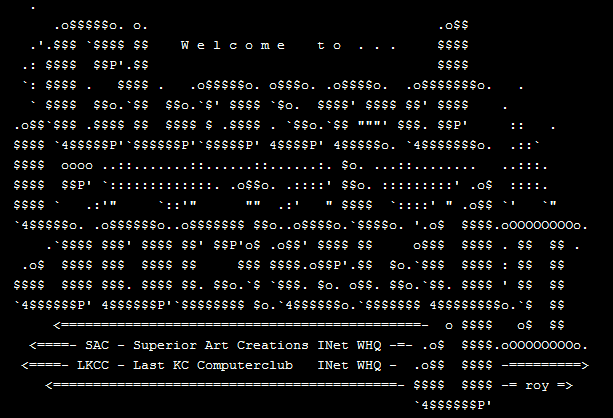
New media art, a genre encompassing works created using electronic media technologies, includes virtual art, computer graphics, computer animation, digital art, interactive art, sound art, Internet art, video games, robotics, 3D printing, immersive installations, and cyborg art. This artistic category is defined by the nature of the artwork itself, distinguishing it from traditional visual arts like architecture, painting, or sculpture.
Originating from the intersection of science, art, and performance, new media art frequently explores themes such as databases, political and social activism, Afrofuturism, feminism, and identity. A pervasive characteristic across these works is the integration of novel technologies. The focus on the artistic medium is a hallmark of much contemporary art, leading many art schools and universities to establish undergraduate majors in "New Genres" or "New Media," alongside an increasing number of international graduate programs.
New media art often incorporates varying levels of interaction between the artwork and its observer, or between the artist and the audience, akin to performance art. However, theorists and curators have observed that such interactivity is not exclusive to new media art; instead, it represents a shared characteristic found across diverse contemporary art practices. These perspectives highlight cultural practices that evolve alongside new technological platforms, prompting a re-evaluation of the sole emphasis on technological media. Furthermore, the complex curation and preservation requirements of new media art present significant challenges for collecting, installing, and exhibiting these works compared to other artistic mediums. Consequently, numerous cultural centers and museums have been founded to address the specialized demands of new media art.
History
The genesis of new media art can be identified in 19th-century moving image innovations, including the phenakistiscope (1833), the praxinoscope (1877), and Eadweard Muybridge's zoopraxiscope (1879). Throughout the period from the 1900s to the 1960s, diverse manifestations of kinetic and light art, ranging from Thomas Wilfred's 'Lumia' (1919) and 'Clavilux' light organs to Jean Tinguely's self-destructing sculpture, Homage to New York (1960), are considered precursors to new media art.
In his publication, Digital Performance: New Technologies in Theatre, Dance and Performance Art, Steve Dixon posits that Futurism, an early twentieth-century avant-garde art movement, marked the inception of the convergence between technology and performance art. Early practitioners who integrated cutting-edge lighting, film, and projection into their performances include dancers Loïe Fuller and Valentine de Saint-Point. Notably, cartoonist Winsor McCay toured in 1914, performing synchronously with an animated Gertie the Dinosaur. By the 1920s, numerous Cabaret acts had started to incorporate film projection into their presentations.
Robert Rauschenberg's work, Broadcast (1959), which combined three interactive, re-tunable radios with a painting, is recognized as an early instance of interactive art. Concurrently, German artist Wolf Vostell explored the use of television sets in his 1958 installation, *TV De-collages*. Vostell's artistic approach subsequently influenced Nam June Paik, who developed sculptural installations incorporating hundreds of television sets to exhibit distorted and abstract visual content.
The 1970s in Chicago witnessed a significant rise in artists exploring video art and integrating nascent computer technology with established mediums such as sculpture, photography, and graphic design. Many of these innovators were graduate students at The School of the Art Institute of Chicago, including Kate Horsfield and Lyn Blumenthal, who jointly established the Video Data Bank in 1976. Donna Cox, another prominent artist, collaborated with mathematician George Francis and computer scientist Ray Idaszak on the project Venus in Time, which translated mathematical data into 3D digital sculptures, named for their resemblance to Paleolithic Venus figures. In 1982, artist Ellen Sandor and her team at (art)n Laboratory developed PHSCologram, a medium combining photography, holography, sculpture, and computer graphics; her visualization of the AIDS virus notably appeared on the cover of IEEE Computer Graphics and Applications in November 1988. Further advancements occurred in 1989 at the University of Illinois, where Electronic Visualization Laboratory members Carolina Cruz-Neira, Thomas DeFanti, and Daniel J. Sandin collaborated to create CAVE (Cave Automatic Virtual Environment), an early virtual reality immersion system utilizing rear projection.
In 1983, Roy Ascott pioneered the concept of "distributed authorship" through his global telematic project, La Plissure du Texte, presented for Frank Popper's "Electra" exhibition at the Musée d'Art Moderne de la Ville de Paris. The late 1980s saw advancements in computer graphics, while the 1990s brought real-time technologies, alongside the proliferation of the World Wide Web and the Internet. These developments collectively fostered the emergence of diverse new media art forms, including interactive art by Ken Feingold, Lynn Hershman Leeson, David Rokeby, Ken Rinaldo, Perry Hoberman, and Tamas Waliczky; telematic art by Roy Ascott, Paul Sermon, and Michael Bielický; Internet art by Vuk Ćosić and Jodi; virtual and immersive art by Jeffrey Shaw, Maurice Benayoun, and Monika Fleischmann; and large-scale urban installations by Rafael Lozano-Hemmer. Concurrently, the Centre pour l'Image Contemporaine (CIC) in Geneva collaborated with Paris's Centre Georges Pompidou and Cologne's Museum Ludwig to produce the inaugural internet video archive dedicated to new media art.
Concurrently, advancements in biotechnology have enabled artists such as Eduardo Kac to investigate DNA and genetics as an emergent artistic medium.
New media art has been significantly influenced by theoretical frameworks concerning interaction, hypertext, databases, and networks. Key intellectual figures in this domain include Vannevar Bush and Theodor Nelson, while analogous conceptualizations are discernible in the literary contributions of Jorge Luis Borges, Italo Calvino, and Julio Cortázar.
Themes
In their publication New Media Art, Mark Tribe and Reena Jana identified several recurring themes within contemporary new media art, such as computer art, collaboration, identity, appropriation, open sourcing, telepresence, surveillance, corporate parody, intervention, and hacktivism. Maurizio Bolognini, in his book Postdigitale, proposed that new media artists share a fundamental characteristic: a self-referential engagement with emerging technologies, stemming from their immersion in a transformative era shaped by technological evolution.
New media art manifests not as a homogeneous collection of practices, but rather as an intricate domain converging around three primary components: 1) the established art system, 2) scientific and industrial research, and 3) political-cultural media activism. Distinct variations exist among scientist-artists, activist-artists, and technological artists (who are more closely aligned with the art system), encompassing differences in their training, technocultures, and artistic outputs. These distinctions are crucial considerations when analyzing the diverse themes explored within new media art.
Non-linearity is a crucial theme in new media art, particularly for artists such as Jeffrey Shaw and Maurice Benayoun, who create interactive, generative, collaborative, and immersive works. These artists conceptualize non-linearity as a methodology for examining diverse digital projects where content dynamically responds to user engagement. This concept is pivotal because traditional perspectives often condition individuals to perceive information in a linear and unambiguous manner. Contemporary art, however, is evolving beyond this structure, enabling audiences to construct personalized experiences with artworks. Non-linearity characterizes projects that diverge from the conventional linear narratives found in literature, theater, and cinema. Non-linear art typically necessitates audience participation or, at minimum, acknowledges the "visitor's" role in shaping the representation, thereby modifying the presented content. The participatory dimension of new media art, now fundamental for many practitioners, originated from Allan Kaprow's Happenings and has subsequently become a prominent feature of contemporary art, especially with the advent of the Internet.
The internet's inherent interconnectivity and interactivity, alongside the dynamic interplay among corporate, governmental, and public interests that shaped its development, significantly influence much of contemporary new media art.
Databases
A prominent theme within new media art involves the visualization of databases. Leading figures in this domain include Lisa Strausfeld, Martin Wattenberg, and Alberto Frigo. For instance, George Legrady's artwork, "Making Visible the Invisible," exhibited from 2004 to 2014, rendered the typically concealed library metadata of recently borrowed items from the Seattle Public Library on six LCD monitors positioned behind the circulation desk. Database aesthetics appeals to new media artists for at least two reasons: formally, it offers a novel approach to non-linear narratives; and politically, it serves as a mechanism to challenge emerging forms of control and authority.
Political and Social Activism
Numerous new media art projects engage with themes of politics and social consciousness, facilitating social activism through the medium's interactive capabilities. This artistic domain encompasses diverse practices, including "explorations of code and user interface; interrogations of archives, databases, and networks; production via automated scraping, filtering, cloning, and recombinatory techniques; applications of user-generated content (UGC) layers; crowdsourcing ideas on social-media platforms; narrowcasting digital selves on 'free' websites that claim copyright; and provocative performances that implicate audiences as participants".
Afrofuturism
Afrofuturism represents an interdisciplinary genre that investigates the African diaspora experience, primarily within the United States, by critically examining historical narratives and envisioning future possibilities through the lenses of technology, science fiction, and fantasy. Musician Sun Ra, widely regarded as a progenitor of Afrofuturism, posited that a synthesis of technology and music could facilitate humanity's transcendence of societal maladies. His ensemble, The Sun Ra Arkestra, integrated traditional jazz with sound and performance art, pioneering the use of synthesizers in musical performance. The twenty-first century has witnessed a revitalization of Afrofuturist aesthetics and themes, exemplified by artists and collectives such as Jessi Jumanji and Black Quantum Futurism, as well as educational institutions like Black Space in Durham, North Carolina.
Feminism and the Female Experience
Japanese artist Mariko Mori's multimedia installation, Wave UFO (1999–2003), investigated the scientific and perceptual underpinnings of consciousness and neuroscience. Mori's work critiqued the materially reductionist approach often employed in these disciplines, advocating instead for a more holistic methodology that integrates philosophical and humanistic perspectives. Similarly, Swiss artist Pipilotti Rist's immersive video installation, Pour Your Body Out (2008), examined the interplay between beauty and the grotesque within the natural world, linking these themes to the female experience. This expansive 360-degree installation incorporated breast-shaped projectors and circular pink pillows, encouraging viewers to engage in relaxation, meditation, and yoga amidst vibrant visuals and psychedelic audio. American filmmaker and artist Lynn Hershman Leeson's cinematic works delve into themes of identity, technology, and the historical marginalization of women's contributions to technological advancement. Her 1999 film, *Conceiving Ada*, portrays Emmy, a computer scientist and new media artist, who successfully establishes communication through cyberspace with Ada Lovelace, an English pioneer who developed the first computer program in the 1840s using a form of artificial intelligence.
Identity
Originating from outsider art traditions, New Media offers a potent platform for artists to investigate themes of identity and representation. Canadian Indigenous multidisciplinary artists, such as Cheryl L'Hirondelle and Kent Monkman, have integrated concepts of gender, identity, activism, and colonization into their artistic practices. Monkman, a Cree artist, embodies their alter ego, Miss Chief Eagle Testickle, across various mediums including film, photography, painting, installation, and performance art. Monkman characterizes Miss Chief as a manifestation of a two-spirit or non-binary persona, distinct from conventional drag portrayals.
Future of New Media Art
The advent of 3D printing has established a novel connection within new media art, bridging the virtual and physical realms. This technological advancement enables artists to integrate the computational foundations of new media with the tangible forms of traditional sculpture. Jonty Hurwitz stands as a pioneer in this domain, having produced the inaugural documented anamorphosis sculpture utilizing this method.
Longevity
The inherent obsolescence of technologies employed in new media art, including film, magnetic tapes, web browsers, software, and operating systems, presents significant challenges for preserving these artworks beyond their initial production period. Consequently, ongoing research initiatives are dedicated to enhancing the preservation and documentation strategies for this vulnerable media arts heritage.
Various preservation methodologies are employed, encompassing the migration of artworks from obsolete to contemporary media, the digital archiving of media, and the utilization of emulators to sustain works reliant on outdated software or operating system environments.
By the mid-1990s, the challenges associated with digitally storing artworks gained prominence. Digital art, encompassing moving images, multimedia, interactive programs, and computer-generated creations, possesses distinct characteristics compared to physical artworks like oil paintings and sculptures. Unlike analog technologies, digital files can be replicated onto new storage media without any degradation of their content. However, a primary challenge in digital art preservation stems from the continuous evolution of file formats. Historical transitions illustrate this, moving from 8-inch floppy disks to 5.25-inch floppies, then to 3-inch diskettes, CD-ROMs, and subsequently DVDs to flash drives. The impending obsolescence of flash drives and portable hard drives is anticipated, as data storage increasingly shifts towards online cloud-based solutions.
Museums and galleries traditionally excel at presenting and preserving physical artwork. However, new media art presents significant challenges to the established methods of documentation, collection, and preservation within the art world. As technology progresses, the fundamental nature and structure of art organizations and institutions face ongoing disruption. This necessitates a reevaluation of traditional curatorial and artistic roles, advocating for a transition towards novel collaborative paradigms for artistic production and presentation.
Preservation
New media art incorporates diverse mediums, each demanding distinct preservation strategies. Given the extensive technical complexities, no single set of established digital preservation guidelines adequately addresses the full scope of new media art. Within the Digital Curation Centre's digital curation lifecycle model, new media art is classified as a "complex digital object," necessitating specialized or entirely unique preservation methodologies. The preservation of complex digital objects particularly emphasizes the intrinsic interconnectedness of their constituent components.
Education
New Media programs enable students to familiarize themselves with contemporary forms of creative expression and communication. Students in these programs develop the ability to discern the genuinely novel aspects of various technologies. Given that scientific advancements and market forces continuously introduce new tools and platforms for artists and designers, students are trained to critically evaluate emerging technological platforms and contextualize them within broader frameworks of sensation, communication, production, and consumption.
Pursuing a bachelor's degree in New Media primarily involves practical experience in constructing interactive experiences that integrate both nascent and established technologies and narrative structures. By developing projects across diverse media, students cultivate technical proficiencies, refine their critical and analytical vocabularies, and become conversant with historical and contemporary artistic precedents.
Numerous Bachelor's and Master's degree programs in the United States offer specializations in areas such as Media Art, New Media, Media Design, Digital Media, and Interactive Arts.
Theorists and Historians
Prominent art theorists and historians engaged in this domain include:
Categories
The designation "New Media Art" typically encompasses disciplines such as:
Artists
Cultural Centers
- Australian Network for Art and Technology
- Center for Art and Media Karlsruhe
- Centre pour l'Image Contemporaine
- Daniel Langlois Foundation
- Eyebeam Art and Technology Center
- FACT Liverpool
- Foundation for Art and Creative Technology
- Gray Area Foundation for the Arts
- Harvestworks
- InterAccess
- Los Angeles Center for Digital Art (LACDA)
- Netherlands Media Art Institute
- NTT InterCommunication Center
- Rhizome (organization)
- RIXC
- School for Poetic Computation (SFPC)
- School of the Art Institute of Chicago
- Squeaky Wheel: Film and Media Arts Center
- V2 Institute for the Unstable Media
- WORM
References
References
Wardrip-Fruin, Noah; Montfort, Nick, eds. (2003). The New Media Reader. The MIT Press. ISBN 0-262-23227-8.
- Wardrip-Fruin, Noah; Montfort, Nick, eds. (2003). The New Media Reader. The MIT Press. ISBN 0-262-23227-8.Benayoun, Maurice (July 2011). The Dump, 207 Hypotheses for Committing Art (in French). France: Fyp éditions. ISBN 978-2-916571-64-5.Murray, Timothy; de Kerckhove, Derrick; Grau, Oliver; Stiles, Kristine; Barrière, Jean-Baptiste; Moulon, Dominique; Balpe, Jean-Pierre (2011). Maurice Benayoun - Open Art (in French). Nouvelles éditions Scala. ISBN 978-2-35988-046-5.Bush, Vannevar (1945-07-01). "As We May Think". The Atlantic. Archived from the original on 2012-08-22.Ascott, Roy (2003). Telematic Embrace: Visionary Theories of Art, Technology, and Consciousness. Berkeley, Calif.: Univ of California Press. ISBN 978-0-520-21803-1.Barreto, Ricardo; Perissinotto, Paula (2002). The Culture of Immanence. INTERNET ART FILE 2002, São Paulo, IMESP. ISBN 85-7060-038-0. Archived from the original (DOC) on 2008-06-25.
- Bourriaud, Nicolas (2020) [1998]. Relational Aesthetics. Les presses du réel. ISBN 978-2-37896-371-2.Buci-Glucksmann, Christine (1999). "L'art à l'époque virtuel." In Olive, Jean-Paul; Amey, Claude (eds.), Les frontières esthétiques de l'art (in French). Paris Montréal (Québec): Editions L'Harmattan. ISBN 2-7384-8262-7.Buci-Glucksmann, Christine (2002). La folie du voir: Une esthétique du virtuel (in French). Paris: Editions Galilée. ISBN 978-2-7186-0599-9.Catricalà, Valentino (2015-01-01). "Media Art: Towards a New Definition of Arts in the Age of Technology." Academia.edu.Graham, Beryl; Cook, Sarah (2010). Rethinking Curating: Art After New Media. Cambridge: MIT Press (MA). ISBN 978-0-262-01388-8."Curating New Media – Beryl Graham & Sarah Cook on the challenges of exhibiting massless media." Art Monthly, no. 261 (November 2002).Cook, Sarah (2010). A Brief History of Curating New Media Art – Conversations with Curators. Berlin: Damaris Publishing. ISBN 978-3-941644-20-5.Cook, Sarah (2010). A Brief History of Working with New Media Art – Conversations with Artists. Berlin: The Green-Box-Kunst-Ed. ISBN 978-3-941644-21-2.Fleischmann, Monika; Reinhard, Ulrike (2004). Digitale Transformationen : Medienkunst als Schnittstelle von Kunst, Wissenschaft, Wirtschaft und Gesellschaft [Digital Transformations – Media Art as at the Interface between Art, Science, Economy and Society] (in German). Heidelberg: WHOIS Verlags- & Vetriebsgesellschaft. ISBN 978-3-934013-38-4.Fleischmann, Monika; Strauss, Wolfgang, eds. (2001). CAST01//Living in Mixed Realities. ISSN 1618-1387.Shapiro, Alan N. (2010). "Preface." In Gatti, Gianna Maria (ed.), The Technological Herbarium. Avinus Verlag. ISBN 978-3-86938-012-4.Gere, Charlie (2002). Digital Culture. London: Reaktion Books. ISBN 978-1-86189-143-3.Brown, Paul; Gere, Charlie; Lambert, Nicholas; Mason, Catherine, eds. (2008). White Heat Cold Logic: British Computer Art 1960–1980. MIT Press/Leonardo Books. ISBN 978-0-262-02653-6.
- Grau, Oliver (2003). Virtual Art: From Illusion to Immersion. Cambridge (Mass.): Mit Press. ISBN 0-262-07241-6.Grau, Oliver (2007). MediaArtHistories. Cambridge, Mass: MIT Press. ISBN 978-0-262-07279-3.Hansen, Mark (2004). New Philosophy for New Media. Cambridge, Mass.: MIT Press. ISBN 978-0-262-08321-8.Higgins, Dick (February 1966). "Intermedia." The Something else Newsletter, §34§(1).Manovich, Lev (2002). The Language of New Media. Cambridge, Mass.: MIT Press. ISBN 0-262-63255-1.Manovich, Lev (2002). "Ten Key Texts on Digital Art: 1970-2000." Leonardo, 35(5): 567–575. MIT Press - Journals. doi:10.1162/002409402320774385. ISSN 0024-094X. S2CID 57566892.Manovich, Lev (2003). "New Media from Borges to HTML" (PDF). In Wardrip-Fruin, Noah; Montfort, Nick (eds.), The New Media Reader. Cambridge, Mass: MIT Press. ISBN 978-0-262-23227-2.Mondloch, Kate (2010). Screens: Viewing Media Installation Art. Minneapolis, Minn: University of Minnesota Press. ISBN 978-0-8166-6522-8.Paul, Christiane (2003). Digital Art. London: Thames & Hudson. ISBN 0-500-20367-9.Paul, Christiane (2007-01-27). "Challenges for a Ubiquitous Museum: Presenting and Preserving New Media." NeMe.The New Media Reader. MIT Press.
- Popper, Frank (2007). From Technological to Virtual Art. MIT Press/Leonardo Books.
- Popper, Frank (1997). Art of the Electronic Age. Thames & Hudson.
- Shanken, Edward (2009-02-09). "Writings on Contemporary Art and New Media."Art and Electronic Media. London; New York: Phaidon. ISBN 978-0-7148-4782-5.New Media Art. Basic Art Series. Taschen. ISBN 978-3-8365-1413-2.Leonardo, 36 (5): 389–396. MIT Press - Journals. doi:10.1162/002409403771048191. ISSN 0024-094X. S2CID 263470200.About Interface: Actualisation and Totality." University of Southampton.
- Wands, Bruce (2006). Art of the Digital Age. London: Thames and Hudson. ISBN 0-500-23817-0.Metacreation: Art and Artificial Life. Cambridge, MA; London: MIT Press. ISBN 0-262-73176-2.NeMe.Digital Arts: Trends, Artists, Venues, and Festivals (Arts Numériques: Tendances, Artistes, Lieux et Festivals). M21 Editions. ISBN 978-2-916260-33-4.Artistic Practices and the Internet in the Era of Social Networks (Prácticas artísticas e internet en la época de las redes sociales). Ediciones Akal, S.A. ISBN 978-84-460-3517-6.University of Illinois at Urbana-Champaign.
- Hiekel, Jörn Peter (2009). Networking: New Music in the Field of Tension Between Science and Technology (Vernetzungen: Neue Musik im Spannungsfeld von Wissenschaft und Technik). Institut für Neue Musik und Musikerziehung Darmstadt. OCLC 320198124.Revisualizing Visual Culture. Routledge. doi:10.4324/9781315606286. ISBN 978-1-317-06349-0.Afterimage, 36 (4): 14–19. doi:10.1525/aft.2009.36.4.15.Rhizome.Hyperallergic.After Art. Princeton: Princeton University Press. ISBN 978-0-691-15044-4.Digital Prohibition: Piracy and Authorship in New Media Art. London: Continuum. ISBN 978-1-4411-0610-0.In "Imago. Journal of Film and Media Studies" (in Italian).Thinking Through Digital Media: Transnational Environments and Locative Places. Palgrave Macmillan. ISBN 978-1-137-43362-6.Text as Ride: Electronic Literature and New Media Art. Computing Literature. West Virginia University Press. ISBN 9781943665372. OCLC 959956315.New Media Futures: The Rise of Women in the Digital Arts. University of Illinois Press. ISBN 978-0-252-05018-3.Source: TORIma Academy Archive
- Bourriaud, Nicolas (2020) [1998]. Relational Aesthetics. Les presses du réel. ISBN 978-2-37896-371-2.Buci-Glucksmann, Christine (1999). "L'art à l'époque virtuel." In Olive, Jean-Paul; Amey, Claude (eds.), Les frontières esthétiques de l'art (in French). Paris Montréal (Québec): Editions L'Harmattan. ISBN 2-7384-8262-7.Buci-Glucksmann, Christine (2002). La folie du voir: Une esthétique du virtuel (in French). Paris: Editions Galilée. ISBN 978-2-7186-0599-9.Catricalà, Valentino (2015-01-01). "Media Art: Towards a New Definition of Arts in the Age of Technology." Academia.edu.Graham, Beryl; Cook, Sarah (2010). Rethinking Curating: Art After New Media. Cambridge: MIT Press (MA). ISBN 978-0-262-01388-8."Curating New Media – Beryl Graham & Sarah Cook on the challenges of exhibiting massless media." Art Monthly, no. 261 (November 2002).Cook, Sarah (2010). A Brief History of Curating New Media Art – Conversations with Curators. Berlin: Damaris Publishing. ISBN 978-3-941644-20-5.Cook, Sarah (2010). A Brief History of Working with New Media Art – Conversations with Artists. Berlin: The Green-Box-Kunst-Ed. ISBN 978-3-941644-21-2.Fleischmann, Monika; Reinhard, Ulrike (2004). Digitale Transformationen : Medienkunst als Schnittstelle von Kunst, Wissenschaft, Wirtschaft und Gesellschaft [Digital Transformations – Media Art as at the Interface between Art, Science, Economy and Society] (in German). Heidelberg: WHOIS Verlags- & Vetriebsgesellschaft. ISBN 978-3-934013-38-4.Fleischmann, Monika; Strauss, Wolfgang, eds. (2001). CAST01//Living in Mixed Realities. ISSN 1618-1387.Shapiro, Alan N. (2010). "Preface." In Gatti, Gianna Maria (ed.), The Technological Herbarium. Avinus Verlag. ISBN 978-3-86938-012-4.Gere, Charlie (2002). Digital Culture. London: Reaktion Books. ISBN 978-1-86189-143-3.Brown, Paul; Gere, Charlie; Lambert, Nicholas; Mason, Catherine, eds. (2008). White Heat Cold Logic: British Computer Art 1960–1980. MIT Press/Leonardo Books. ISBN 978-0-262-02653-6.