
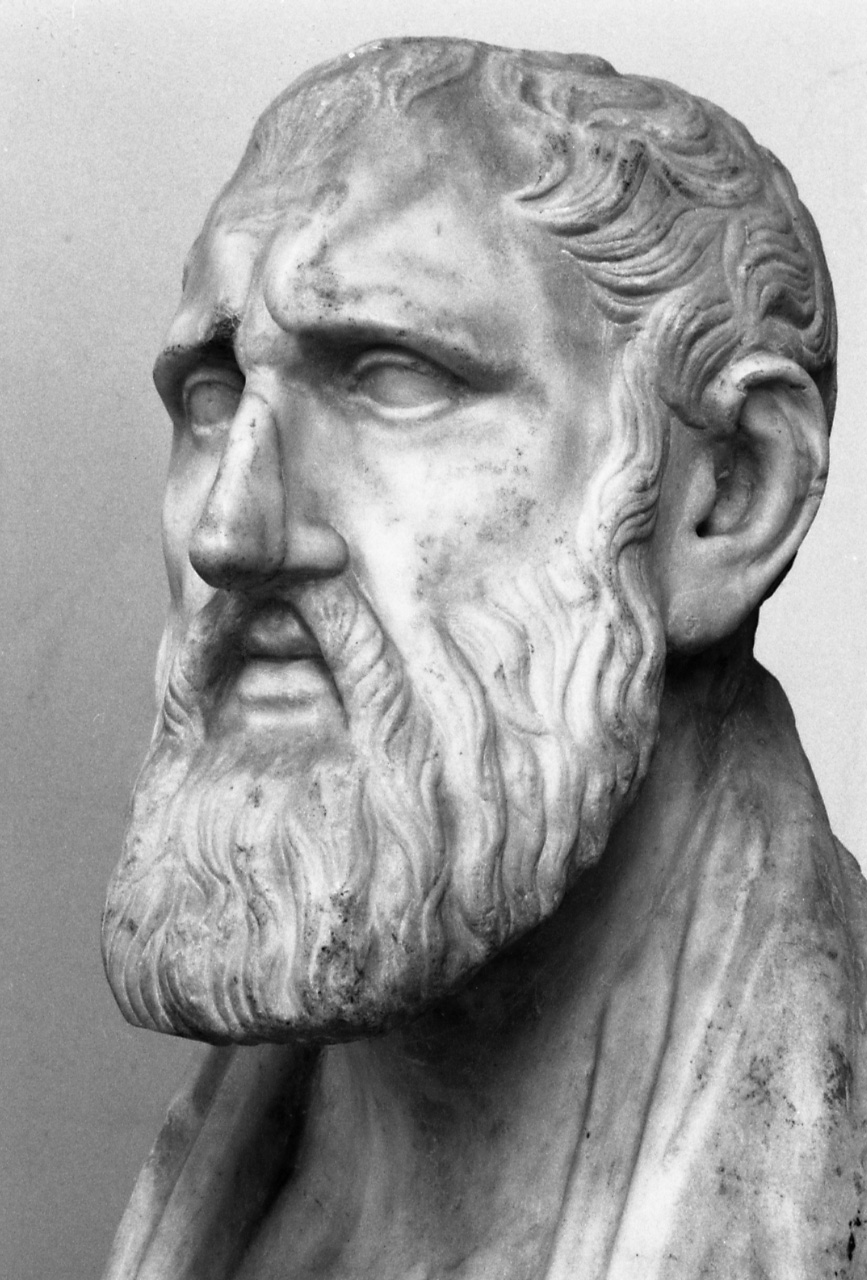
Stoicism is a philosophical school and a practical methodology for life, stressing consistent self-discipline and ethical development, which emerged during the Hellenistic era in ancient Greece and gained significant traction throughout the Roman Imperial period. Adherents of ancient Stoicism posited that the cosmos functioned in accordance with logos, or universal reason, thereby offering a cohesive worldview founded upon principles of rational inquiry, monistic metaphysics, and naturalistic morality. These foundational tenets collectively define virtue, which the Stoics considered indispensable for achieving a 'well-reasoned existence'.
Stoicism is a philosophical movement and practical guide to living, emphasizing daily self-discipline and moral improvement, which originated in the Hellenistic period of ancient Greece and proliferated well into the Roman Imperial period. The ancient Stoics believed that the universe operated according to reason, or logos, providing a unified account of the world, constructed from ideals of rational discourse, monistic physics, and naturalistic ethics. These three ideals constitute virtue, which is necessary for the Stoic goal of 'living a well-reasoned life'.
Stoic philosophy is conventionally categorized into three interdependent branches: logic, physics, and ethics. Stoic logic emphasizes rigorous, intentional reasoning, encompassing the analysis of propositions, arguments, and the discernment between veracity and falsity. The significance of philosophical discourse is central to Stoicism, extending to the concept of the mind engaging in internal rational dialogue. Stoic ethics prioritizes virtue as the supreme good, fostering emotional regulation, a composed approach to problem-solving, and sound rational judgment to achieve enduring prosperity (eudaimonia). Conversely, emotions such as passions, anxieties, and insecurities are regarded as erroneous responses requiring regulation through disciplined self-practice. Among the various schools of ancient Western philosophy, Stoicism asserted the most comprehensive claim to systematicity. A core tenet of Stoic ethics involved living congruently with nature, implying the alignment of one's existence with individual reason and the universe's inherent rational structure.
Stoicism was established by Zeno of Citium in the ancient Athenian Agora approximately 300 BCE, and prospered across the Greco-Roman sphere until the third century CE. It developed from the Cynic philosophical tradition and gained widespread recognition through public instruction conducted at the Stoa Poikile, a distinctive painted colonnade. Notable adherents included the Roman Emperor Marcus Aurelius.
Alongside Aristotelian term logic, the propositional logic system formulated by the Stoics represented one of the two principal logical frameworks of the classical era. This system was primarily constructed and refined by Chrysippus, who served as the third leader of the Stoic school during the third century BCE. Chrysippus's logical approach diverged from term logic by focusing on the analysis of propositions instead of individual terms. Stoicism subsequently declined following the establishment of Christianity as the state religion in the fourth century CE, though Gnosticism persisted and integrated certain aspects of Stoic and Platonic thought.
Subsequently, Stoicism has undergone periods of resurgence, particularly during the Renaissance (manifesting as Neostoicism) and in the modern epoch. Its philosophical impact reached prominent Roman intellectuals such as Seneca and Epictetus, and it later informed both Christian thought and the Neostoicism movement of the Renaissance. Furthermore, Stoicism significantly influenced later advancements in logic and served as an inspiration for contemporary cognitive therapies.
History
The appellation Stoicism originates from the Stoa Poikile (Ancient Greek: ἡ ποικίλη στοά), or 'painted porch,' a colonnade adorned with mythological and historical battle depictions situated on the northern periphery of the Athenian Agora. It was here that Zeno of Citium and his disciples convened to deliberate their philosophical concepts towards the close of the fourth century BCE. In contrast to the Epicureans, Zeno opted to disseminate his philosophy within a public forum. Initially, the philosophy was referred to as Zenonism. Nevertheless, this designation was promptly abandoned, likely due to the Stoics' reluctance to attribute perfect wisdom to their founders and to mitigate the potential for the philosophy to devolve into a personality cult.
The Stoic philosophical tradition maintained its prominence for several centuries, spanning from the late fourth century BCE through late antiquity. Zeno's philosophical framework evolved from Cynic principles, which were introduced to him by Crates of Thebes; the Cynic school's progenitor, Antisthenes, had been a student of Socrates. Chrysippus, who succeeded Cleanthes as the school's head, emerged as Zeno's most significant successor and was instrumental in shaping the philosophy now recognized as Stoicism. Stoicism attained preeminent popularity among the educated classes throughout the Hellenistic world and the Roman Empire, leading Gilbert Murray to observe that "nearly all the successors of Alexander [...] professed themselves Stoics". Subsequent Roman Stoics increasingly prioritized practical ethics and the development of internal moral fortitude in daily existence.
Throughout its history, the Stoic school evolved through successive generations of philosophers and disseminated extensively across the Hellenistic and Roman civilizations.
The history of Stoicism is typically categorized into three distinct periods by scholars: the Early Stoa, spanning from Zeno's establishment of the school to Antipater; the Middle Stoa, encompassing figures such as Panaetius and Posidonius; and the Late Stoa, featuring prominent thinkers like Musonius Rufus, Seneca, Epictetus, and Marcus Aurelius. Regrettably, no complete works from the initial two phases of Stoicism have been preserved. Consequently, extant Stoic literature is primarily limited to Roman-era texts originating from the Late Stoa.
Logic
Within Stoic philosophy, logic (logike) constituted the branch dedicated to the examination of reason (logos). Attaining a fulfilling and virtuous life, according to Stoic doctrine, necessitated rigorous logical reasoning. They contended that comprehending ethics was unattainable without a foundational grasp of logic. As articulated by Inwood, the Stoics posited that:
Logic helps a person see what is the case, reason effectively about practical affairs, stand his or her ground amid confusion, differentiate the certain from the probable, and so forth.
For the Stoics, logic encompassed an expansive domain of knowledge, incorporating the study of language, grammar, rhetoric, and epistemology. Nevertheless, these disciplines were intrinsically interconnected, and the Stoics formulated their logical system (often termed "dialectic") in conjunction with their theories of language and epistemology.
The Stoic logical tradition emerged in the 4th century BCE, drawing its origins from the distinct philosophical school known as the Megarian school. Specifically, two prominent dialecticians from this school, Diodorus Cronus and his student Philo, were instrumental in developing theories concerning modalities and conditional propositions. Zeno of Citium, the founder of Stoicism, undertook studies with the Megarians and is reported to have been a contemporary pupil of Philo.
Nevertheless, the most pivotal figure in the evolution of Stoic logic was Chrysippus of Soli (c. 279 – c. 206 BCE), who served as the third leader of the Stoic school. Chrysippus significantly influenced the form of Stoic logic as understood today, establishing a comprehensive system of propositional logic. Regrettably, Chrysippus's original logical treatises are almost entirely lost; consequently, his intricate system must be reconstructed from fragmented and incomplete descriptions found in the writings of subsequent scholars.
Assertibles
In Stoic logic, the fundamental unit is an assertible (axiomata), defined as a proposition that is definitively either true or false, and which either affirms or denies a state of affairs. Illustrative examples of assertibles include statements such as "it is night," "it is raining this afternoon," and "no one is walking." The truth-value of assertibles is contingent upon the context of their utterance; for instance, the assertible "it is night" holds true exclusively during nighttime hours. The Stoics systematically classified these elementary assertibles based on their affirmative or negative nature, and whether they were definite, indefinite, or both.
Compound assertibles
Complex assertibles are constructed from simpler ones by employing logical connectives that articulate relationships of choice and consequence, exemplified by phrases like "if...then," "either...or," and "not both." Chrysippus is credited with introducing the three primary categories of connectives: the conditional (if), the conjunctive (and), and the disjunctive (or). A standard conditional statement is structured as "if p then q"; a conjunction as "both p and q"; and a disjunction as "either p or q." Notably, the Stoic use of or was exclusive, contrasting with the inclusive 'or' commonly employed in contemporary formal logic. These connectives are further combined with the particle not to express negation. Consequently, the conditional can manifest in four distinct forms: 1) "If p, then q"; 2) "If not p, then q"; 3) "If p, then not q"; and 4) "If not p, then not q." Subsequent Stoics introduced additional connectives, including the pseudo-conditional, structured as "since p then q," and the causal assertible, expressed as "because p then q".[a] A comparative (or dissertive) form also existed: "more/less (likely) p than q."
Modal assertibles
Assertibles can also be distinguished by their modal properties[b]—specifically, whether they are possible, impossible, necessary, or non-necessary. The Stoics developed this concept building upon an earlier Megarian discourse initiated by Diodorus Cronus. Diodorus defined possibility in a manner that appeared to endorse a form of fatalism. His definition of possible was "that which either is or will be true," implying that no possibilities remain perpetually unrealized; whatever is possible will eventually manifest as true. In contrast, his student Philo rejected this view, defining possible as "that which is capable of being true by the proposition's own nature." Under Philo's definition, a statement such as "this piece of wood can burn" remains possible, even if the wood were to spend its entire existence submerged at the bottom of the ocean. Chrysippus, however, adopted a position of causal determinism, asserting that genuine causes invariably produce their effects and that all phenomena arise through this mechanism. Nevertheless, he was not a logical determinist or fatalist, as he sought to differentiate between possible and necessary truths. Consequently, Chrysippus established an intermediate stance between Diodorus and Philo, integrating elements from both their modal frameworks. Chrysippus's Stoic modal definitions were articulated as follows:
Arguments
Within Stoic logic, an argument is conceptualized as a composite structure or system comprising premises and a conclusion. A representative Stoic syllogism is exemplified by: "If it is day, it is light; It is day; Therefore it is light." This structure features a non-simple assertible as its first premise ("If it is day, it is light") and a simple assertible as its second premise ("It is day"). Stoic logic further employs propositional variables to generalize arguments sharing the same form. In a more abstract representation, this argument would be expressed as: "If p, then q; p; Therefore q."
Indemonstrable Arguments
Chrysippus enumerated five fundamental argument forms, termed indemonstrables,[c] to which all other arguments are ultimately reducible:
These five indemonstrable arguments permit numerous variations. For instance, the assertibles within the premises can exhibit greater complexity. The following syllogism serves as a valid illustration of the second indemonstrable (modus tollens): "if both p and q, then r; not r; therefore not: both p and q." Similarly, negation can be incorporated into these arguments. A valid instance of the fourth indemonstrable (strong modus tollendo ponens or exclusive disjunctive syllogism) is: "either [not p] or q; not [not p]; therefore q." When the principle of double negation is applied, this is equivalent to: "either [not p] or q; p; therefore q."
Complex Arguments
Many other arguments, however, do not conform to the structure of the five indemonstrables, necessitating a demonstration of their reducibility to one of these five types. Sextus Empiricus reports a straightforward example of Stoic reduction: "if both p and q, then r; not r; but also p; Therefore not q." This argument can be reduced to two distinct indemonstrable arguments of the second and third types: "if both p and q, then r; not r; therefore not: both p and q; not: both p and q; p; therefore not q."
The Stoics posited that complex syllogisms could be simplified to the indemonstrables through the application of four foundational rules, or themata. Of these four themata, only two have been preserved. The first thema, known as a rule of antilogism, states: "When from two [assertibles] a third follows, then from either of them together with the contradictory of the conclusion the contradictory of the other follows." The third thema was a cut rule, enabling the reduction of chain syllogisms to simpler forms.[e] The precise significance of these rules remains somewhat ambiguous. In the 2nd century BCE, Antipater of Tarsus reportedly introduced a more streamlined methodology involving fewer themata, though specific details regarding this approach are scarce.
Paradoxes
Stoic logical training encompassed not only the identification of valid inferences but also the systematic enumeration and refutation of fallacious arguments, including the analysis of paradoxes. These paradoxes posed significant challenges to fundamental Stoic logical principles, such as the concepts of truth and falsehood. Chrysippus, for instance, extensively examined the Liar paradox, which poses the question: "A man states, 'I am lying'; is this statement true or false?" This paradox creates a recursive dilemma: if the man's statement is true, he is indeed lying, which implies his statement is false; conversely, if he is lying, his statement is not true, leading back to the initial premise. Another notable paradox, the Sorites paradox or "Heap," questions the precise point at which individual grains of wheat accumulate to form a heap, thereby challenging the binary notion of truth or falsehood by introducing the concept of vagueness. Through the mastery of such paradoxes, the Stoics aimed to refine their rational faculties, thereby facilitating ethical deliberation, enabling robust and confident argumentation, and ultimately guiding them toward truth.
Categories
The Stoics posited that all existing entities (ὄντα), though not all conceptual "things" (τινά), possess a material nature. In addition to these material beings, they recognized four incorporeal entities (asomata): time, place, void, and the sayable. These incorporeals were considered to merely 'subsist,' a status explicitly denied to universals. Consequently, the Stoics adopted Anaxagoras's theory, also embraced by Aristotle, which suggests that an object's heat derives from the presence of a portion of a universal "heat body" within it. However, unlike Aristotle, the Stoics extended this principle to encompass all incidental properties. For example, an object's redness would be attributed to the incorporation of a segment of a universal "red body" into its composition.
They articulated a system comprising four distinct categories:
- Substance (ὑποκείμενον): This refers to the foundational, undifferentiated primary matter (ousia) from which all phenomena are constituted.
- Quality (ποιόν): This describes the specific organization of matter that defines an individual object; in Stoic physics, it is embodied by a physical ingredient, pneuma (air or breath), which imparts form to matter.
- Somehow disposed (πως ἔχον): This category encompasses particular attributes that describe an object's state or configuration, such as its size, shape, action, or posture.
- Somehow disposed in relation to something (πρός τί πως ἔχον): This pertains to characteristics that define an object's relationship to other phenomena, including its spatial and temporal position relative to other entities.
Jacques Brunschwig offers a straightforward illustration of the Stoic categories in practical application:
I am a certain lump of matter, and thereby a substance, an existent something (and thus far that is all); I am a man, and this individual man that I am, and thereby qualified by a common quality and a peculiar one; I am sitting or standing, disposed in a certain way; I am the father of my children, the fellow citizen of my fellow citizens, disposed in a certain way in relation to something else.
Epistemology
According to Stoic philosophy, knowledge is acquired through the rational processing of sensory impressions (phantasiai) received by the mind. The mind possesses the capacity to evaluate (συγκατάθεσις, synkatathesis)—either affirming or rejecting—an impression, thereby enabling the differentiation between accurate and erroneous representations of reality. While some impressions may elicit immediate assent, others may only achieve varying degrees of tentative acceptance, which are categorized as belief or opinion (doxa). Genuine comprehension and conviction (katalepsis) are attainable exclusively through the exercise of reason. Ultimate certainty and true knowledge (episteme), the pinnacle of achievement for the Stoic sage, are realized only when a conviction is corroborated by the collective judgment of humanity and the expertise of one's peers.
Physics
Stoic philosophy posits the Universe as a material, rational substance, identified as logos, which is fundamentally divided into two components: the active and the passive. The passive element constitutes matter itself, while the active substance is an intelligent aether or primordial fire. This active principle, referred to as the logos or anima mundi, permeates and animates the entire Universe, acting upon the passive matter. Conceived as material, this active substance is frequently equated with God or Nature. The Stoics also introduced the concept of seminal reason ("logos spermatikos"), representing the universal law of generation and the active rational principle operating within inanimate matter. Furthermore, human beings are believed to possess a fragment of this divine logos, which embodies the primordial Fire and reason governing and sustaining the cosmos. Consequently, all phenomena are subject to the immutable laws of Fate, as the Universe operates in accordance with its inherent nature and the nature of the passive matter it governs.
Stoicism does not propose a definitive origin or ultimate cessation for the Universe. Instead, the current cosmic order is understood as one phase within an ongoing cycle, preceded by an infinite succession of Universes that were destined for destruction through "Ekpyrosis" (conflagration) and subsequent re-creation, and which will be followed by an equally infinite series of future Universes.
Ethics
For Stoic philosophers, ethics constituted the foundational element of their philosophical system, primarily addressing the question of how individuals ought to conduct their lives in harmony with reason and the natural order.
Alongside Aristotelian ethics, the Stoic tradition stands as a seminal framework within virtue ethics. Stoics maintained that the cultivation of virtue alone suffices for the attainment of eudaimonia, or a flourishing life. They delineated the path to this state as one dedicated to the daily practice of the four cardinal virtues—prudence, fortitude, temperance, and justice—in conjunction with living congruently with nature.
A core tenet for which the Stoics are particularly recognized is the assertion that "virtue is the only good" for humanity. External factors such as health, wealth, and pleasure are deemed neither inherently good nor bad (adiaphora), but rather possess value as "material for virtue to act upon." Prominent Stoics, including Seneca and Epictetus, emphasized that since "virtue is sufficient for happiness," a wise individual would exhibit profound emotional resilience in the face of adversity. The Stoics further contended that destructive emotions arise from erroneous judgments, advocating that individuals should strive to cultivate a will (termed prohairesis) that is "in accordance with nature." Consequently, the Stoics believed that an individual's philosophical commitment was best evidenced not by their pronouncements but by their conduct.
Stoic philosophy posits that an individual's actions, thoughts, and reactions are entirely within their sphere of control. Stoic ethics fundamentally aims at enhancing an individual's moral and ethical well-being, encapsulated by the maxim: "Virtue consists in a will that is in agreement with Nature." The bedrock of Stoic ethics is the conviction that true good resides within the state of the soul itself, manifested through wisdom and self-control. For the Stoics, reason entailed employing logic and comprehending the inherent processes of nature—the logos or universal reason—as a mechanism for overcoming detrimental emotions. This principle extends to interpersonal relationships, advocating for freedom from anger, envy, and jealousy, and even promoting the acceptance of enslaved individuals as equals, given that all are products of nature. Despite this emphasis on individual agency, Stoic ethics embraces a deterministic worldview. Regarding those lacking Stoic virtue, Cleanthes famously remarked that the wicked person resembles "a dog tied to a cart, and compelled to go wherever it goes." In stark contrast, a virtuous Stoic would align their will with the cosmic order, thereby remaining, as Epictetus articulated, "sick and yet happy, in peril and yet happy, dying and yet happy, in exile and happy, in disgrace and happy." This perspective simultaneously posits a "completely autonomous" individual will within a universe characterized as "a rigidly deterministic single whole."
Passions
According to the Stoic philosopher Chrysippus, passions are fundamentally evaluative judgments. He posited that a passion represents a disruptive and deceptive mental force, arising from a deficiency in correct reasoning. Stoics applied this term to various common emotions, including anger, fear, and immoderate joy. For instance, an erroneous assessment of a present good leads to delight, whereas lust stems from an incorrect estimation of a future good. Similarly, unfounded apprehensions of evil manifest as distress concerning the present or fear regarding the future. The exemplary Stoic, conversely, would appraise matters based on their intrinsic worth, recognizing that passions are not inherent to human nature. Achieving freedom from these passions signifies a state of self-sufficient happiness, eliminating fear—as unreason is the sole evil—and precluding anger, since external agents cannot inflict harm.
Stoic philosophy categorized passions into four primary divisions: distress, pleasure, fear, and lust. A compilation of the Stoic definitions for these passions is documented in Chrysippus's treatise On Passions (translated by Long & Sedley, page 411, with modifications).
- Distress (lupē): Defined as an irrational contraction, or a novel conviction that an undesirable situation is currently present, prompting individuals to believe that despondency is appropriate.
- Fear (phobos): Characterized as an irrational aversion, or the act of avoiding an anticipated peril.
- Lust (epithumia): Described as an irrational desire, or the pursuit of something perceived as a future good but which is, in actuality, detrimental.
- Delight (hēdonē): An irrational expansion, or a new belief that a beneficial circumstance is currently present, leading individuals to consider elation as a fitting response.
Among these passions, distress and delight pertain to present emotional states, while fear and lust are directed towards future prospects. Consequently, there are two fundamental states concerning the anticipation of good and evil, further categorized by their temporal orientation (present or future). Numerous specific emotional states were subsequently classified under these distinct passion headings:
- Distress: Encompasses envy, rivalry, jealousy, compassion, anxiety, mourning, sadness, troubling, grief, lamenting, depression, vexation, and despondency.
- Fear: Includes sluggishness, shame, fright, timidity, consternation, pusillanimity, bewilderment, and faintheartedness.
- Lust: Comprises anger, rage, hatred, enmity, wrath, greed, and longing.
- Delight: Consists of malice, rapture, and ostentation.
The Stoic ideal of the wise person (sophos) is characterized by freedom from passions, a state known as apatheia or impassivity. Rather than being devoid of emotion, the sage experiences 'good feelings' (eupatheia), which are distinguished by their clarity and rationality. These emotional impulses are neither excessive nor diminished; instead, they represent correctly reasoned emotions. The Stoics categorized these good feelings under three main headings: joy (chara), wish (boulesis), and caution (eulabeia). For instance, when a genuine good is present, the wise individual experiences an elevation of the soul, termed joy (chara). The Stoics further delineated these good feelings into subcategories:
- Joy: Includes enjoyment, cheerfulness, and good spirits.
- Wish: Encompasses good intent, goodwill, welcoming, cherishing, and love.
- Caution: Comprises moral shame and reverence.
Suicide
Stoic philosophy deemed suicide permissible for the wise individual under specific conditions that would impede a virtuous life, such as succumbing to severe pain or debilitating disease. Conversely, in other contexts, suicide was generally regarded as an abandonment of one's societal obligations. Plutarch, for instance, recounts that Cato's adherence to Stoic principles would have been compromised by living under tyranny, thereby impairing his self-consistency (constantia) and his capacity for honorable moral decisions.
Legacy
For approximately five centuries, Stoic logic stood as one of the two preeminent logical systems. Chrysippus's logical framework was frequently debated in conjunction with Aristotle's, and it potentially held greater prominence given Stoicism's status as the prevailing philosophical school. While contemporary analysis often views Aristotle's term logic and Stoic propositional logic as complementary, historically, they were occasionally perceived as competing systems.
Neoplatonism
During late antiquity, the Stoic school experienced a decline, leading the Neoplatonists, the final pagan philosophical tradition, to integrate Aristotelian logic into their framework. Although Plotinus had critiqued both Aristotle's and the Stoics' Categories, his disciple Porphyry subsequently championed Aristotle's system. Porphyry rationalized this defense by asserting that these categories should be understood purely as linguistic expressions rather than as fundamental metaphysical entities. This perspective finds partial corroboration in Aristotle's own treatise, The Categories. Boethius's endorsement of Porphyry's interpretation subsequently facilitated its adoption within Scholastic philosophy. Consequently, original Stoic logical texts largely perished, with only fragmented elements of Stoic logic being preserved in the works of Boethius and other later commentators, thereby transmitting an incomplete understanding to the Middle Ages. While Peter Abelard redeveloped propositional logic in the 12th century, by the mid-15th century, the prevailing logical study was a simplified form of Aristotelian logic. Comprehensive knowledge of Stoic logic as a distinct system remained lost until the 20th century, when logicians conversant with modern propositional calculus re-evaluated its ancient expositions.
Christianity
Although the Church Fathers initially categorized Stoicism as a "pagan philosophy," early Christian authors nonetheless incorporated several core Stoic philosophical concepts. Notable examples include the terms "logos," "virtue," "Spirit," and "conscience." Both Stoicism and Christianity affirm an intrinsic freedom despite external circumstances, a conviction in humanity's connection to Nature or God, an acknowledgment of humankind's inherent depravity—or "persistent evil"—and the transient nature and ultimate futility of material possessions and worldly attachments. Both traditions advocate for equanimity concerning passions and base emotions, such as lust and envy, thereby fostering the realization and cultivation of humanity's elevated potential. Furthermore, Stoic philosophical influences are discernible in the writings of Ambrose of Milan, Marcus Minucius Felix, and Tertullian.
Neostoicism
Neostoicism emerged as a philosophical current in the late 16th century, primarily stemming from the contributions of the Renaissance humanist Justus Lipsius, who endeavored to synthesize Stoic and Christian doctrines. Lipsius's Neostoic undertaking has been characterized as an effort to formulate "a secular ethics based on Roman Stoic philosophy." His stance on religious toleration was not absolute, underscoring the necessity of a moral framework independent of religious affiliation. Another significant contribution to the Neostoic movement was Guillaume du Vair's work, Traité de la Constance (1594). While Lipsius predominantly drew upon Seneca's writings, du Vair notably foregrounded Epictetus. Pierre Charron's adoption of a Neostoic perspective was significantly influenced by the French Wars of Religion, leading him to advocate for a complete disjunction between morality and religion.
Reappraisal of Stoic Logic
In the 18th century, Immanuel Kant famously asserted that "since Aristotle... logic has not been able to advance a single step, and is thus to all appearance a closed and complete body of doctrine." This sentiment contributed to the 19th-century historical perspective, which largely viewed Hellenistic philosophy as a regression from the intellectual achievements of Plato and Aristotle, consequently treating Stoic logic with disdain. Carl Prantl, for instance, characterized Stoic logic as "dullness, triviality, and scholastic quibbling," expressing satisfaction that Chrysippus's works were no longer extant.
While advancements in modern logic, exhibiting parallels with Stoic logic, commenced in the mid-19th century through the contributions of George Boole and Augustus De Morgan, the direct reappraisal of Stoic logic itself did not occur until the 20th century, initiated by the scholarship of Polish logician Jan Łukasiewicz and Benson Mates. Susanne Bobzien highlights this re-evaluation, stating that "The many close similarities between Chrysippus' philosophical logic and that of Gottlob Frege are especially striking."
Consequently, a significant resemblance is observed betweenthese reasoning methodologies and the operational principles of digital computers. This foundational code originated with the nineteenth-century logician and mathematician George Boole, who sought to formalize the relationships previously investigated by Chrysippus, albeit with enhanced abstraction and sophistication. Subsequent scholars expanded upon Boole's contributions; however, the underlying logic enabling these advancements was the interconnected universal logic first elucidated by the ancient philosopher Chrysippus, who conducted his work centuries prior within an Athenian stoa.
Contemporary Stoicism
In contemporary parlance, a 'stoic' is commonly defined as an individual who suppresses emotions or exhibits patient endurance. The Stanford Encyclopedia of Philosophy's entry on Stoicism observes that 'the semantic scope of the English adjective 'stoical' is not entirely incongruous with its philosophical antecedents'.
The early 21st century witnessed the emergence of a modern Stoicism movement, which advocates for the practical implementation of Stoic philosophy in daily existence through scholarly inquiry, public discourse events, and pedagogical programs.
A prominent initiative linked to this resurgence is Stoic Week, an annual international observance designed to encourage participants in the practice of Stoic exercises and the contemplation of Stoic principles within their daily routines.
Contemporary Stoicism is significantly influenced by the surge in scholarly publications concerning ancient Stoicism during the late 20th and early 21st centuries. The 20th-century revitalization of Stoicism is often attributed to the 1971 publication of A. A. Long's work, Problems in Stoicism.
Modern philosophers, including Massimo Pigliucci, have further advanced contemporary interest in Stoicism through their publications and public presentations, thereby popularizing Stoic philosophy for contemporary audiences.
Philosopher Pierre Hadot posited that for a Stoic, philosophy transcends a mere collection of beliefs or ethical propositions; rather, it constitutes a comprehensive way of life necessitating continuous practice and training, termed 'askēsis,' which involves an active regimen of consistent application and self-recollection. In his Discourses, Epictetus delineated three categories of action: judgment, desire, and inclination, which Hadot correlates with logic, physics, and ethics, respectively. Hadot further observed that within the Meditations, 'Each maxim develops either one of these very characteristic topoi [i.e., acts], or two of them or three of them'.
Psychology and psychotherapy
Stoic philosophy served as the foundational philosophical inspiration for modern cognitive psychotherapy, particularly through its mediation by Albert Ellis's Rational Emotive Behavior Therapy (REBT), which is recognized as a primary precursor to Cognitive Behavioral Therapy (CBT). The seminal cognitive therapy treatment manual for depression, authored by Aaron T. Beck et al., explicitly states, 'The philosophical origins of cognitive therapy can be traced back to the Stoic philosophers'. During the initial sessions of traditional REBT, Ellis and his adherents frequently instructed clients with a prominent quotation from the Enchiridion of Epictetus: 'It is not events themselves that disturb us, but our interpretations of them'.
Academic researchers have observed a substantial congruence between Stoic conceptualizations regarding the influence of judgments on emotional responses and the fundamental tenets of contemporary cognitive behavioral therapy.
- Amor fati – Latin phrase meaning 'love of fate'
Notes
Citations
Fragment collections
Stoicorum Veterum Fragmenta (SVF) represents a compilation by Hans von Arnim, comprising fragments and testimonia pertaining to the early Stoics, originally published between 1903 and 1905 within the Bibliotheca Teubneriana series. This collection encompasses the fragments and testimonia attributed to Zeno of Citium, Chrysippus, and their direct disciples. Initially, the work comprised three volumes, with a fourth volume containing comprehensive indices added by Maximilian Adler in 1924. Teubner subsequently reissued the complete work in 1964.
- Volume 1: Fragments attributed to Zeno and his adherents.
- Volume 2: Logical and physical fragments attributed to Chrysippus.
- Volume 3: Ethical fragments attributed to Chrysippus, alongside select fragments from his students.
- Volume 4: Comprehensive indices of terminology, proper nouns, and source materials.
References
- Adamson, Peter (2015), Philosophy in the Hellenistic and Roman Worlds, Oxford University Press, ISBN 978-0-19-872802-3Annas, Julia (1994). Hellenistic Philosophy of Mind. University of California Press. ISBN 978-0520076594.Barnes, Johnathan (1997), Logic and the Imperial Stoa, Brill, ISBN 90-04-10828-9Barnes, Johnathan (1999), "Logic: The Peripatetics", in Algra, Keimpe (ed.), The Cambridge History of Hellenistic Philosophy, Cambridge University Press, ISBN 0-521-25028-5Bobzien, Susanne (1996a), "Logic", in Hornblower, Simon; Spawforth, Antony (eds.), The Oxford Classical Dictionary, Oxford University Press, ISBN 978-0-1986-6172-6Bobzien, Susanne (1996b), "Stoic Syllogistic", Oxford Studies in Ancient Philosophy 14, Oxford University Press, ISBN 978-0-1982-3670-2Bobzien, Susanne (1999), "Logic: The Stoics", in Algra, Keimpe (ed.), The Cambridge History of Hellenistic Philosophy, Cambridge University Press, ISBN 0-521-25028-5Bobzien, Susanne (2020). "Ancient Logic". In Zalta, Edward N. (ed.). Stanford Encyclopedia of Philosophy (Spring 2020 ed.). ISSN 1095-5054. OCLC 429049174.Capes, William Wolfe (1880). Stoicism. Pott, Young, & Co. OCLC 1240350.Graver, Margaret (2007). Stoicism and Emotion. University of Chicago Press. ISBN 978-0226305578.Hadot, Pierre (3 August 1995). Philosophy as a Way of Life: Spiritual Exercises from Socrates to Foucault. Wiley. ISBN 978-0-631-18033-3.
- Hadot, Pierre (1998). The Inner Citadel: The Meditations of Marcus Aurelius. Harvard University Press. ISBN 978-0-674-46171-0.
- Hadot, Pierre (2002), What is Ancient Philosophy?, Harvard University Press, ISBN 0-674-00733-6Hurley, Patrick J. (2011), A Concise Introduction to Logic, Wadsworth, ISBN 978-0-8400-3417-5Ierodiakonou, Katerina (2006), "Stoicism", in Wilson, Nigel (ed.), Encyclopedia of Ancient Greece, Psychology Press, ISBN 978-0-4158-7396-3Ierodiakonou, Katerina (2009), "Stoic Logic", in Gill, Mary Louise; Pellegrin, Pierre (eds.), A Companion to Ancient Philosophy, Wiley-Blackwell, ISBN 978-1-4051-8834-0Inwood, Brad (1999), "Stoic Ethics", in Algra, Keimpe; Barnes, Johnathan; Mansfield, Jaap; Schofield, Malcolm (eds.), The Cambridge History of Hellenistic Philosophy, Cambridge University Press, ISBN 978-0521250283Inwood, Brad (2003), "Stoicism", in Furley, David (ed.), Routledge History of Philosophy Volume II: Aristotle to Augustine, Routledge, ISBN 978-0-4153-0874-8Kneale, William; Kneale, Martha (1962), The Development of Logic, Clarendon PressKaramanolis, George E. (2013). "Free will and divine providence". The Philosophy of Early Christianity. Ancient Philosophies (1st ed.). New York and London: Routledge. p. 151. ISBN 9781844655670.Long, A A (1971). Problems in Stoicism. London: Athlone Press. ISBN 0485111187.
- Long, A. A.; Sedley, D. N., eds. (1987). The Hellenistic Philosophers. Cambridge University Press.Long, A. A. (2001), "Dialectic and the Stoic Sage", Stoic Studies, University of California Press, ISBN 0-520-22974-6Mates, Benson (1953), Stoic Logic, University of California PressNussbaum, Martha C. (2009), The Therapy of Desire: Theory and Practice in Hellenistic Ethics, Princeton University Press, ISBN 978-0-691-14131-2O'Toole, Robert R.; Jennings, Raymond E. (2004), "The Megarians and the Stoics", in Gabbay, Dov M.; Woods, John (eds.), Handbook of the History of Logic, vol. 1, Elsevier, ISBN 0-444-51596-8Robertson, Donald (2010). The Philosophy of Cognitive-Behavioural Therapy: Stoicism as Rational and Cognitive Psychotherapy. London: Karnac. ISBN 978-1855757561.
- Sellars, John (2006). Ancient Philosophies: Stoicism. Acumen. ISBN 978-1-84465-053-8.
- Shenefelt, Michael, and Heidi White (2013). If A, Then B: How Logic Shaped the World. Columbia University Press. ISBN 978-0-231-53519-9.
- Sharples, Robert W. (2003). "The Peripatetic School." In Furley, David (ed.), Routledge History of Philosophy Volume II: Aristotle to Augustine. Routledge. ISBN 978-0-4153-0874-8.
- Sorabji, Richard (2000). Emotion and Peace of Mind: From Stoic Agitation to Christian Temptation. Oxford University Press. ISBN 978-0198250050.
- White, Michael J. (2003). "Stoic Natural Philosophy (Physics and Cosmology)." In Inwood, Brad (ed.), The Cambridge Companion to the Stoics. Cambridge University Press. ISBN 0521779855.
Algra, Keimpe (ed.) (1999). The Cambridge History of Hellenistic Philosophy. Cambridge University Press. ISBN 0-521-25028-5.
- Algra, Keimpe, ed. (1999), The Cambridge History of Hellenistic Philosophy, Cambridge University Press, ISBN 0-521-25028-5Armstrong, A.H. (ed.) (1986). Classical Mediterranean Spirituality: Egyptian, Greek, Roman. New York: Crossroad. ISBN 978-0-8245-0764-0.
- Bobzien, Susanne (1998). Determinism and Freedom in Stoic Philosophy. Oxford: Clarendon. ISBN 9780191597091.
- Boudouris, K.J. (ed.) (1993–1994). Hellenistic Philosophy. Athens: International Center for Greek Philosophy and Culture and K.B. ISBN 9789607670014.
- Bulloch, Anthony W. (1993). Images and Ideologies: Self-Definition in the Hellenistic World. Berkeley: University of California Press. ISBN 9780520075269.
- Colish, Marcia L. (1990). The Stoic Tradition from Antiquity to the Early Middle Ages. Leiden; New York: E.J. Brill. ISBN 9789004093300.
- Griffin, Miriam, and Jonathan Barnes (eds.) (1997). Philosophia Togata I: Essays on Philosophy and Roman Society. Oxford: Clarendon Press. ISBN 9780198150855.
- Ierodiakonou, Katerina (ed.) (1999). Topics in Stoic Philosophy. Oxford University Press. ISBN 0198237685.
- Inwood, Brad (ed.). The Cambridge Companion to the Stoics. Cambridge University Press. ISBN 0521779855.
- Irwin, Terence (ed.) (1995). Classical Philosophy: Collected Papers. New York: Garland. ISBN 978-0-8153-1829-3.
- Long, A. A. (1986). Hellenistic Philosophy: Stoics, Epicureans, Sceptics. Bloomsbury Academic. ISBN 978-0-7156-1238-5.
- Long, A. A. (1996). Stoic Studies. University of California Press. ISBN 0520229746.
- Long, A. A. (2006). *From Epicurus to Epictetus: Studies in Hellenistic and Roman Philosophy*. Oxford: Clarendon Press.
- Meijer, P. A. (2007). Stoic Theology: Proofs for the Existence of the Cosmic God and of the Traditional Gods: Including a Commentary on Cleanthes' Hymn on Zeus. Eburon Uitgeverij B.V. ISBN 978-90-5972-202-6.
- Osler, Margaret J. (ed.) (1991). Atoms, Pneuma, and Tranquillity: Epicurean and Stoic Themes in European Thought. Cambridge University Press. ISBN 978-0-521-40048-0.
- Rist, John M. (ed.) (1978). The Stoics. University of California Press. ISBN 0-520-03135-0.
- Salles, Ricardo (ed.) (2005). Metaphysics, Soul, and Ethics in Ancient Thought: Themes from the Work of Richard Sorabji. Oxford: Clarendon Press. ISBN 9780199261307.
- Salles, Ricardo (ed.) (2009). God and Cosmos in Stoicism. Oxford University Press. ISBN 9780199556144.
- Schofield, Malcolm (1999). The Stoic Idea of the City (Reprinted ed.). Chicago: University of Chicago Press. ISBN 9780226740065.Schofield, Malcolm; Striker, Gisela, eds. (1986). The Norms of Nature: Studies in Hellenistic Ethics. Cambridge: Cambridge University Press. ISBN 9782735101474.Sellars, John (18 January 2018). The Art of Living: The Stoics on the Nature and Function of Philosophy. Routledge. ISBN 978-1-351-77274-7. Retrieved 21 May 2025.Sharples, R. W. (7 August 2014). Stoics, Epicureans and Sceptics: An Introduction to Hellenistic Philosophy. Routledge. ISBN 978-1-134-83640-6. Retrieved 21 May 2025.Sihvola, J.; Engberg-Pedersen, T., eds. (9 March 2013). The Emotions in Hellenistic Philosophy. Springer Science & Business Media. ISBN 978-94-015-9082-2. Retrieved 21 May 2025.Sorabji, Richard, ed. (1997). Aristotle and After. Institute of Classical Studies, School of Advanced Study, University of London. ISBN 978-0-900587-79-5. Retrieved 21 May 2025.Strange, Steven K.; Zupko, Jack, eds. (31 December 2010). Stoicism: Traditions and Transformations. Cambridge University Press. ISBN 978-0-521-18164-8. Retrieved 21 May 2025.Striker, Gisela (13 June 1996). Essays on Hellenistic Epistemology and Ethics. Cambridge University Press. ISBN 978-0-521-47641-6. Retrieved 21 May 2025.Encyclopedia articles
Encyclopedia articles
- Baltzly, Dirk. "Stoicism". In Zalta, Edward N. (ed.). Stanford Encyclopedia of Philosophy. ISSN 1095-5054. OCLC 429049174.Fieser, James; Dowden, Bradley (eds.). "Stoicism". Internet Encyclopedia of Philosophy. ISSN 2161-0002. OCLC 37741658.Fieser, James; Dowden, Bradley (eds.). "Stoic Ethics". Internet Encyclopedia of Philosophy. ISSN 2161-0002. OCLC 37741658.Fieser, James; Dowden, Bradley (eds.). "Stoic Philosophy of Mind". Internet Encyclopedia of Philosophy. ISSN 2161-0002. OCLC 37741658.Hicks, Robert Drew (1911). "Stoics" . Encyclopædia Britannica (11th ed.).Academic and professional organizations
- Modern Stoicism Organization
- Centre for the Study and Application of Stoicism
- Stoa Nova
- Aurelius Foundation
- Baltzly, Dirk. "Stoicism". In Zalta, Edward N. (ed.). Stanford Encyclopedia of Philosophy. ISSN 1095-5054. OCLC 429049174.Fieser, James; Dowden, Bradley (eds.). "Stoicism". Internet Encyclopedia of Philosophy. ISSN 2161-0002. OCLC 37741658.Fieser, James; Dowden, Bradley (eds.). "Stoic Ethics". Internet Encyclopedia of Philosophy. ISSN 2161-0002. OCLC 37741658.Fieser, James; Dowden, Bradley (eds.). "Stoic Philosophy of Mind". Internet Encyclopedia of Philosophy. ISSN 2161-0002. OCLC 37741658.Hicks, Robert Drew (1911). "Stoics" . Encyclopædia Britannica (11th ed.).Academic and professional organizations