
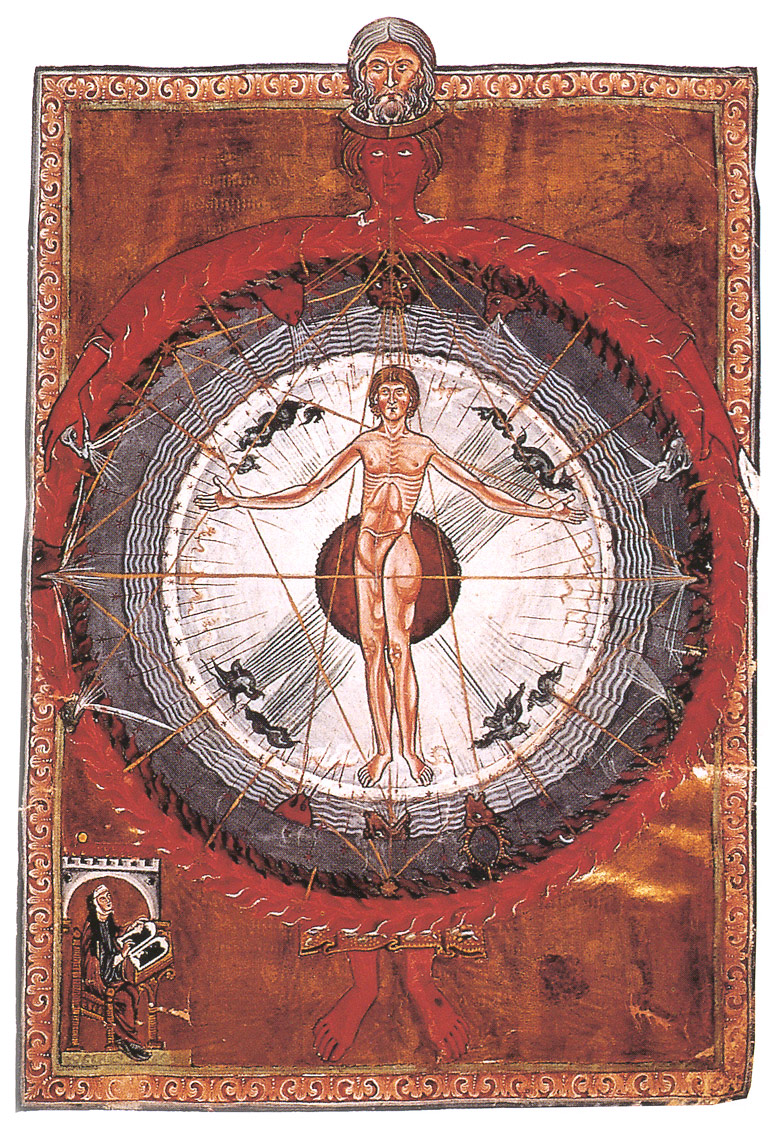
Mysticism encompasses religious traditions focused on human transformation, often facilitated by specific practices and profound religious experiences. Colloquially, the term 'mysticism' is frequently equated with 'mystical experience,' a modern coinage denoting an ecstatic, unitive state of oneness with a divine entity, the Absolute, or the totality of existence.
However, scholarly inquiry since the 1970s has challenged this narrow definition, suggesting that phenomena categorized as mysticism can also signify the acquisition of profound insight into ultimate or concealed truths. Examples include Buddhist awakening, Hindu prajna, nondualistic perspectives, the realization of emptiness and egolessness, and various altered states of consciousness like samadhi.
The term 'mysticism' originates from Ancient Greek, evolving through various historically specific interpretations. Initially derived from the Greek word μύω múō, signifying 'to close' or 'to conceal,' its application in early and medieval Christianity encompassed the biblical, liturgical (including sacramental), spiritual, and contemplative aspects of faith. By the early modern period, the scope of mysticism expanded significantly, embracing a wide array of beliefs and ideologies associated with 'extraordinary experiences and states of mind.'
When broadly construed, mysticism, understood as a path to personal transformation, manifests across numerous religious traditions. These include Western mysticism, Western esotericism, Sufism, Buddhism, and Hinduism.
Etymology
The term 'mysticism' originates from the Greek word μύω, which translates to 'I conceal,' and its derivative μυστικός, mystikos, meaning 'an initiate.' In contemporary Greek, the verb μύω has evolved to carry distinct primary meanings such as 'induct' and 'initiate.' Secondary interpretations encompass 'introduce,' 'make someone aware of something,' 'train,' 'familiarize,' and 'give first experience of something.'
A related verbal form, μυέω (mueó or myéō), is found in the New Testament. According to Strong's Concordance, its literal interpretation involves closing the eyes and mouth to apprehend a mystery. Figuratively, it signifies initiation into a 'mystery revelation,' a meaning rooted in the initiatory rituals of pagan mystery cults. The New Testament also features the related noun μυστήριον (mustérion or mystḗrion), which serves as the etymological basis for the English word 'mystery.' This term denotes 'anything hidden,' a secret requiring initiation for understanding. Within the New Testament context, it is understood to refer to the divine counsels of God, previously concealed but now disclosed through the Gospel, encompassing the broader Christian revelation and/or specific truths or elements thereof.
As per Thayer's Greek Lexicon, the term μυστήριον in classical Greek denoted 'a hidden thing' or 'secret.' In Classical antiquity, it specifically referred to religious secrets entrusted solely to initiates, who were forbidden from disclosing them to uninitiated individuals. In both the Septuagint and the New Testament, its meaning shifted to signify a hidden purpose, counsel, or secret will. While occasionally applied to the concealed intentions of humans, it more frequently designates the hidden will of God. In other biblical contexts, it conveys the mystic or concealed meaning of phenomena, such as the underlying secrets of sayings, names, or imagery encountered in visions and dreams. The Vulgate frequently renders this Greek term into the Latin sacramentum (sacrament).
The related Greek noun μύστης (mustis or mystis, singular) denotes an initiate, specifically an individual admitted to the mysteries. Ana Jiménez San Cristobal's research on Greco-Roman mysteries and Orphism indicates that both the singular form μύστης and the plural form μύσται appear in ancient Greek texts to signify individuals initiated into religious mysteries. Adherents of these mystery religions constituted an exclusive cohort, gaining entry solely through an initiation process. San Cristobal observed an association between these terms and βάκχος (Bacchus), a designation for a distinct category of initiates within the Orphic mysteries. The earliest documented connection between these terms is found in the writings of Heraclitus. Textual sources identify such initiates as individuals who have undergone purification and performed specific rituals. A passage from Euripides' Cretans suggests that a μύστης (initiate) who embraces an ascetic lifestyle, abstains from sexual activity, and avoids contact with the deceased is subsequently recognized as a βάκχος. These initiates were devotees of the god Dionysus Bacchus, adopting their deity's name and striving for identification with him.
Prior to the sixth century, the practices now categorized as mysticism were designated by the terms contemplatio and theoria. Johnston posits that "both contemplation and mysticism speak of the eye of love which is looking at, gazing at, aware of divine realities."
Definitions
Peter Moore characterizes the term "mysticism" as "problematic but indispensable," describing it as a generic descriptor that consolidates distinct practices and ideas that evolved independently. Dupré observes that "mysticism" has received numerous definitions, while Merkur highlights the historical variability in the term's meaning. Moore additionally remarks that "mysticism" has become a prevalent label for concepts perceived as "nebulous, esoteric, occult, or supernatural."
Parsons cautions that what might initially appear as a straightforward phenomenon with clear commonalities has, within the academic study of religion, become "opaque and controversial on multiple levels." Due to its Christian connotations and the absence of analogous terms in diverse cultures, some scholars deem "mysticism" an insufficient descriptive term. Conversely, other academics consider the term an inauthentic construct, characterizing it as "the product of post-Enlightenment universalism."
Richard Jones observes that "few classical mystics refer to their experiences as the union of two realities: there is no literal 'merging' or 'absorption' of one reality into another resulting in only one entity." He elaborates on mysticism by emphasizing the mode of access, thereby encompassing both the mystic's union with a transcendent reality and the non-sensory apprehension of that reality. A mystical experience can be characterized by the mystic's claimed access to "realities or states of affairs that are of a kind not accessible by way of ordinary sense-perception structured by mental conceptions, somatosensory modalities, or standard introspection." The veridicality of such experiences, however, remains an open question.
Union and Mystical Experience
Rooted in Neo-Platonism and Henosis, mysticism is commonly understood as a union with God or the Absolute. During the 13th century, the term unio mystica emerged, referring to a "spiritual marriage," ecstasy, or rapture attained through prayer, which facilitated the contemplation of "both God's omnipresence in the world and God in his essence." Subsequently, in the 19th century, influenced by Romanticism, this concept of "union" was reinterpreted as a "religious experience" that offered certainty regarding God or a transcendental reality.
William James (1842–1910) was an influential advocate for this perspective, asserting that "in mystic states we both become one with the Absolute and we become aware of our oneness." James popularized the use of the term "religious experience" in his work, The Varieties of Religious Experience, thereby contributing to its interpretation as a distinctive experience comparable to sensory perceptions. He categorized religious experiences under "personal religion," which he considered "more fundamental than either theology or ecclesiasticism." James also applied a Perennialist framework to religious experience, positing that such experiences exhibit ultimate uniformity across diverse traditions.
McGinn observes that the term unio mystica, despite its Christian origins, is predominantly a contemporary expression. He contends that "presence" offers greater precision than "union," given that not all mystics articulated a union with God, and numerous visions and miracles were not inherently linked to such union. Furthermore, McGinn advocates for referring to "consciousness" of God's presence rather than "experience," explaining that mystical activity transcends the mere sensation of God as an external entity, encompassing instead "new ways of knowing and loving based on states of awareness in which God becomes present in our inner acts."
Nevertheless, the concept of "union" is not universally applicable. For instance, Advaita Vedanta posits a singular reality, Brahman, implying no separate entity with which to unite; the Brahman within each individual (atman) has always been inherently identical to Brahman. Dan Merkur similarly observes that defining mysticism solely as union with God or the Absolute is overly restrictive, as some traditions, such as those of Pseudo-Dionysius the Areopagite and Meister Eckhart, pursue a state of nothingness rather than unity. Merkur also highlights the emphasis on nothingness in Kabbala and Buddhism. Blakemore and Jennett further remark on the frequent imprecision of "definitions of mysticism," noting that this particular interpretation and definition represents a recent development that has nonetheless become the prevailing standard.
Gellman defines a "unitive experience" as one that "involves a phenomenological de-emphasis, blurring, or eradication of multiplicity, where the cognitive significance of the experience is deemed to lie precisely in that phenomenological feature."
Process and Explanatory Context
Mysticism inherently includes an explanatory context that imbues mystical, visionary, and related experiences, such as trances, with meaning. Dan Merkur suggests that mysticism can encompass any form of ecstasy or altered state of consciousness, along with their associated ideas and interpretations. Parsons, echoed by Richard Jones, emphasizes the critical distinction between transient experiences and mysticism as an ongoing process, which is embedded within a "religious matrix" of specific texts and practices. Peter Moore further observes that mystical experiences can occur spontaneously and naturally in individuals not affiliated with any religious tradition, and these experiences are not invariably interpreted within a religious framework. Ann Taves investigates the mechanisms by which certain experiences are categorized and designated as religious or mystical.
Intuitive Insight and Enlightenment
Several scholars highlight that mystical experience entails an intuitive grasp of existential meaning, hidden truths, and the resolution of life's challenges. Larson defines "mystical experience" as "an intuitive understanding and realization of the meaning of existence." McClenon characterizes mysticism as "the doctrine that special mental states or events allow an understanding of ultimate truths." Similarly, James R. Horne describes mystical illumination as "a central visionary experience [...] that results in the resolution of a personal or religious problem."
Evelyn Underhill posits that illumination serves as a general English descriptor for the phenomenon of mysticism. This term, illumination, originates from the Latin illuminatio, which was applied to Christian prayer during the 15th century. Analogous Asian concepts include bodhi, kenshō, and satori in Buddhism, frequently rendered as "enlightenment," and vipassana; all these terms denote cognitive processes involving intuition and comprehension.
Spiritual Life and Re-formation
Scholars contend that mysticism encompasses more than mere "mystical experience." Gellman, for instance, posits that the ultimate objective of mysticism is human transformation, rather than solely the attainment of mystical or visionary states. Similarly, McGinn identifies personal transformation as the crucial criterion for authenticating Christian mysticism.
Historical Evolution of the Term
The Hellenistic Period
During the Hellenistic era, the term 'mystical' denoted "secret" religious ceremonies, such as the Eleusinian Mysteries. This usage did not directly imply transcendental concepts. A "mystikos" was an individual initiated into a mystery religion.
Early Christian Context
Within early Christianity, the term "mystikos" encompassed three interconnected dimensions: the biblical, the liturgical, and the spiritual or contemplative. The biblical dimension pertained to "hidden" or allegorical interpretations of scriptural texts. The liturgical dimension referred to the Eucharistic mystery, specifically the presence of Christ within the Eucharist. The third dimension involved the contemplative or experiential apprehension of God.
Prior to the sixth century, the Greek term theoria, which translates to "contemplation" in Latin, was applied to the mystical interpretation of the Bible and the direct vision of God. The early Church Fathers established the connection between mysticism and the divine vision, employing the term adjectivally in phrases such as mystical theology and mystical contemplation.
Theoria allowed the Church Fathers to discern profound layers of meaning within biblical texts, which eluded purely scientific or empirical interpretive methodologies. Notably, the Antiochene Fathers identified a dual significance in every scriptural passage, encompassing both literal and spiritual interpretations.
Subsequently, theoria, or contemplation, became differentiated from intellectual pursuits, culminating in the identification of θεωρία or contemplatio as a distinct form of prayer, separate from discursive meditation, in both Eastern and Western traditions.
Medieval Interpretations
The tripartite understanding of "mystical" persisted throughout the Middle Ages. Dan Merkur notes that the term unio mystica emerged in the 13th century, serving as a synonym for "spiritual marriage"—an ecstatic or rapturous state achieved through prayer directed at contemplating both God's omnipresence in the world and His essential nature. Mysticism also found expression within various contemporary sects, including the Waldensians.
Apophatic Theology
Influenced by Pseudo-Dionysius the Areopagite, the concept of mystical theology evolved to signify the exploration of the Bible's allegorical truths and "the spiritual awareness of the ineffable Absolute beyond the theology of divine names." Pseudo-Dionysius' Apophatic theology, also known as "negative theology," profoundly impacted medieval monastic religiosity, predominantly among men due to restrictions on women's education. This theological approach was shaped by Neo-Platonism and became highly influential in Eastern Orthodox Christian theology. Within Western Christianity, it represented a counter-current to the dominant Cataphatic, or "positive," theology.
The Renaissance
During the 15th century, the prominent theologian Jean Gerson authored numerous works on "mystical theology," defining it as any theological or divine-human knowledge arising within the affective realm (pertaining to the will and emotions) rather than the intellective. This form of mysticism constituted a broad category encompassing the positive apprehension of God, often achieved through practical "repentant activity" (e.g., sacramental participation), rather than passive esoteric or transcendent religious ecstasy. Gerson presented it as an antidote to the "self-aggrandizing hyper-inquisitiveness" of Scholasticism, asserting its accessibility even to uneducated individuals. The objective of affective mysticism was often to perceive God's goodness or love, contrasting with an emphasis on His radical otherness.
Baron Friedrich von Hügel analyzed the theology of Catherine of Siena within the framework of mystical theology in his 1908 work, The Mystical Element of Religion as Studied in St. Catherine of Genoa and Her Friends. Von Hügel posited three fundamental components of religious experience: the institutional/historical, the intellectual/speculative, and the mystical/experiential.
Erasmus understood mysticism as residing in the contemplation of profound biblical mysteries, particularly the remarkable persona of Christ.
Early Modern Interpretations
During the sixteenth and seventeenth centuries, the term mysticism began to function as a substantive, a development associated with a nascent intellectual discourse that increasingly differentiated science from religion.
Martin Luther rejected the allegorical interpretation of the Bible and denounced mystical theology, perceiving it as more Platonic than Christian. Consequently, "the mystical," understood as the pursuit of hidden textual meanings, underwent secularization and became linked with literature rather than science or prose.
Concurrently, science became distinct from religion. By the mid-17th century, "the mystical" was increasingly confined to the religious domain, thereby delineating religion and "natural philosophy" as divergent methodologies for uncovering the universe's concealed meanings. Traditional hagiographies and saintly writings were subsequently labeled "mystical," shifting focus from virtues and miracles to extraordinary experiences and mental states, thus establishing a novel "mystical tradition." This period also fostered a new conception of the Divine as an intrinsic human essence, transcending diverse religious manifestations.
Contemporary Interpretations
The nineteenth century witnessed an escalating emphasis on individual experience, serving as a counterpoint to the burgeoning rationalism prevalent in Western society. This era significantly constrained the definition of mysticism:
The interplay between theological and scientific viewpoints led to a compromise wherein most forms traditionally categorized as mysticism were reclassified as mere psychological phenomena. Only one specific variety, characterized by its pursuit of union with the Absolute, the Infinite, or God—and the subsequent perception of essential unity—was deemed genuinely mystical. Nevertheless, historical evidence does not substantiate such a restricted understanding of mysticism.
Influenced by Perennialism, a philosophy popularized in both Western and Eastern contexts by Unitarianism, Transcendentalists, and Theosophy, the concept of mysticism expanded to encompass a wide array of religious traditions, integrating various forms of esotericism, practices, and beliefs. This extension of the term to comparable phenomena in non-Christian religions significantly shaped Hindu and Buddhist reactions to colonialism, giving rise to movements such as Neo-Vedanta and Buddhist modernism.
In contemporary discourse, "mysticism" has evolved into an encompassing term for diverse non-rational worldviews, parapsychology, and pseudoscience. William Harmless notably asserts that mysticism has become "a catch-all for religious weirdness." Within the academic study of religion, the presumed "unambiguous commonality" of the term has become "opaque and controversial." The application of "mysticism" varies significantly across different traditions, prompting some scholars to highlight the conflation of mysticism with related concepts like spirituality and esotericism, emphasizing the distinctions among various traditions.
Typologies and Manifestations
Drawing upon diverse definitions—including mysticism as an experience of union or nothingness, as a religiously attributed altered state of consciousness, as "enlightenment" or profound insight, and as a transformative path—"mysticism" manifests across numerous cultures and religious traditions, spanning both folk and organized religious contexts. These traditions often incorporate practices designed to induce religious or mystical experiences, alongside ethical frameworks and disciplines aimed at fostering self-control and integrating such experiences into daily existence.
Dan Merkur observes, however, that mystical practices are frequently distinct from quotidian religious observances and are often confined to "religious specialists like monastics, priests, and other renunciates."
Shamanistic Mysticism
Dan Merkur posits that shamanism can be considered a form of mysticism, characterized by accessing the spirit world through religious ecstasy. Mircea Eliade similarly defines shamanism as a "technique of religious ecstasy."
Shamanism entails a practitioner attaining an altered state of consciousness to perceive and engage with spirits, thereby channeling transcendental energies into the earthly realm. A shaman is recognized as an individual possessing access to, and influence within, the domain of benevolent and malevolent spirits, typically entering a trance state during rituals to perform divination and healing.
Neoshamanism refers to contemporary iterations of shamanic practices, or methodologies for seeking visions and healing, primarily observed in Western nations. This movement encompasses an eclectic spectrum of beliefs and rituals focused on achieving altered states of consciousness and communicating with the spirit world, frequently associated with New Age practices.
Western Mysticism
Mystery Religions
The Eleusinian Mysteries (Greek: Ἐλευσίνια Μυστήρια) constituted annual initiation rites within the cults dedicated to the goddesses Demeter and Persephone, conducted confidentially at Eleusis, a site near Athens in ancient Greece. Originating around 1600 B.C. during the Mycenaean period, these mysteries persisted for two millennia, evolving into a significant festival during the Hellenic era before extending their influence to Rome. A substantial body of scholarly work suggests that the profound impact of the Eleusinian Mysteries derived from the psychoactive properties of the kykeon, functioning as an entheogen.
Christian Mysticism
Early Christianity
The apophatic, or "negative," theology articulated by Pseudo-Dionysius the Areopagite in the 6th century profoundly influenced medieval monastic religiosity, impacting both Eastern traditions and, through Latin translations, Western contexts. Pseudo-Dionysius integrated Neoplatonic philosophy, particularly the ideas of Proclus, into Christian theological discourse.
Eastern Orthodox Christianity
The Eastern Orthodox Church maintains a venerable tradition of theoria (intimate experience) and hesychia (inner stillness), wherein contemplative prayer facilitates mental quietude, enabling progress toward theosis (deification).
Theosis, defined as practical unity with and conformity to God, is achieved through the practice of contemplative prayer, which constitutes the initial phase of theoria and arises from cultivating watchfulness (nepsis). Within theoria, an individual perceives the "divisibly indivisible" divine operations (energeia) of God as the "uncreated light" of transfiguration, an eternal grace that emanates intrinsically from the profound darkness of the incomprehensible divine essence. This pursuit represents the central objective of hesychasm, a spiritual discipline elaborated by St. Symeon the New Theologian, adopted by the monastic communities of Mount Athos, and prominently championed by St. Gregory Palamas in opposition to the Greek humanist philosopher Barlaam of Calabria. Roman Catholic critics contend that hesychastic practice originates from Symeon the New Theologian's systematic practical methodology for quietism.
Symeon posited that direct spiritual experience conferred upon monks the authority to preach and grant absolution from sins, thereby circumventing the necessity of formal ordination. In contrast to Church authorities who often presented teachings from a speculative and philosophical standpoint, Symeon's instruction stemmed from his personal mystical encounters, which garnered significant opposition due to his charismatic methodology and advocacy for individual, direct experiences of divine grace.
Western Europe
The High Middle Ages witnessed a significant proliferation of mystical practices and theoretical frameworks within Western Roman Catholicism, coinciding with the emergence of new monastic orders. Prominent figures from various orders, including Guigo II, Hildegard of Bingen, Bernard of Clairvaux, and the Victorines, contributed to this development, alongside the initial widespread growth of popular piety among the laity.
The Late Middle Ages were characterized by a notable intellectual divergence between the Dominican and Franciscan schools of thought, which also reflected a conflict between distinct mystical theologies. One perspective was represented by Dominic de Guzmán, while the other encompassed the teachings of Francis of Assisi, Anthony of Padua, Bonaventure, and Angela of Foligno. This era also produced influential individuals such as John of Ruysbroeck, Catherine of Siena, and Catherine of Genoa, fostered movements like the Devotio Moderna, and yielded seminal texts including the Theologia Germanica, The Cloud of Unknowing, and The Imitation of Christ.
Furthermore, the period observed the emergence of mystical groups organized by geographical regions. These included the Beguines, with notable figures such as Mechthild of Magdeburg and Hadewijch; the Rhineland mystics, comprising Meister Eckhart, Johannes Tauler, and Henry Suso; and the English mystics, including Richard Rolle, Walter Hilton, and Julian of Norwich. Prominent Spanish mystics of this time were Teresa of Avila, John of the Cross, and Ignatius Loyola.
The subsequent post-Reformation era witnessed the literary contributions of lay visionaries like Emanuel Swedenborg and William Blake, alongside the establishment of mystical movements such as the Quakers. Catholic mysticism persisted into the modern period, exemplified by figures such as Padre Pio and Thomas Merton.
The *Philokalia*, an ancient compendium of Eastern Orthodox mystical texts, gained prominence through the advocacy of the twentieth-century Traditionalist School.
Western Esotericism and Contemporary Spirituality
Various Western esoteric traditions and components of contemporary spirituality, including Transcendentalism, Theosophy, the Fourth Way, Martinus, spiritual science, and Neo-Paganism, are frequently categorized as forms of mysticism. Modern Western spirituality and transpersonal psychology integrate Western psychotherapeutic methodologies with religious practices, such as meditation, to facilitate enduring personal transformation. Nature mysticism, characterized by an profound experience of unity with the natural world or the cosmic whole, was particularly favored by Romantic authors.
Jewish Mysticism
Within the Common Era, Jewish mysticism has primarily manifested in two forms: Merkabah mysticism and Kabbalah. Merkabah mysticism, preceding Kabbalah, centered on visionary experiences, notably those described in the Book of Ezekiel. Its nomenclature derives from the Hebrew term for "chariot," alluding to Ezekiel's vision of a celestial chariot formed by divine entities.
Kabbalah constitutes a corpus of esoteric doctrines intended to elucidate the relationship between the immutable, eternal, and enigmatic Ein Sof (the Infinite) and the transient, finite universe (its creation). Within Judaism, it establishes the foundational principles of mystical religious exegesis.
Kabbalah initially evolved exclusively within the framework of Jewish intellectual tradition. Practitioners of Kabbalah frequently reference classical Jewish sources to explicate and substantiate its esoteric doctrines. Consequently, adherents within Judaism consider these teachings to delineate the intrinsic meaning of both the Hebrew Bible and traditional Rabbinic literature, representing their previously veiled, transmitted dimension, and to clarify the profound significance of Jewish religious observances.
Subsequent to earlier manifestations of Jewish mysticism, Kabbalah emerged in Southern France and Spain during the 12th and 13th centuries, undergoing reinterpretation within the Jewish mystical renaissance of 16th-century Ottoman Palestine. Its popularization occurred through Hasidic Judaism from the 18th century onward. Twentieth-century scholarly and popular interest in Kabbalah has stimulated cross-denominational Jewish renewal and contributed to broader non-Jewish contemporary spirituality, concurrently fostering its burgeoning academic study and historical re-evaluation.
Within Jewish mysticism, the concept of "Segulot" is prevalent. "Segulot" refer to spiritual potencies believed to influence worldly reality. However, the efficacy of "Segulot" is not guaranteed. In times of adversity, the primary imperative is to introspect upon one's actions to identify transgressions that may have precipitated the difficulty, as "teshuvah, tefillah, and tzedakah (repentance, prayer, and charity) avert the evil decree." Nevertheless, if one has already engaged in teshuvah, prayed with sincere devotion, and performed tzedakah, particularly in support of scholars, it is considered appropriate to additionally invoke the power of "Segulot" to provide, metaphorically, an extra impetus towards achieving desired salvation.
Islamic Mysticism
It is widely accepted that Sufism embodies the intrinsic and mystical dimension of Islam.
Classical Sufi scholars have characterized Sufism as:
A discipline whose aim is the rectification of the heart and its redirection from all entities other than God.
A practitioner of this tradition is currently identified as a ṣūfī (صُوفِيّ), or, historically, a dervish. The etymology of the term "Sufi" remains uncertain. One interpretation suggests that "Sufi" denotes a wool-wearer, referencing the pious ascetics of early Islam who adopted wool garments and retreated from urban environments. An alternative explanation posits that the word "Sufi" signifies 'purity'.
Sufis typically affiliate with a halaqa, which is a circle or group guided by a Sheikh or Murshid. These Sufi circles are commonly part of a Tariqa, representing a Sufi order, each possessing a Silsila, or spiritual lineage. This lineage traces its succession to distinguished Sufis of previous eras, frequently extending ultimately to Muhammad or one of his close companions. The turuq (the plural form of tariqa) do not operate as cloistered communities akin to Christian monastic orders; instead, their adherents maintain engagement with external life. Affiliation with a Sufi group often follows hereditary lines. Gatherings may or may not be gender-segregated, depending on the predominant customs of the broader society. Prior adherence to the Muslim faith is not invariably a prerequisite for entry, especially in Western nations.
Sufi practice encompasses several key elements, including:
- Dhikr, defined as the remembrance of God, frequently manifests as rhythmic chanting and controlled breathing exercises.
- Sama, involving music and dance, notably includes the distinctive whirling dance performed by the Mevlevi dervishes, which has gained considerable recognition in Western cultures.
- Muraqaba, a practice of meditation.
- Pilgrimages to sacred sites, especially the tombs of Sufi saints, are undertaken to contemplate mortality and honor the legacy of revered individuals.
The objectives of Sufism encompass the attainment of ecstatic states (hal), the purification of the heart (qalb), the transcendence of the lower self (nafs), the annihilation of individual personality (fana), profound communion with God (haqiqa), and the acquisition of higher knowledge (marifat). Certain Sufi tenets and rituals have been deemed heterodox by other Muslim communities; for example, Mansur al-Hallaj was executed for blasphemy after proclaiming, "I am the Truth" (i.e., God) – Ana'l Haqq – during a trance.
Prominent classical Sufi figures include Jalaluddin Rumi, Fariduddin Attar, Sultan Bahoo, Saadi Shirazi, and Hafez, all of whom were significant poets in the Persian language. Omar Khayyam, Al-Ghazzali, and Ibn Arabi distinguished themselves as renowned scholars. Abdul Qadir Jilani, Moinuddin Chishti, and Bahauddin Naqshband, alongside Rumi, established influential Sufi orders. Rabia Basri is recognized as the most eminent female Sufi.
Sufism initially engaged with the Judeo-Christian world during the period of Muslim governance in Iberia. In the modern era, a resurgence of interest in Sufism emerged in non-Muslim nations, spearheaded by individuals such as Inayat Khan, Idries Shah, and Abdalqadir as-Sufi (all based in the UK), René Guénon (France), and Ivan Aguéli (Sweden). Furthermore, Sufism has historically maintained a significant presence in Asian countries lacking a Muslim majority, including India and China.
Eastern Mysticism
Buddhism
Paul Oliver, a lecturer at Huddersfield University, posits that Buddhism exhibits mystical characteristics through its objective of identifying the true nature of the self (encompassing concepts such as anatman, sunyata, and Buddha-nature) and subsequently living in accordance with this understanding. Originating in India between the 6th and 4th centuries BCE, Buddhism is now predominantly practiced in other nations, where it has diversified into various traditions, primarily Theravada, Mahayana, and Vajrayana.
Buddhism seeks liberation from the cycle of rebirth through self-discipline, achieved via meditation and ethical conduct. Certain Buddhist paths, such as the Theravada stages of enlightenment, advocate for a gradual evolution and transformation of the personality towards Nirvana. Conversely, other traditions, including the Japanese Rinzai Zen, prioritize sudden insight while simultaneously mandating rigorous training, which incorporates meditation and self-restraint.
While Theravada does not recognize a theistic Absolute, it posits Nirvana as an attainable transcendent reality. This tradition further emphasizes personal transformation through meditative practice, self-restraint, and ethical conduct. Richard H. Jones characterizes Theravada as a mindful form of both extrovertive and introvertive mysticism, wherein the conceptual organization of experiences and the conventional sense of self are diminished. In the West, it is primarily recognized through the Vipassana movement, which encompasses various modern Theravāda Buddhist branches originating from Burma, Cambodia, Laos, Thailand, and Sri Lanka, and includes contemporary American Buddhist instructors like Joseph Goldstein and Jack Kornfield.
The Yogacara school within Mahayana Buddhism examines the operations of the mind, asserting that only the mind itself (citta-mātra) or the representations we perceive (vijñapti-mātra) possess true existence. Subsequent Mahayana Buddhist philosophy, adopting an idealistic perspective, came to regard the unmodified mind as a pristine consciousness from which all phenomena emerge. The concept of Vijñapti-mātra, when combined with Buddha-nature or tathagatagarba, has profoundly influenced the later evolution of Mahayana Buddhism, not only in India but also in China and Tibet, particularly within the Chán (Zen) and Dzogchen traditions.
Chinese and Japanese Zen traditions are fundamentally based on the Chinese interpretation of Buddha-nature as an individual's intrinsic essence, alongside the doctrine of two truths, which posits a polarity between relative and Absolute reality. The primary objective of Zen is to achieve insight into one's authentic nature, or Buddha-nature, thereby actualizing Absolute reality within the context of relative existence. Within the Soto school, Buddha-nature is considered perpetually present, and *shikan-taza* (sitting meditation) serves as the manifestation of this inherent Buddhahood. Rinzai Zen, conversely, underscores the necessity of a transformative breakthrough insight into this Buddha-nature, while also emphasizing the ongoing practice required to deepen this understanding and integrate it into daily life, as exemplified by concepts such as the Three Mysterious Gates, Hakuin's Four Ways of Knowing, and the Ten Ox-Herding Pictures. The Japanese Zen scholar D.T. Suzuki identified parallels between Zen Buddhism and Christian mysticism, particularly with the teachings of Meister Eckhart.
The Tibetan Vajrayana tradition is founded upon Madhyamaka philosophy and Tantra. Within deity yoga, practitioners engage in visualizations of deities, which are subsequently dissolved to facilitate the realization of the inherent emptiness of all phenomena. Dzogchen, a teaching prevalent in both the Tibetan Buddhist Nyingma school and the Bön tradition, emphasizes direct insight into one's fundamental nature. This tradition posits that "mind-nature" becomes manifest upon enlightenment, characterized by a non-conceptual awareness (rigpa, or "open presence") of one's intrinsic being, described as "a recognition of one's beginningless nature." Mahamudra shares conceptual similarities with Dzogchen, particularly in its emphasis on a meditative pathway to insight and liberation.
Hinduism
Within Hinduism, diverse *sadhanas* (spiritual disciplines) are employed to overcome ignorance (avidya) and transcend identification with the physical body, mind, and ego, ultimately aiming for moksha—liberation from the cycle of birth and death. Hinduism encompasses numerous interconnected ascetic traditions and philosophical schools, all striving for *moksha* and the attainment of elevated spiritual capacities. Following the commencement of British colonization in India, these indigenous traditions were frequently reinterpreted through Western conceptual frameworks, such as "mysticism," leading to comparative analyses with Western terminology and practices.
Yoga refers to a comprehensive system of physical, mental, and spiritual practices or disciplines designed to achieve a state of enduring tranquility. Multiple yoga traditions exist across Hinduism, Buddhism, and Jainism. The Yoga Sūtras of Patañjali famously define yoga as "the stilling of the changing states of the mind," a process that culminates in the profound state of *samadhi*.
Classical Vedanta provides philosophical interpretations and extensive commentaries on the Upanishads, an expansive compilation of ancient sacred texts. At least ten distinct schools of Vedanta are recognized, with Advaita Vedanta, Vishishtadvaita, and Dvaita being the most prominent. Advaita Vedanta, articulated by Adi Shankara, asserts the non-duality between Atman (the individual soul) and Brahman (the ultimate reality). Its most recognized sub-school is Kevala Vedanta, also known as mayavada, as elaborated by Adi Shankara. Advaita Vedanta has achieved widespread recognition within Indian culture and globally as a quintessential representation of Hindu spirituality. Conversely, Bhedabheda-Vedanta posits that Atman and Brahman are simultaneously identical and not identical, whereas Dvaita Vedanta maintains that Atman and God are fundamentally distinct entities. In contemporary discourse, Neo-Vedanta has characterized the Upanishads as "mystical" texts.
Tantra
Tantra is a scholarly designation for a distinct tradition of meditation and ritual that originated in India by at least the fifth century CE. This tradition has significantly influenced Hindu, Bön, Buddhist, and Jain practices, disseminating alongside Buddhism into East and Southeast Asia. Tantric rituals endeavor to access the supra-mundane by engaging with the mundane, establishing an identification between the microcosm and the macrocosm. The fundamental objective of Tantra is to sublimate reality rather than to negate it. Practitioners of Tantra aim to utilize prana (the vital energy permeating the universe, including the human body) to achieve objectives that may be spiritual, material, or a combination thereof. Tantric practices encompass the visualization of deities, recitation of mantras, and creation of mandalas, and may also involve sexual and other antinomian rituals.
Sikhism and Sant Philosophy
The origins of mysticism within the Sikh faith are attributed to its founder, Guru Nanak, who experienced profound mystical states from an early age. Guru Nanak emphasized the necessity of perceiving the divine through an 'inward eye' or the 'heart' of an individual. Subsequently, Guru Arjan, the fifth Sikh Guru, incorporated the writings of mystics (bhagat) from diverse religious traditions into the sacred scriptures, which later coalesced into the Guru Granth Sahib.
The ultimate objective in Sikhism is the attainment of union with the Divine. Adherents engage in meditation as a pathway to spiritual enlightenment; this dedicated meditative practice, known as simran, is understood to facilitate communion between the Infinite and finite human consciousness. Unlike some other Dharmic traditions, Sikh meditation does not primarily focus on breath control. Instead, simran predominantly involves the remembrance of God through the recitation of the Divine Name. A common metaphorical expression describes mystics as "surrendering themselves to the Lord's feet."
Taoism
Central to Taoist philosophy is the concept of the Tao, commonly rendered as "Way," which represents an ineffable cosmic principle. The complementary yet interdependent notions of yin and yang further symbolize harmony, with Taoist texts frequently highlighting the Yin attributes of femininity, passivity, and yielding. Taoist practices encompass various exercises and rituals designed to manipulate the vital life force, Qi, with the aim of promoting health and extending longevity. These practices have evolved into well-known disciplines in the Western world, such as Tai chi.
Mysticism and Morality
A significant philosophical inquiry within the study of mysticism concerns its relationship with morality. Albert Schweitzer famously articulated the perspective that mysticism and morality are fundamentally incompatible. Similarly, Arthur Danto contended that morality is, at minimum, inconsistent with Indian mystical doctrines. Conversely, Walter Stace posited that mysticism is not only compatible with morality but also serves as its foundational source and justification. Other researchers in the field of mysticism have concluded that the interplay between mysticism and morality is considerably more complex than these dichotomous views suggest.
Richard King critically examines the individualistic inclination within contemporary mysticism, noting its growing detachment from political considerations:
The privatization of mysticism—defined as the escalating propensity to situate mystical phenomena within the psychological domain of individual experiences—effectively marginalizes it from political concerns such as social justice. Consequently, mysticism is reinterpreted as a personal endeavor focused on cultivating internal states of tranquility and equanimity, which, instead of aiming to transform societal structures, function to reconcile the individual with the prevailing status quo by mitigating anxiety and stress.
Notes
Sources
Web-sources
- Quotations related to Mysticism at Wikiquote