
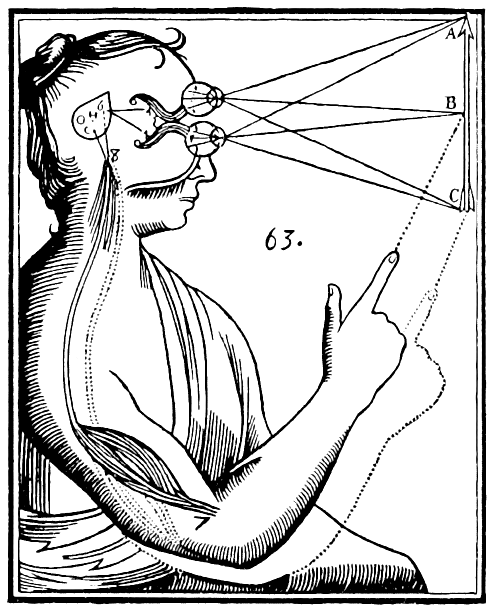
In the philosophy of mind, mind–body dualism posits that mental phenomena are either non-physical or that the mind and body constitute distinct and separable entities. Consequently, it encompasses various perspectives on the relationship between consciousness and physical reality, as well as between the subjective and objective realms, contrasting with alternative stances like physicalism and enactivism within the broader mind–body problem.
In the philosophy of mind, mind–body dualism denotes either that mental phenomena are non-physical, or that the mind and body are distinct and separable. Thus, it encompasses a set of views about the relationship between mind and matter, as well as between subject and object, and is contrasted with other positions, such as physicalism and enactivism, in the mind–body problem.
Aristotle, aligning with Plato's concept of multiple souls, developed a hierarchical framework corresponding to the distinct functions observed in plants, animals, and humans. This hierarchy included a nutritive soul responsible for growth and metabolism, common to all three; a perceptive soul governing pain, pleasure, and desire, shared by humans and other animals; and the faculty of reason, exclusively attributed to humans. Within this Aristotelian perspective, the soul represents the hylomorphic form of a living organism, with each hierarchical stratum formally supervening on the substance of the preceding one. Aristotle posited that the nutritive and perceptive souls, being intrinsically linked to the body, cease to exist upon the organism's death, while an immortal and perpetual intellective component of the mind endures. In contrast, Plato maintained that the soul was independent of the physical body, advocating for metempsychosis, or the transmigration of the soul into a new corporeal form. Some philosophers have characterized this perspective as a form of reductionism, arguing that it facilitates the disregard of significant variable groups due to their presumed association with either the mind or the body, rather than evaluating their intrinsic explanatory or predictive utility for a given phenomenon.
Dualism is profoundly linked to the philosophical contributions of René Descartes (1641), who posited the mind as a non-physical, and consequently non-spatial, substance. Descartes explicitly equated the mind with consciousness and self-awareness, differentiating it from the physical brain, which he considered the locus of intelligence. Consequently, he is recognized as the first Western philosopher to articulate the mind–body problem in its contemporary formulation. Nevertheless, substance dualism continues to find numerous proponents in contemporary philosophy, including Richard Swinburne, William Hasker, J. P. Moreland, E. J. Low, Charles Taliaferro, Seyyed Jaaber Mousavirad, and John Foster.
Dualism stands in opposition to various forms of monism. While substance dualism opposes all manifestations of materialism, property dualism can be conceptualized as a variant of non-reductive physicalism.
Types
Ontological dualism posits two fundamental commitments regarding the nature of existence concerning mind and matter, and is categorized into three distinct types:
- Substance dualism posits that mind and matter represent fundamentally distinct ontological categories.
- Property dualism proposes that the ontological divergence resides in the differing properties of mental and material entities, exemplified by emergentism.
- Predicate dualism asserts the irreducibility of mental predicates to physical predicates.
Substance Dualism or Cartesian Dualism
Substance dualism posits that mind and matter constitute fundamentally distinct ontological categories. This philosophical stance encompasses various subtypes. A majority of substance dualists subscribe to interactionism, the belief that the mind and body can exert causal influence upon each other. Prominent proponents of substance dualism include John Foster, Stewart Goetz, Richard Swinburne, and Charles Taliaferro.
Cartesian dualism, notably championed by René Descartes, posits the existence of two distinct types of substances: mental and physical. Descartes asserted that the mental realm can exist independently of the body, and that the body itself lacks the capacity for thought. Historically, substance dualism holds significant importance for stimulating extensive philosophical inquiry into the renowned mind–body problem. This perspective aligns with theological frameworks that propose immortal souls inhabit an autonomous realm of existence, separate from the physical world. Adherents of Cartesian philosophy typically equate the soul with the mind.
The Copernican Revolution and subsequent 17th-century scientific advancements solidified the conviction that the scientific method constituted the singular pathway to knowledge. Biological organisms, specifically bodies, came to be viewed as entities whose constituent parts could be investigated through anatomy, physiology, biochemistry, and physics, reflecting a materialist and reductionist approach. Despite these developments, mind–body dualism persisted as the dominant biomedical paradigm and conceptual framework for the subsequent three centuries.
Emergent Dualism
Emergent dualism, a form of substance dualism, has been advocated by William Hasker and Dean Zimmerman. This perspective posits that mental substances manifest when physical systems, such as the brain, attain an adequate level of complexity. Hasker articulates emergent dualism as follows:
Human persons are not identical to any physical body; rather, they comprise both a physical body and a non-physical, substantial soul. Furthermore, the human soul naturally emerges from and remains dependent on the structure and function of a living human brain and nervous system.
Hasker contends that emergent dualism aligns with neuroscientific findings demonstrating the mind's dependence on the brain. He draws an analogy between the individual mind and a magnetic field, highlighting its qualitative distinction from the physical properties that produce it, as well as its capacity to influence the generating brain. Consciousness is posited to emerge when the brain achieves a specific threshold of organizational complexity, which, when appropriately structured, gives rise to the soul.
Thomistic Dualism
Thomistic dualism represents a form of dualism originating from the philosophical perspectives of Thomas Aquinas. Edward Feser has articulated the following:
Aristotelians and Thomists—philosophers whose doctrines stem from St. Thomas Aquinas—occasionally propose that their hylomorphic stance is neither a form of dualism nor materialism. However, while their perspective diverges from Cartesian dualism, an examination of the human soul's distinction from the souls of plants and animals (particularly within the Thomistic interpretation of hylomorphism) reveals that this view indeed constitutes a form of dualism, variously termed Thomistic dualism or hylomorphic dualism.
Thomistic substance dualism has found proponents in J. P. Moreland and Scott B. Rae. This perspective differentiates itself from Cartesian substance dualism by rejecting the notion that the body and soul constitute distinct substances. Instead, it posits that an individual is composed of a single substance, the soul, with the body regarded as an ensouled physical structure. J. P. Moreland has observed:
Thomistic substance dualism does not posit a duality of two separable substances. Instead, it maintains that there is only one substance, which I do not equate with a body/soul composite. Rather, I consider the singular substance to be the soul, and the body to be an ensouled biological and physical structure whose existence is contingent upon the soul.
Eleonore Stump has proposed that while Thomas Aquinas's perspectives on matter and the soul are challenging to categorize within contemporary discourse, he would nonetheless satisfy the criteria for a non-Cartesian substance dualist.
Alternative designations for Thomistic dualism encompass hylomorphic dualism or Thomistic hylomorphism, which are differentiated from substance dualism. Hylomorphism diverges from substance dualism by asserting that the immaterial (form) and material (matter) do not constitute distinct substances but rather share only an efficient causality.
Thomistic scholars, including Paul Chutikorn and Edward Feser, have posited that Aquinas did not adhere to substance dualism. Feser, a proponent of hylomorphic dualism, has suggested that this framework offers advantages over substance dualism, notably by potentially resolving the interaction problem. Paul Chutikorn has remarked that "adopting Aquinas' view of substance will provide a solution to the problem by avoiding altogether the position that man is made up of dual substances. Rather, Aquinas shows us that we can acknowledge a duality within substance itself, while maintaining its inherent substantial unity."
Aristotelian hylomorphic dualism shares numerous commonalities with Thomistic dualism. Michael Egnor stands out as a prominent advocate for Aristotelian dualism.
Property Dualism
Property dualism posits an ontological distinction between the properties of mind and matter, suggesting that consciousness may be ontologically irreducible to neurobiology and physics. This perspective asserts that mental properties emerge when matter is organized in a specific manner, such as the configuration found in living human bodies. Consequently, it is classified as a sub-branch of emergent materialism. The precise scope of views that appropriately fall under the property dualism rubric remains a subject of debate, with various versions of property dualism asserting distinct categorizations.
Non-reductive physicalism represents a type of property dualism, positing that all mental states are causally reducible to physical states. Donald Davidson's anomalous monism offers one argument for this position, asserting that mental events are identical to physical events, yet their relationships cannot be characterized by strict, law-governed causal connections. John Searle, a proponent of biological naturalism—a unique form of physicalism—presents another argument. Searle contends that while mental states are ontologically irreducible to physical states, they are nonetheless causally reducible. He acknowledges a perceived similarity between his perspective and property dualism, but considers this comparison inaccurate.
Epiphenomenalism
Epiphenomenalism, a variant of property dualism, posits that certain mental states exert no influence on physical states, being both ontologically and causally irreducible. This perspective maintains that although material causes generate sensations, volitions, and ideas, these mental phenomena themselves lack further causal efficacy, functioning as causal dead-ends. This stands in contrast to interactionism, which asserts that mental causes can generate material effects, and vice versa.
Predicate Dualism
Predicate dualism is a philosophical stance advanced by non-reductive physicalists like Donald Davidson and Jerry Fodor. They argue that despite the existence of a singular ontological category for substances and their properties (typically physical), the predicates employed to characterize mental events are not amenable to redescription or reduction to physical predicates within natural languages.
Predicate dualism is most readily understood as the antithesis of predicate monism. Predicate monism is a position held by eliminative materialists, who assert that intentional predicates such as believe, desire, think, and feel will ultimately be expunged from both scientific and everyday discourse, given that the entities they purport to describe do not exist. Conversely, predicate dualists contend that "folk psychology," encompassing all propositional attitude ascriptions, constitutes an indispensable component for describing, explaining, and comprehending human mental states and behavior.
For instance, Davidson advocates anomalous monism, a theory positing the absence of strict psychophysical laws capable of linking mental and physical events when described as mental and physical events, respectively. Nevertheless, every mental event also possesses a physical description. It is through these physical descriptions that such events can be integrated into law-like relationships with other physical phenomena. Mental predicates are fundamentally distinct in nature—being rational, holistic, and necessary—compared to physical predicates, which are contingent, atomic, and causal.
Dualist Perspectives on Mental Causation
This section examines causation between properties and states of the subject under investigation, rather than focusing on its substances or predicates. In this context, a state is defined as the complete set of all properties pertaining to the entity being studied, thereby describing a single temporal point.
Interactionism
Interactionism proposes that mental states, including beliefs and desires, engage in causal interaction with physical states. This position resonates strongly with common-sense intuitions, despite the considerable challenge in substantiating its validity or accuracy through rigorous logical argumentation or empirical evidence. Its intuitive appeal stems from ubiquitous daily experiences, such as a child touching a hot stove (a physical event) leading to pain (a mental event), subsequently causing the child to yell and scream (a physical event), which in turn elicits fear and protectiveness in parents (a mental event), and similar sequences.
Epiphenomenalism
Epiphenomenalism posits that mental events originate solely from physical occurrences, lacking any physical repercussions, and that individual or multiple mental states exert no influence on physical states. For instance, the mental decision to lift a rock ("M1") is attributed to the activation of specific neural pathways in the brain ("P1"). However, the subsequent physical action of the arm and hand moving to grasp the rock ("P2") is not caused by the preceding mental event M1, nor by a combination of M1 and P1, but exclusively by P1. This reductionist framework suggests that physical causes are fundamentally reducible to basic physics, thereby eliminating mental causation from explanatory models. If a physical event P1 simultaneously causes both the mental event M1 and the physical action P2, the explanation for P2 avoids overdetermination.
The concept that consciousness, even in humans, contributes nothing to behavioral generation was initially articulated by La Mettrie (1745), subsequently by Cabanis (1802), and further elaborated by Hodgson (1870) and Huxley (1874). Jackson initially presented a subjective argument supporting epiphenomenalism but later disavowed it in favor of physicalism.
Parallelism
Psychophysical parallelism represents a distinctive perspective on the interaction between mental and physical phenomena, primarily, and arguably exclusively, championed by Gottfried Wilhelm von Leibniz. Leibniz, echoing Malebranche and earlier thinkers, identified deficiencies in Descartes' explanation of causal interaction occurring within a specific physical brain location. Malebranche concluded that a material foundation for interaction between material and immaterial entities was untenable, leading him to propose occasionalism, which asserts that divine intervention directly causes interactions on every individual instance. Leibniz's proposition posits a divinely orchestrated pre-established harmony, creating the impression that physical and mental events mutually influence each other. However, in this framework, mental causes exclusively yield mental effects, and physical causes produce only physical effects. Consequently, the designation parallelism aptly characterizes this philosophical stance.
Occasionalism
Occasionalism is a philosophical tenet concerning causation, asserting that created substances lack the capacity to be efficient causes of events. Instead, all occurrences are directly attributed to divine causation. The theory posits that the perception of efficient causation among ordinary events stems from a consistent correlation established by God, wherein each presence of a supposed cause serves as an "occasion" for the effect to manifest as an expression of divine power. This "occasioning" relationship, nevertheless, does not equate to efficient causation. Within this perspective, the initial event does not compel God to produce the subsequent event; rather, God directly causes both events, choosing to govern their sequence according to universal natural laws. Notable historical proponents include Al-Ghazali, Louis de la Forge, Arnold Geulincx, and Nicolas Malebranche.
Kantianism
Immanuel Kant's philosophy delineates a fundamental difference between actions motivated by desire and those executed by rational freedom, guided by the categorical imperative. Consequently, physical actions are not exclusively determined by material factors or solely by freedom. Certain actions are inherently instinctual, whereas others arise from the mind's autonomous influence on the physical realm.
History
Ancient Greek Philosophy
Hermotimus of Clazomenae (fl. c. 6th century BCE) is credited with initially positing the mind as a foundational cause of change. He theorized that physical entities are inherently static, with reason serving as the impetus for alteration. Sextus Empiricus categorizes him alongside Hesiod, Parmenides, and Empedocles, identifying them as philosophers who espoused a dualistic theory involving both a material and an active principle as the universe's origin. Anaxagoras further developed analogous concepts.
Within the dialogue Phaedo, Plato articulated his renowned Theory of Forms, conceptualizing them as distinct, immaterial substances from which the objects and phenomena perceived in the empirical world are merely derivative manifestations.
Plato's Phaedo elucidates that Forms constitute the universalia ante res, functioning as ideal universals that enable our comprehension of the world. Through his allegory of the cave, Plato metaphorically equates the attainment of philosophical insight with ascending from a dark cavern into sunlight, where only indistinct shadows of external realities are faintly projected onto the wall. Plato posited that Forms are neither physical nor mental entities. They transcend spatio-temporal existence, residing neither within the mind nor within the plenitude of matter; instead, matter is described as "participating" in form (μεθεξις, methexis). Nevertheless, the precise meaning Plato ascribed to this concept remained ambiguous, even for Aristotle.
Aristotle extensively critiqued numerous facets of Plato's Forms, subsequently developing his own hylomorphic doctrine, which posits the coexistence of form and matter. Despite his criticisms, Aristotle's ultimate objective was to refine, rather than repudiate, a theory of forms. While he vehemently opposed the independent existence Plato ascribed to Forms, Aristotle's metaphysical framework frequently aligns with Plato's a priori considerations. For instance, Aristotle contended that an immutable, eternal substantial form must inherently be immaterial. Given that matter serves as a stable substratum for formal alteration, it perpetually possesses the potential for change. Consequently, if afforded an infinite duration, matter will inevitably actualize this potential.
Within Aristotle's psychology, which investigates the soul, he addresses the human capacity for reason and the animal capacity for perception. In both instances, precise replicas of forms are assimilated: through direct sensory impression of environmental forms for perception, or via contemplation, comprehension, and recollection for intellectual understanding. Aristotle posited that the mind can literally adopt any form it contemplates or experiences, distinguishing itself by its unique capacity to function as a tabula rasa, devoid of an inherent essential form. Just as thoughts of earth lack weight and thoughts of fire are not causally efficacious, these mental constructs offer an immaterial counterpart to the intrinsically formless mind.
The Trajectory from Neoplatonism to Scholasticism
Neoplatonism, a philosophical school prominent during late antiquity, asserted that both physical and spiritual realms originate as emanations from the One. This school significantly impacted Christianity, a trajectory paralleled by the influence of Aristotelian philosophy through scholasticism.
Within the scholastic tradition of Saint Thomas Aquinas, whose doctrines significantly shaped Roman Catholic dogma, the soul is defined as the substantial form of a human being. Aquinas conducted the Quaestiones disputate de anima, or 'Disputed questions on the soul,' at the Roman studium provinciale of the Dominican Order at Santa Sabina—a precursor to the Pontifical University of Saint Thomas Aquinas, Angelicum—during the academic year 1265–1266. By 1268, Aquinas had completed at least the initial book of the Sententia Libri De anima, his commentary on Aristotle's De anima, which had been translated from Greek by his Dominican colleague, William of Moerbeke, in Viterbo in 1267. Consistent with Aristotle's philosophy, Aquinas maintained that a human being constitutes a unified composite substance comprising two fundamental principles: form and matter. The soul, therefore, represents the substantial form and the primary actuality of a material organic body endowed with the potentiality for life.
Aquinas posited the unity of human nature as a composite substance, formed by the inseparable principles of form and matter. Concurrently, he asserted the intellectual soul's incorruptibility, distinguishing it from the corruptible vegetative and sensitive animation found in plants and animals. His rationale for the intellectual soul's subsistence and incorruptibility stems from the metaphysical principle that operation follows being (agiture sequitur esse), implying that an entity's activity discloses its mode of existence. Given that the intellectual soul performs its intrinsic per se intellectual operations independently of material faculties—meaning these operations are immaterial—the intellect and the intellectual soul must similarly be immaterial and, consequently, incorruptible. Despite the intellectual soul's capacity to subsist after human death, Aquinas maintained that the human person does not retain integration post-mortem. A separated intellectual soul is neither a man nor a human person. The intellectual soul by itself does not constitute a human person, defined as an individual supposit of a rational nature. Therefore, Aquinas suggested that "soul of St. Peter pray for us" would be more fitting than "St. Peter pray for us," as all aspects associated with his person, including memories, ceased with his corporeal life.
In contrast, the Catholic doctrine of the resurrection of the body posits that the body and soul form an integral whole. It asserts that, at the Second Coming, the souls of the deceased will be reunited with their bodies, reconstituting them as complete persons (substances) to witness the apocalypse. The profound consistency between dogma and contemporary scientific understanding was historically upheld, partly due to a steadfast adherence to the principle of a singular truth. Maintaining congruence with science, logic, philosophy, and faith remained a paramount objective for centuries, with a university doctorate in theology typically requiring the completion of the entire science curriculum as a prerequisite. However, this doctrine is not universally embraced by Christians today, as many adhere to the belief that an individual's immortal soul proceeds directly to Heaven upon bodily death.
Eastern Philosophy
While early Chinese thought is frequently characterized as non-dualistic, Slingerland and Chudek (2011) have demonstrated the existence of numerous classical texts that delineate clear distinctions between mental and physical processes. Their textual analysis indicates that specific manifestations of dualistic thought were indeed present within ancient Chinese traditions.
Certain interpretations of Buddhist philosophy characterize the mind and body as interdependent. Lin (2013) contends that classical Buddhist texts do not advocate for a rigid separation between the mind and the body; instead, they conceptualize consciousness as emerging from an amalgamation of physical, cognitive, and environmental factors.
Descartes and His Disciples
In his seminal work, Meditations on First Philosophy, René Descartes initiated an inquiry by systematically doubting all his prior convictions to ascertain what could be known with certainty. Through this process, he realized that while he could question the existence of his body (positing it might be a dream or an illusion conjured by a malevolent demon), he could not doubt the existence of his mind. This realization provided Descartes with the initial insight that the mind and body were distinct entities. Descartes defined the mind as a "thinking thing" (Latin: res cogitans), an immaterial substance representing his essential self—the faculty that doubts, believes, hopes, and thinks. Conversely, the body, described as "the thing that exists" (res extensa), governs standard physiological functions, such as those of the heart and liver. Descartes contended that animals possessed only a body and lacked a soul, thereby differentiating humans from animals. The fundamental distinction between mind and body is articulated in Meditation VI: Descartes posited having a clear and distinct idea of himself as a thinking, non-extended entity, and an equally clear and distinct idea of the body as an extended, non-thinking entity. He concluded that anything he could conceive clearly and distinctly, God was capable of creating.
Modern scholarly discourse often oversimplifies René Descartes' perspectives on the mind-body relationship. Duncan (2000) contends that Descartes did not conceptualize the mind and body as entirely distinct entities in quotidian experiences, particularly concerning pain. Descartes' own texts indicate a continuous interaction between the mind and body, presenting a more nuanced perspective than the rigid dualistic separation commonly attributed to him. Consequently, subsequent scholars may have amplified this division, thereby influencing contemporary medical interpretations of "Cartesian dualism."
The core tenet of what is frequently termed Cartesian dualism, named after Descartes, posits that the immaterial mind and the material body, despite their ontological distinction as substances, engage in causal interaction. This concept remains significant within numerous non-European philosophical traditions. Specifically, mental occurrences can induce physical events, and physical events can similarly influence mental ones. However, this proposition introduces a significant challenge for Cartesian dualism: the question of how an immaterial mind can exert causal influence on a material body, and vice versa. This conundrum is widely recognized as the "problem of interactionism."
Descartes himself encountered considerable difficulty in formulating a satisfactory resolution to this issue. In correspondence with Elisabeth of Bohemia, Princess Palatine, he posited that spirits facilitated interaction with the body via the pineal gland, a diminutive structure situated centrally within the brain, between its two hemispheres. The designation Cartesian dualism is frequently linked to this particular concept of causal interaction mediated by the pineal gland. Nevertheless, this explanation proved inadequate, raising the fundamental question: how could an immaterial mind interact with a physical pineal gland? Given the inherent challenges in defending Descartes' theory, some of his followers, including Arnold Geulincx and Nicolas Malebranche, advanced an alternative hypothesis: that all mind-body interactions necessitated direct divine intervention. These philosophers contended that the corresponding states of mind and body merely served as the occasions for such intervention, rather than being genuine causes. These occasionalists upheld the robust assertion that all causation was directly contingent upon God, diverging from the view that all causation was natural except for that occurring between the mind and body.
The Application of Mind-Body Dualism in Medical Contexts
Within the domain of pain research, certain academics contend that categorizing pain into "physical" versus "psychological" types exemplifies an antiquated dualistic paradigm. Williams and Craig (2016) propose that pain is concurrently shaped by biological, emotional, and social determinants, and that addressing these as discrete entities can result in suboptimal patient care. They underscore the necessity of a holistic methodology for effective pain management, one that integrates these interconnected dimensions. This perspective highlights that an exclusive focus on either physical or psychological aspects risks overlooking crucial factors influencing a patient's pain experience.
Cultural perspectives regarding the etiology of illness further demonstrate the enduring influence of dualism on contemporary health attitudes. Tayeb (2019) investigated public perceptions of epilepsy in Saudi Arabia, observing that individuals attributing epilepsy to spiritual or psychological origins exhibited a greater propensity for stigmatizing attitudes toward the condition, in contrast to those who perceived it as a neurological disorder. This research emphasizes that cultural constructs of mind-body causation not only shape individual convictions but can also contribute to systemic impediments, including hesitancy in administering treatment or or even delays in diagnosis.
Hane (2019) examines the function of dualism within contemporary psychiatry. Rather than advocating for a rigid demarcation between the mind and body, Hane asserts that mental and physical explanations provide distinct yet often complementary avenues for comprehending shared experiences. Dualistic concepts persistently inform clinical methodologies, influencing diagnostic processes and guiding therapeutic interventions. Even when explicitly recognized, this framework impacts both the professional practice of psychiatry and the subjective experience of mental distress among patients.
Within the field of psychiatry, ongoing discussions concerning the mind-body problem continue to exert influence over the conceptualization of mental disorders. Van Oudenhove and Cuypers (2010) contend that despite advancements in neuroscience, the foundational premise of the mind's distinctness from the brain continues to inform theoretical frameworks, diagnostic criteria, and therapeutic approaches.
Perspectives in Cognitive Science
Research in cognitive anthropology indicates that numerous cultures tend to conceptualize the mind as an entity separable from the body. Cohen and Barret (2008) observed this phenomenon in beliefs concerning spirits and possession, wherein individuals conceptualize minds or souls as operating independently of the physical body. Such cultural frameworks suggest that the perception of mind and body as distinct entities transcends mere philosophical discourse, actively shaping individuals' daily experiences.
Developmental research also suggests that children often differentiate between the mind, body, and soul as distinct entities. Richert and Harris (2008) demonstrated that young children frequently perceive mental capacities and spiritual attributes as distinct from the corporeal form, thereby supporting the hypothesis of an early emergence of dualistic cognition. For example, children might posit that cognitive or emotional states persist post-mortem, or that an individual's soul can occupy an alternative physical vessel or inanimate object.
Beyond the previously examined theories of dualism (particularly the Christian and Cartesian models), contemporary arguments have emerged in its defense. Naturalistic dualism was proposed by the Australian philosopher David Chalmers (born 1966), who posits an explanatory chasm between objective and subjective experience, irreducible through reductionist approaches, given that consciousness is, at minimum, logically independent of the physical properties it supervenes upon. Chalmers contends that a naturalistic framework for property dualism necessitates the introduction of a novel fundamental category of properties, governed by distinct laws of supervenience; a challenge he likens to comprehending electricity within the mechanistic and Newtonian paradigms of materialism before the advent of Maxwell's equations.
In addition to already discussed theories of dualism (particularly the Christian and Cartesian models) there are new theories in the defense of dualism. Naturalistic dualism comes from Australian philosopher, David Chalmers (born 1966) who argues there is an explanatory gap between objective and subjective experience that cannot be bridged by reductionism because consciousness is, at least, logically autonomous of the physical properties upon which it supervenes. According to Chalmers, a naturalistic account of property dualism requires a new fundamental category of properties described by new laws of supervenience; the challenge being analogous to that of understanding electricity based on the mechanistic and Newtonian models of materialism prior to Maxwell's equations.
A comparable defense originates from the Australian philosopher Frank Jackson (born 1943), who revitalized the theory of epiphenomenalism, asserting that mental states lack causal efficacy over physical states. Jackson delineates two primary forms of dualism:
- Substance dualism, which posits the existence of a distinct, non-corporeal form of reality. Under this framework, the body and soul are considered two disparate substances.
- Property dualism, which asserts that the mind and soul represent distinct properties of a singular physical entity.
He contends that the functions of the mind/soul manifest as internal, inherently private experiences, rendering them inaccessible to external observation and, consequently, to scientific inquiry (at least presently). For instance, while comprehensive knowledge of a bat's echolocation capabilities is attainable, the subjective experience of this phenomenon remains beyond our grasp.
In 2018, The Blackwell Companion to Substance Dualism was published, presenting arguments both supporting and opposing Cartesian dualism, emergent dualism, Thomistic dualism, emergent individualism, and nonreductive physicalism. Notable contributors comprise Charles Taliaferro, Edward Feser, William Hasker, J. P. Moreland, Richard Swinburne, Lynne Rudder Baker, John W. Cooper, and Timothy O'Connor.
Arguments for Dualism
The Subjective Argument
A significant observation is that minds apprehend intra-mental states distinctly from sensory phenomena, a cognitive divergence that leads to mental and physical phenomena exhibiting ostensibly disparate properties. The subjective argument posits that such properties are irreconcilable within a purely physicalist conception of the mind.
Mental events possess an inherent subjective quality, a characteristic seemingly absent from physical occurrences. For instance, one might inquire about the sensation of a burned finger, the visual experience of the sky's blueness, or the auditory perception of pleasant music. Philosophers of mind designate these subjective facets of mental events as qualia. This encompasses the what it's like aspect of experiencing pain, perceiving a specific hue of blue, and similar phenomena. Such mental events inherently involve qualia. The central assertion is that qualia are irreducible to any physical substrate.
Thomas Nagel initially articulated the challenge of qualia for physicalistic monism in his seminal article, "What Is It Like to Be a Bat?". Nagel contended that even with comprehensive third-person, scientific knowledge of a bat's sonar system, the subjective experience of being a bat would remain elusive. Conversely, some scholars maintain that qualia are emergent properties of the neurological processes underlying the bat's consciousness and will be entirely elucidated through advancements in scientific understanding.
Frank Jackson developed his prominent knowledge argument, which draws on comparable conceptual frameworks. This thought experiment, termed "Mary's room," posits a neuroscientist named Mary who has spent her entire life in a monochromatic environment, equipped only with a black and white television and computer monitor. Within this setting, she meticulously gathers all available scientific data concerning the nature of colors. Jackson contends that upon exiting this room, Mary will acquire novel knowledge previously inaccessible to her: an experiential understanding of colors (i.e., their phenomenal character). Despite possessing comprehensive objective, third-person knowledge about colors, Jackson argues that Mary has never experienced what it is like to perceive red, orange, or green. Consequently, if Mary genuinely gains new information, it must pertain to a non-physical domain, given her prior complete understanding of the physical dimensions of color.
Subsequently, Jackson recanted his argument and adopted physicalism. He observed that Mary's acquired knowledge pertained not to color itself, but rather to a novel intramental state, specifically seeing color. Furthermore, he noted that Mary's potential exclamation of "wow," as a mental state influencing the physical, contradicted his earlier adherence to epiphenomenalism. David Lewis's counter-argument, now designated the ability argument, posits that Mary's new understanding constituted merely the capacity to recognize and identify color sensations to which she had previously lacked exposure. Daniel Dennett and other scholars have also presented critiques of this concept.
The Zombie Argument
The zombie argument originates from a thought experiment introduced by David Chalmers, addressing the concepts of qualia and the hard problem of consciousness. Its fundamental premise suggests the possibility of imagining, and consequently conceiving, an ostensibly functional human organism devoid of any associated conscious states.
Chalmers contends that the existence of such a being appears plausible, as it merely requires that all physical characteristics and observable phenomena described by the physical sciences concerning a human being also apply to the zombie. Concepts within these sciences do not reference consciousness or other mental phenomena, and any physical entity can be scientifically characterized through physics, irrespective of its conscious state. The logical possibility of a philosophical zombie (p-zombie) thus indicates that consciousness represents a natural phenomenon extending beyond current inadequate explanations. Chalmers suggests that constructing a living p-zombie would likely be impossible, given that living organisms appear to necessitate a degree of consciousness. Nevertheless, robots designed to simulate humans, potentially lacking consciousness, might represent the first genuine p-zombies. Consequently, Chalmers humorously advocates for the development of a "consciousness meter" to determine the conscious status of any given entity, whether human or robotic.
Conversely, scholars like Dennett have asserted that the concept of a philosophical zombie is either incoherent or improbable. Specifically, there is no conclusive evidence to suggest that an entity (e.g., a computer or robot) capable of perfectly emulating human behavior, particularly the expression of emotions such as joy, fear, or anger, would not genuinely experience these states, thereby possessing conscious states analogous to those of a human. It is further argued that within a physicalist framework, one must either accept the possibility that anyone, including oneself, could be a zombie, or conclude that no one can be a zombie. This stems from the premise that one's personal conviction regarding one's own zombie status is a product of the physical world and thus indistinguishable from anyone else's.
Avshalom Elitzur has characterized himself as a "reluctant dualist." Among his arguments supporting dualism is the "argument from bafflement." Elitzur posits that a conscious entity can conceptualize a philosophical zombie version of itself. Conversely, a philosophical zombie is incapable of conceiving a version of itself that lacks corresponding qualia.
The Special Sciences Argument
Howard Robinson contends that the validity of predicate dualism implies the existence of "special sciences" that cannot be reduced to physics. These purportedly irreducible disciplines, characterized by their unique predicates, diverge from the exact sciences due to their interest-relative nature. Such interest-relative domains are contingent upon the presence of minds capable of forming specific perspectives. Psychology exemplifies such a science, being entirely dependent on and presupposing the existence of the mind.
Physics fundamentally analyzes nature to elucidate the universe's operational mechanisms. Conversely, investigations into meteorological phenomena or human conduct are primarily relevant to human beings. The core assertion is that possessing a worldview constitutes a psychological state. Consequently, the special sciences inherently presuppose the existence of minds capable of experiencing these states. To circumvent ontological dualism, the mind that possesses a perspective must be integrated within the physical reality to which it applies its viewpoint. Should this premise hold, then for the physical world to be perceived psychologically, the mind must necessarily adopt a perspective on the physical realm, which inherently presupposes the mind's existence.
Nevertheless, cognitive science and psychology do not necessitate the mind's irreducibility, operating instead on the premise of its physical foundation. Indeed, scientific practice frequently involves presupposing complex systems; although disciplines like chemistry, biology, or geology could theoretically be articulated exhaustively through quantum field theory, employing levels of abstraction such as molecules, cells, or geological strata proves more practical. Deconstructing these abstract levels often presents significant analytical and computational challenges. Sober has additionally presented philosophical arguments challenging the concept of irreducibility.
The Argument from Personal Identity
This argument delineates the distinctions in applying counterfactual conditionals to physical objects versus conscious, personal agents. Regarding any material entity, such as a printer, a sequence of counterfactual statements can be constructed as follows:
- This specific printer might have been constructed from straw.
- Alternatively, this printer could have been fabricated from different types of plastics and vacuum-tube transistors.
- Furthermore, this printer might have comprised 95% of its actual constituent materials and 5% vacuum-tube transistors, among other variations.
As the composition of the printer deviates from its original constituent parts and materials, for instance, by 20% with different matter, the determination of its identity as the "same printer" transitions into an issue of arbitrary convention.
Consider the hypothetical scenario of an individual, Frederick, possessing a counterpart originating from the same ovum but a subtly genetically altered sperm. Envision a sequence of counterfactual situations analogous to those applied to the printer. At a certain point in this progression, the certainty regarding Frederick's identity diminishes. In this latter context, it has been asserted that constitutional overlap is inapplicable to the identity of the mind. As Madell articulates:
- While my current physical form may possess a partial counterpart in a conceivable world, my present consciousness does not. Any conceivable present state of consciousness is unequivocally either mine or not mine; there exists no continuum or degree in this determination.
If Frederick's counterpart, Frederickus, shares 70% of Frederick's physical constitution, does this imply a corresponding 70% mental identity with Frederick? Is it coherent to assert that an entity is 70% mentally identical to Frederick? Open individualism presents a potential resolution to this conundrum.
Richard Swinburne, in his publication The Existence of God, proposed an argument supporting mind-body dualism, grounded in the concept of personal identity. He posits that the brain comprises two hemispheres connected by a commissure, and that, as contemporary scientific findings indicate, either of these components can be excised without the individual experiencing a loss of memories or cognitive faculties.
Swinburne then proposes a thought experiment, positing a scenario where each hemisphere of an individual's brain is transplanted into a distinct recipient. Swinburne asserts that in such a case, either one of the recipients constitutes the original self, or neither does, with no discernible method to differentiate, given that both would possess comparable memories and cognitive abilities. Furthermore, Swinburne contends that even if one recipient's mental faculties and recollections bear a significantly greater resemblance to the original person than the other's, that individual might still not embody the original self.
From this premise, he infers that comprehensive knowledge of every atomic event within an individual's brain does not equate to understanding the fate of their personal identity. Consequently, this line of reasoning suggests that a component of our consciousness, or soul, is immaterial, thereby affirming the validity of mind-body dualism.
Christian List posits that Benj Hellie's 'vertiginous question'—concerning why individuals experience existence as themselves rather than as another—along with the presence of first-personal facts, constitutes a refutation of physicalist theories of consciousness. List contends that first-personal facts are not supervenient upon third-personal facts. Nevertheless, List further asserts that this argument simultaneously challenges conventional forms of mind-body dualism characterized by exclusively third-personal metaphysical frameworks.
The Argument from Reason
Prominent philosophers and scientists, including Victor Reppert, William Hasker, and Alvin Plantinga, have advanced a dualist argument termed the "argument from reason." They attribute the initial articulation of this argument to C. S. Lewis, who presented it in his work Miracles, where he referred to it as "The Cardinal Difficulty of Naturalism," a designation that served as the title for chapter three of Miracles.
This argument posits that if, consistent with naturalism, all human thoughts are solely the outcome of physical causation, then there is no basis for presuming that these thoughts also arise from a rational foundation. Nevertheless, knowledge acquisition fundamentally relies on logical inference from premises to conclusions. Consequently, if naturalism were veridical, the attainment of knowledge—including knowledge of naturalism itself—would be impossible, save by mere chance.
Following this logical framework, the assertion "I have reason to believe naturalism is valid" exhibits a self-referential inconsistency analogous to the statement "I never tell the truth." Specifically, affirming its truth would simultaneously undermine the rational basis for its acceptance. To encapsulate the argument within his text, Lewis cites J. B. S. Haldane, who employs a comparable rationale:
If my mental processes are determined wholly by the motions of atoms in my brain, I have no reason to suppose that my beliefs are true...and hence I have no reason for supposing my brain to be composed of atoms.
In his essay titled "Is Theology Poetry?", Lewis himself articulates the argument in a parallel manner, stating:
If minds are wholly dependent on brains, and brains on biochemistry, and biochemistry (in the long run) on the meaningless flux of the atoms, I cannot understand how the thought of those minds should have any more significance than the sound of the wind in the trees.
However, Lewis subsequently concurred with Elizabeth Anscombe's critique of his argument presented in Miracles. Anscombe demonstrated that an argument could maintain validity and a ground-consequent structure even if its constituent propositions originated from physical cause-and-effect mechanisms driven by non-rational elements. Echoing Anscombe's position, Richard Carrier and John Beversluis have also formulated comprehensive objections to the argument from reason, primarily challenging the tenability of its initial postulate.
Cartesian Arguments for Dualism
In Meditations, Descartes advances two primary arguments in support of dualism: first, the "modal argument," also known as the "clear and distinct perception argument," and second, the "indivisibility" or "divisibility" argument.
This argument differentiates itself from the Zombie Argument by asserting the potential for the mind's continued existence independently of the body, as opposed to the possibility of an unaltered body existing without a mind. Alvin Plantinga, J. P. Moreland, and Edward Feser have all endorsed this argument, though Feser and Moreland suggest that it requires meticulous reformulation to achieve its intended efficacy.
Descartes articulated the indivisibility argument for dualism in the following manner:
A significant distinction exists between the mind and the body, as the body is inherently divisible, whereas the mind is demonstrably indivisible. As a purely thinking entity, the mind contains no discernible parts. Even though the mind appears to be entirely integrated with the body, the amputation of a limb, such as a foot or an arm, would not diminish the mind's essence.
This argument is predicated on Leibniz's principle of the identity of indiscernibles, which posits that two entities are identical if and only if they possess all the same properties. A counter-argument suggests that matter may not be infinitely divisible, thereby allowing for the possibility that the mind could be identified with indivisible material entities or, conceivably, with Leibnizian monads.
Critiques of Dualism
The Problem of Causal Interaction
A significant objection to dualism concerns the nature of causal interaction. If consciousness (the mind) exists independently of physical reality (the brain), then an explanation is required for how physical memories related to consciousness are formed. Consequently, dualism must elucidate the mechanism by which consciousness influences physical reality. A primary critique of dualistic interactionism is its failure to explain how material and immaterial entities can interact. Various forms of dualism, which propose that an immaterial mind causally influences the material body and vice versa, have faced intense scrutiny, particularly during the 20th century. Critics frequently question how an entirely immaterial entity can affect a wholly material one, identifying this as the fundamental problem of causal interaction.
Firstly, the precise location of this interaction remains ambiguous. For instance, a burned finger elicits pain. This process seemingly involves a sequence of events: skin combustion, nerve ending stimulation, activation of peripheral nerves leading to the brain, specific cerebral activity, and ultimately, the sensation of pain. However, pain is generally not considered spatially localizable. While one might contend that pain "occurs in the brain," it is experientially perceived in the finger. This particular criticism, however, may not be insurmountable.
A second, more profound issue concerns the mechanism of interaction, especially since dualism posits "the mind" as non-physical and inherently outside the scope of scientific inquiry. Consequently, any explanation for the connection between mental and physical phenomena would constitute a philosophical proposition rather than a scientific theory. Consider, for example, a well-understood physical mechanism, such as a cue ball striking an eight ball, causing it to enter a pocket. This involves the transfer of momentum from the moving cue ball to the eight ball. Contrast this with the brain, where a decision is posited to trigger neuronal firing, leading to bodily movement. An intention, such as "to cross the room now," is a mental event devoid of physical properties like force. Without force, it appears incapable of causing neurons to fire. Dualism, therefore, necessitates an explanation for how an entity lacking physical properties can produce physical outcomes.
Contemporary philosophical discourse has re-examined the challenge of how a non-physical mind might influence a physical body. Tiehen (2016) contends that modern scientific assumptions regarding the "causal closure" of the physical world render it problematic for dualism to account for the mind's causal agency without violating this principle. This difficulty has prompted some philosophers to propose alternative conceptual frameworks to elucidate how mental states could affect bodily processes without contravening physical laws.
Responses to Criticisms
Alfred North Whitehead, followed by David Ray Griffin, developed a novel ontology, termed process philosophy, specifically designed to circumvent the inherent difficulties of ontological dualism.
The philosophical concept of occasionalism, proposed by Arnold Geulincx and Nicolas Malebranche, posits that all interactions between the mind and body necessitate direct divine intervention.
When C. S. Lewis authored Miracles, quantum mechanics and the concept of physical indeterminism were nascent. Nevertheless, Lewis articulated the logical possibility that an indeterministic physical world could offer an interaction point within a conventionally closed system. In such a scenario, a scientifically characterized physically probable or improbable event might be philosophically interpreted as the action of a non-physical entity on physical reality. He explicitly noted, however, that his book's arguments would not depend on this premise. While certain interpretations of quantum mechanics view wave function collapse as indeterminate, other interpretations define this phenomenon as deterministic.
The Argument from Physics
The argument derived from physics is intrinsically linked to the argument concerning causal interaction. Numerous physicists and consciousness researchers contend that any influence exerted by a nonphysical mind on the brain would necessarily contravene established physical laws, including the principle of energy conservation.
Assuming a deterministic physical universe allows for a more precise formulation of this objection. When an individual resolves to traverse a room, the mental event of this decision is conventionally understood to immediately trigger the firing of a neuronal cluster in the brain—a physical event—culminating in the act of walking. The core issue arises if a wholly non-physical entity is causing neurons to fire, as this implies the absence of a preceding physical event responsible for the firing. Consequently, physical energy would seemingly be generated in contravention of the deterministic universe's physical laws, which, by definition, constitutes a miracle and precludes any scientific explanation (or repeatable experimentation) regarding the origin of the physical energy for the neuronal activation. Such interactions would fundamentally violate physical laws. Specifically, if an external energy source were responsible for these interactions, it would infringe upon the law of energy conservation. Therefore, dualistic interactionism has faced criticism for contravening a fundamental heuristic principle of science: the causal closure of the physical world.
Counterarguments
The Stanford Encyclopedia of Philosophy and the New Catholic Encyclopedia present two potential responses to the aforementioned objections. The initial response suggests that the mind might influence the distribution of energy without altering its total quantity. The alternative possibility involves asserting that the human body is not causally closed, given that energy conservation principles apply exclusively to closed systems. Nevertheless, physicalists counter that there is no empirical evidence supporting the causal non-closure of the human body. Robin Collins argues that objections based on energy conservation misinterpret its role in physics. Established scenarios within general relativity demonstrate violations of energy conservation, and quantum mechanics offers precedents for causal interactions or correlations without the exchange of energy or momentum. However, this does not imply that the mind expends energy, nor does it preclude the possibility of supernatural involvement.
An additional counterargument, similar to parallelism, is proposed by Mills, who posits that behavioral events are causally overdetermined, meaning they can be comprehensively explained by either physical or mental causes independently. An overdetermined event is one for which multiple causes simultaneously provide a complete explanation. Conversely, J. J. C. Smart and Paul Churchland have highlighted that if physical phenomena entirely determine behavioral events, then, applying Occam's razor, a non-physical mind becomes superfluous.
Howard Robinson proposes that such interactions might involve dark energy, dark matter, or other scientific processes presently unidentified.
An alternative perspective posits that the interactions within the human body may not conform to a "billiard ball" model of classical mechanics. If a non-deterministic interpretation of quantum mechanics holds true, then microscopic events are indeterminate, with the degree of determinism increasing proportionally to the system's scale. Philosophers Karl Popper and John Eccles, alongside physicist Henry Stapp, have theorized that such indeterminacy could extend to the macroscopic level. Conversely, Max Tegmark has contended that both classical and quantum calculations indicate that quantum decoherence effects do not significantly influence brain activity.
Another response to the interaction problem suggests that it does not universally apply to all forms of substance dualism. For instance, Thomistic dualism does not inherently encounter an interaction issue, as it conceptualizes the soul and body as related in terms of form and matter.
Argument from Brain Damage
This argument, articulated by Paul Churchland among others, highlights that in cases of brain damage (e.g., resulting from vehicular accidents, substance abuse, or pathological conditions), the individual's mental substance and/or properties are invariably and significantly altered or compromised. If the mind were an entirely distinct substance from the brain, it would be difficult to explain why every instance of brain injury consistently correlates with mental impairment. Furthermore, it is frequently possible to predict and elucidate the specific types of mental or psychological deterioration or changes individuals will experience when particular brain regions are damaged. Consequently, dualists must address how these observations can be reconciled with the notion of the mind as a separate, immaterial substance or with its properties being ontologically independent of the brain.
The case of Phineas Gage, who sustained damage to one or both frontal lobes from an iron rod projectile, is frequently cited to illustrate the brain's influence on the mind. Gage indeed exhibited certain mental alterations post-accident, suggesting a correlation between brain states and mental states. However, it has been observed that Gage's most severe mental changes were transient, and he achieved a reasonable social and mental recovery. The reported changes in his condition have almost consistently been misrepresented and exaggerated in both scientific and popular literature, often relying on anecdotal accounts. Numerous similar examples exist; neuroscientist David Eagleman describes an individual who displayed escalating pedophilic tendencies on two distinct occasions, each time found to have tumors growing in a specific brain region.
Beyond individual case studies, contemporary experiments have demonstrated that the relationship between the brain and mind extends beyond mere correlation. By repeatedly damaging or manipulating specific brain areas under controlled conditions (e.g., in monkeys) and consistently observing identical results in measures of mental state and abilities, neuroscientists have established a probable causal link between brain damage and mental deterioration. This conclusion is further substantiated by data on the effects of neuro-active chemicals (e.g., those influencing neurotransmitters) on mental functions, as well as research into neurostimulation (direct electrical brain stimulation, including transcranial magnetic stimulation).
Replies
Property dualism and William Hasker's "emergent dualism" endeavor to circumvent this particular problem. They posit that the mind constitutes a property or substance that emerges from the appropriate configuration of physical matter, and is therefore susceptible to any rearrangement of that matter.
Writing in the 13th century, St. Thomas Aquinas asserted that "the body is necessary for the action of the intellect, not as its origin of action." Thus, if the body is dysfunctional, the intellect will not actualize its intentions. According to philosopher Stephen Evans:
The understanding that severe brain trauma impairs cognitive and conscious functions predates modern neurophysiology. Neurophysiological discoveries can be interpreted as providing detailed and precise insights into a fundamental truth long recognized by humanity: that the mind, at least during mortal existence, necessitates and relies upon a functional brain. While contemporary research has significantly advanced our comprehension of precisely how the mind depends on the body, the foundational concept that this dependency exists, particularly before death, was not a revelation of the 20th century.
Argument from Neuroscience
Brain activity scans have demonstrated the capacity to predict an individual's decisions up to ten seconds prior to their conscious awareness in certain scenarios. Furthermore, these techniques can identify subjective experiences, implicit attitudes, and mental imagery. Such findings are frequently presented as empirical evidence supporting the physical basis of cognitive processes within the brain.
Recent advancements in robotics and artificial intelligence have also presented challenges to traditional dualistic perspectives. For instance, Sandini, Scuitti, and Morasso (2024) contend that intelligent behavior is intrinsically linked to the interaction between a body and its environment, suggesting that purely abstract artificial intelligence models may overlook crucial elements essential for natural cognition. This research underscores the significance of sensorimotor experiences, implying that efforts to replicate human intelligence in machines must integrate physical embodiment and adaptive learning, rather than exclusively depending on abstract computational frameworks.
Replies
Thomist philosopher Edward Feser critiques the application of neuroscience to substantiate naturalist explanations of the mind, referencing philosopher Tyler Burge's characterization of such arguments as "neurobabble." Feser acknowledges that neural activities form the basis of mental processes, yet he asserts that this aligns with the tenets of hylomorphic dualism, which posits the soul as a composite of mind and matter.
Argument from Simplicity
The argument from simplicity represents arguably the most straightforward and prevalent objection to mental dualism. Proponents of dualism are consistently challenged to justify the necessity of positing two ontologically distinct entities—mind and brain—when a monistic explanation of the same events and properties appears feasible and would offer a more parsimonious hypothesis for scientific verification. A fundamental heuristic principle in both scientific and philosophical inquiry dictates against assuming the existence of more entities than are requisite for coherent explanation and accurate prediction.
Replies
Peter Glassen critiqued this argument during a debate with J. J. C. Smart, published in Philosophy during the late 1970s and early 1980s. Glassen contended that, given its non-physical nature, Occam's razor cannot be consistently invoked by a physicalist or materialist to justify mental states or events, such as the conviction that dualism is erroneous. This perspective suggests that Occam's razor might not possess the "unrestricted" applicability often attributed to it (i.e., extending to all qualitative and abstract postulates), but rather operates concretely, applying exclusively to physical objects. An unrestricted application of Occam's Razor would favor monism unless pluralism garners greater empirical support or is refuted. Conversely, a concrete application would preclude its use for abstract concepts, a position that, however, presents significant challenges for evaluating hypotheses about abstract phenomena.
Seyyed Jaaber Mousavirad has also criticized this argument, asserting that the principle of simplicity is applicable only in contexts where no additional entity is required. He posits that, given existing arguments suggesting the necessity of the soul, the principle of simplicity becomes inapplicable. Consequently, while the absence of arguments for the soul's existence might permit its denial based on the principle of simplicity, numerous arguments have been advanced to establish its reality. These arguments highlight that although neuroscience can elucidate aspects of the material brain, certain profound issues, including personal identity and free will, persist beyond its explanatory capacity. The core of this contention resides in the inherent limitations of neuroscience and the explanatory power of substance dualism regarding these phenomena.
The explanatory gap
- Explanatory gap
- Mentalism within psychological discourse
- Nondualistic philosophical perspectives
- The hard problem of consciousness
- Bipartite theological frameworks
- The Concept of Mind, a seminal work by Gilbert Ryle
- Trialism
- Advaita Vedanta philosophy
- The vertiginous question
References
- Consciousness Studies at Wikibooks
- "Dualism." In the Dictionary of Philosophy of Mind.
- "Dualism." In the Stanford Encyclopedia of Philosophy.
- "Zombies." In the Stanford Encyclopedia of Philosophy.
- Fieser, James; Dowden, Bradley (eds.). "Dualism and Mind". Internet Encyclopedia of Philosophy. ISSN 2161-0002. OCLC 37741658.Source: TORIma Academy Archive